


Moxibustion in Wokingham
On this page
- What is moxibustion?
- History of moxibustion
- Types of moxibustion
- How does moxibustion work?
- What are the benefits of moxibustion?
- What conditions can moxibustion treat?
- Moxibustion for breech baby
- Does moxibustion hurt?
- Is moxibustion safe?
- Are there any side effects?
- What happens during a moxibustion session?
- How to find a qualified moxibustion practitioner
- Commonly asked questions about moxibustion
- References
1. What is moxibustion?
Moxibustion is a form of heat therapy that originates from traditional Chinese medicine (TCM). It involves burning a herb called ai ye — commonly known as mugwort (Artemisia vulgaris) — at or near specific acupuncture points on the body to warm the area, stimulate the flow of qi (energy) and promote the body's natural healing response.
The word moxibustion comes from the Japanese word mogusa (mugwort) combined with the Latin bustion (burning). It is one of the most important and widely used therapies within TCM, and has been used throughout East Asia for over 2,500 years alongside acupuncture as a complete system of healthcare.
In clinical practice, moxibustion and acupuncture are very commonly used together within the same treatment session. While acupuncture works by stimulating acupoints with needles, moxibustion adds a thermal component that penetrates deeply into the tissue and meridian system, enhancing the overall therapeutic effect. In Chinese, the traditional medicine system is often referred to as zhēn jiǔ — literally, needle and moxa — reflecting how inseparable the two therapies have always been.
2. History of moxibustion
Moxibustion has been used in East Asia for over 2,500 years and is one of the oldest known forms of medical treatment. Its origins predate written history and are thought to have developed alongside acupuncture as part of the same system of medicine in ancient China.
The earliest written references to moxibustion appear in Chinese classical texts from around 300 BCE. The foundational medical textbook of traditional Chinese medicine, the Huángdì Nèijīng (The Yellow Emperor's Classic of Medicine), describes moxibustion extensively and outlines its principles, indications and contraindications in detail — evidence of how developed and sophisticated the practice already was at that time.
The herb most commonly used — mugwort (Artemisia vulgaris, known in Chinese as ai ye) — was selected over thousands of years of empirical observation for its unique properties. When dried and burned, mugwort produces a penetrating heat that practitioners discovered could warm the meridians and dispel cold and dampness from the body more effectively than other heat sources. Its ability to stimulate specific acupuncture points and promote the flow of qi and blood through the channels was refined across millennia of continuous clinical use.
Moxibustion spread from China throughout East Asia, where it became a central component of traditional medicine in Japan, Korea and Vietnam. In Japan in particular, it developed its own distinct traditions and techniques, some of which are still practised today. It has been used in the UK and Europe for several decades as part of the growing interest in TCM and complementary medicine.
3. Types of moxibustion
There are several forms of moxibustion, broadly divided into direct and indirect methods. All use mugwort as the primary therapeutic material, either in its traditional form or as a modern smokeless substitute.
Indirect moxibustion (moxa stick)
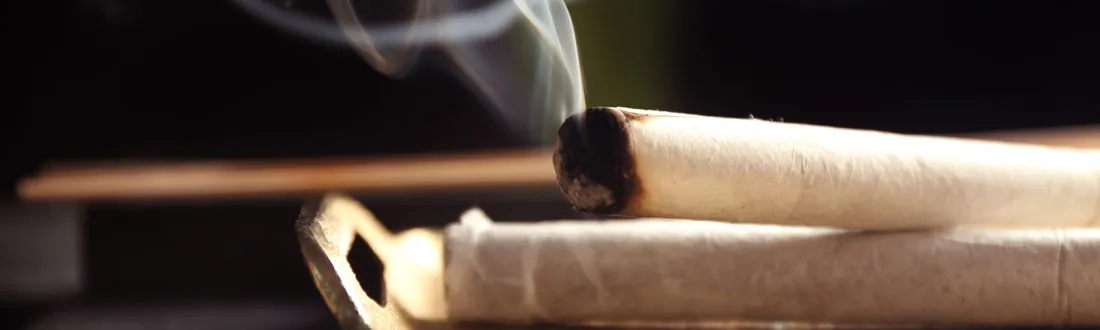
This is the most widely used form in clinical practice and the method I use in my clinic. A moxa stick — a tightly compressed cigar of dried mugwort — is lit at one end and held approximately one inch above the surface of the skin over the relevant acupuncture point. The practitioner moves the stick in a gentle circular or pecking motion, maintaining the optimal distance to produce a comfortable, penetrating warmth without any risk of burning.
Indirect moxibustion is safe, comfortable and highly effective. It allows precise direction of heat into specific acupoints and is suitable for a wide range of conditions and patients, including pregnant women and children.
Smokeless moxibustion
Smokeless moxa is a modern form made from compressed charcoal rather than traditional dried mugwort. It produces the same therapeutic warmth as traditional moxa but without the significant volume of smoke, which can be irritating to people with sensitive respiratory systems and can trigger smoke alarms in clinical settings. This is the form I use in my practice, as it delivers all the therapeutic benefits of traditional moxibustion without the practical disadvantages of smoke.
Direct moxibustion (cone moxa)
In direct moxibustion, a small cone of dried mugwort is placed directly on the skin over an acupuncture point and lit. Non-scarring direct moxibustion removes the cone before it burns down to the skin, leaving only a sensation of warmth. Scarring direct moxibustion allows the cone to burn fully, deliberately raising a blister to create a longer-lasting therapeutic effect at the point. Scarring moxibustion is a traditional technique but is rarely used in modern clinical practice in the UK. I do not practise scarring moxibustion.
Moxa on the needle
In this technique, a small ball of moxa is attached to the handle of an inserted acupuncture needle and lit, allowing the heat to travel down the needle shaft directly into the acupuncture point. This combines the effects of needling and heat simultaneously, producing a particularly strong therapeutic stimulus at the point. It is used for deep-seated cold and stagnation conditions and is a valuable addition to an acupuncture treatment session.
Infrared heat therapy
Because a moxa stick must be held by hand, only one acupuncture point can be warmed at a time using traditional moxibustion. To warm a broader area or multiple points simultaneously, I also use infrared heat lamps, which direct therapeutic heat across a larger region of the body in a single application. This is particularly useful for conditions involving widespread cold or stagnation, such as lower back pain, joint stiffness or digestive weakness. You can read more about this on the heat therapy page.
4. How does moxibustion work?
From a traditional Chinese medicine perspective, moxibustion works by warming the meridian channels and acupuncture points, dispelling cold and dampness from the body and stimulating the smooth flow of qi (energy) and blood. In TCM theory, many chronic health conditions — particularly those involving pain, fatigue, digestive weakness, reproductive problems and susceptibility to illness — are understood to arise from a state of deficiency or cold within the body. Moxibustion directly addresses this by introducing therapeutic warmth into the system at specific, targeted points.
From a modern scientific perspective, moxibustion has been shown to produce several well-documented physiological effects. The heat generated by burning mugwort penetrates several centimetres beneath the skin surface, significantly deeper than the warmth produced by a conventional heat pad. This stimulates increased local blood circulation, relaxes smooth muscle, promotes the secretion of hormones and neurotransmitters, activates the immune system and has anti-inflammatory effects.
Research has also identified specific properties of Artemisia vulgaris (mugwort) smoke and combustion products that may contribute to its therapeutic effects beyond heat alone. Compounds released during burning have been shown to have antioxidant, anti-inflammatory and analgesic properties when absorbed through the skin and respiratory system.
When combined with acupuncture, moxibustion significantly enhances the therapeutic effect of needle treatment, particularly for conditions involving cold, deficiency and stagnation. The combination of needling and heat is more powerful than either therapy used in isolation, which is why the two have been used together throughout the history of TCM.
5. What are the benefits of moxibustion?
Moxibustion is a versatile therapy with a broad range of therapeutic benefits. Its primary strength lies in its ability to warm and tonify the body — qualities that make it particularly valuable for conditions involving cold, deficiency, poor circulation and sluggish organ function.
The key benefits of moxibustion include:
- Warming and tonifying yang qi — the body's fundamental warming and activating energy
- Dispelling cold and dampness from the muscles, joints and internal organs
- Promoting the free flow of qi and blood through the meridian channels
- Relieving pain, particularly pain that is worse in cold conditions or relieved by warmth
- Strengthening digestive function and relieving digestive weakness
- Supporting fertility in both men and women by warming the uterus and improving reproductive organ function
- Turning a breech baby in late pregnancy — one of the most well-researched applications of moxibustion
- Boosting immune function and increasing resistance to illness
- Reducing fatigue and increasing energy levels
- Supporting recovery from chemotherapy and reducing associated side effects
- Warming and relaxing tight, cold muscles and joints
- Improving circulation in conditions such as Raynaud's disease
Unlike cooling therapies that clear heat and inflammation, moxibustion is specifically indicated for conditions where the underlying pattern involves cold, weakness or deficiency. A thorough TCM diagnosis is essential to ensure that moxibustion is the appropriate treatment for each individual patient's presentation.
6. What conditions can moxibustion treat?
Moxibustion is used within traditional Chinese medicine to treat a wide range of conditions, particularly those characterised by cold, deficiency, poor circulation or stagnation. Evidence from both centuries of clinical practice and modern research supports its use for:
- Breech presentation in pregnancy — clinical trials report a success rate of up to 72.5% in turning breech babies when used at 33–35 weeks
- Back pain and neck pain, particularly where the pain is worse in cold or damp conditions
- Muscle pain and joint stiffness, including arthritis and fibromyalgia
- Sciatica and nerve pain associated with cold and dampness
- Female fertility problems, including cold uterus, irregular menstrual cycles and poor ovarian function
- Digestive weakness including bloating, loose stools, IBS and poor appetite
- Fatigue and low energy, including chronic fatigue syndrome
- Raynaud's disease and poor circulation in the extremities
- Menopausal symptoms, particularly those involving cold, fatigue and low energy
- Immune deficiency and recurrent infections
- Side effects of chemotherapy, including fatigue, nausea and immune suppression
- Labour preparation and induction support when used alongside prebirth acupuncture
Moxibustion is most effective when used alongside acupuncture as part of a comprehensive TCM treatment plan, particularly for chronic conditions requiring both stimulation of the meridian system and deep warming of the tissue.
7. Moxibustion for breech baby
One of the most well-known and clinically supported applications of moxibustion is its use to correct a breech presentation in late pregnancy. When a baby is in the breech position — bottom or feet first rather than head down — it can complicate labour and delivery and may result in a caesarean section being recommended.
Moxibustion for breech presentation involves applying a moxa stick to the acupuncture point Bladder 67 (Zhiyin), located at the outer corner of the little toenail on both feet. This point has a strong stimulating effect on the uterus and is believed to encourage uterine contractions that prompt the baby to move. Clinical trials have reported success rates of up to 72.5% when moxibustion is applied at 33 to 35 weeks of pregnancy, making it a highly effective and entirely non-invasive option for encouraging the baby to turn before birth.
The treatment is typically carried out over a course of sessions and can also be taught to the mother to perform at home between clinic appointments, maximising the frequency of stimulation and improving outcomes. It is safe, painless and has no known adverse effects on either the mother or the baby when used correctly.
I have extensive experience in using moxibustion for breech babies and regularly see patients for this purpose at my clinics in Wokingham, Berkshire. You can read more about this treatment on the dedicated moxibustion for breech baby page.
8. Does moxibustion hurt?
No — moxibustion is not painful. The sensation produced by moxibustion is one of gentle, penetrating warmth at and around the acupuncture point being treated. Most patients find it deeply pleasant and relaxing, particularly if they are prone to feeling cold or if the area being treated has been tight and uncomfortable.
The intensity of the heat can be adjusted throughout the treatment simply by moving the moxa stick closer to or further from the skin surface. If at any point the warmth feels too intense, the practitioner will immediately increase the distance. There is no risk of burning when the treatment is carried out correctly by a trained professional using the indirect method.
Some patients notice a sensation of warmth spreading from the treated point along the pathway of the meridian channel — this is a positive sign that the treatment is having an effect and indicates that the flow of qi through the channel is being activated.
9. Is moxibustion safe?
Yes — moxibustion is safe when performed by a properly trained practitioner. It has been used continuously for over 2,500 years across East Asia with an excellent safety record. When the indirect method is used correctly, the risk of adverse effects is extremely low.
Moxibustion is safe to use during pregnancy when applied to appropriate points by a practitioner who is trained and experienced in treating pregnant women. It is most commonly used during pregnancy for breech presentation and labour preparation. There are specific points that must be avoided during pregnancy, and a qualified practitioner will always be aware of these contraindications.
There are some contraindications to be aware of. Moxibustion should not be applied over areas of active infection, inflammation or open skin. It should not be applied directly over varicose veins. Patients with impaired skin sensation — for example due to diabetic neuropathy — need special care, as they may not be able to accurately report the intensity of heat they feel. I always carry out a thorough assessment before treatment to ensure moxibustion is appropriate for each individual patient.
10. Are there any side effects of moxibustion?
When practised correctly using the indirect smokeless method, moxibustion has very few side effects. The treated area may feel warm and slightly flushed for a short while after the session, which is a normal and expected part of the therapeutic response and resolves quickly on its own.
The main practical consideration with traditional moxa is smoke. Traditional mugwort moxa produces a significant volume of aromatic smoke during burning, which can be irritating to people with asthma, hay fever or other respiratory sensitivities, and will trigger smoke alarms in enclosed spaces. For this reason, I use smokeless moxa in my clinic, which produces the same therapeutic warmth without the smoke. Patients who wish to use moxibustion at home between sessions are advised to use smokeless moxa sticks and to ensure the room is well ventilated.
If the moxa stick is held too close to the skin for too long — which should not occur in the hands of a trained practitioner — there is a risk of burning. I do not practise scarring or direct moxibustion, which carries a higher risk of skin burns. The indirect method I use in my clinic maintains a safe distance between the moxa and the skin at all times.
11. What happens during a moxibustion session?
At the start of your session, I will take a detailed case history and ask about your main complaint, your general health, and any relevant medical history. I will also take your pulse and examine your tongue — the two primary diagnostic tools of TCM — to identify your individual pattern of imbalance and determine the most appropriate acupuncture points and areas to warm with moxibustion.
You will then be asked to lie comfortably on the treatment couch and to expose the areas of the body to be treated. The smokeless moxa stick is lit and held approximately one inch above the relevant acupuncture point, producing a gentle, spreading warmth. The stick is moved in a slow circular or pecking motion to maintain the correct level of heat without discomfort. You will be asked to let me know if the sensation becomes too warm at any point, so that the distance can be adjusted immediately.
Moxibustion is frequently combined with acupuncture within the same treatment session, which significantly enhances the therapeutic effect of both therapies. In some sessions, I may also use an infrared heat lamp to warm a broader area of the body simultaneously, particularly for conditions affecting the lower back, abdomen or large muscle groups.
At the end of the session, the moxa stick is carefully extinguished. The treatment is complete and you can dress and return to your normal activities immediately. It is advisable to keep the treated areas warm after moxibustion and to avoid cold showers or cold environments for the remainder of the day, as this can counteract the warming effect of the treatment.
12. How to find a qualified moxibustion practitioner
Moxibustion is not currently regulated in the UK, which means that anyone can legally offer moxibustion treatment regardless of their level of training or clinical experience. It is therefore important to choose your practitioner carefully.
The safest approach is to seek moxibustion from a practitioner who holds a full qualification in traditional Chinese medicine or acupuncture, as moxibustion is an integral part of TCM training. Members of the British Acupuncture Council (BAcC) have completed a minimum of 3,000 hours of training that includes comprehensive study of moxibustion alongside acupuncture — a far higher standard than practitioners who have attended a short stand-alone course.
I am a fully qualified member of the British Acupuncture Council (BAcC) and the Register of Chinese Herbal Medicine (RCHM), with over 25 years of clinical experience in traditional Chinese medicine. I offer moxibustion at my clinics in Wokingham, Berkshire, most commonly as part of an integrated treatment session that also includes acupuncture.
13. Commonly asked questions about moxibustion
What is the difference between smokeless and traditional moxa?
Traditional moxa is made from dried and processed mugwort (Artemisia vulgaris, known in Chinese as ai ye). When burned it produces a significant volume of aromatic smoke, which some patients and practitioners find irritating to the respiratory system and which will trigger smoke alarms in enclosed spaces. Smokeless moxa is made from compressed charcoal and produces the same therapeutic warmth as traditional moxa without the smoke — only a mild odour. I use smokeless moxa in my clinic for all of these practical reasons, while delivering the same therapeutic effect.
How many moxibustion sessions will I need?
This depends entirely on the condition being treated. For a breech baby, a course of several sessions over one to two weeks is typically recommended, often combined with home treatment between appointments. For chronic pain or digestive conditions, moxibustion is usually integrated into an ongoing course of acupuncture and TCM treatment over several weeks or months. I will give you a clear indication of the likely course of treatment at your initial consultation.
Can I use moxibustion at home?
Yes — moxa sticks are available for home use and self-treatment can be a valuable addition to clinical sessions, particularly for breech presentation where frequent stimulation over a short period is beneficial. However, it is essential to be properly shown the correct technique by a trained practitioner before attempting moxibustion at home. Always use smokeless moxa indoors, ensure the room is well ventilated, keep a bowl of sand or a snuffer nearby to extinguish the stick safely, and never leave it unattended when lit.
Is moxibustion available on the NHS?
Some NHS midwives offer moxibustion for breech presentation in late pregnancy, though this is not universally available. Outside of this specific application, moxibustion is not available on the NHS and must be accessed privately. Full pricing information is available on the treatment prices page.
Is moxibustion regulated in the UK?
Moxibustion is not currently statutorily regulated in the UK, meaning anyone can legally offer the treatment. For your safety, always choose a practitioner who is a member of an accredited professional body such as the British Acupuncture Council (BAcC), whose members have completed a minimum of 3,000 hours of training and are bound by a strict code of professional conduct.
Can moxibustion be used alongside acupuncture?
Yes — and this is in fact the most common and effective way to use moxibustion. Acupuncture and moxibustion have been used together throughout the history of traditional Chinese medicine and complement each other powerfully. In my practice, I regularly combine both therapies within a single treatment session, using needles and heat together to produce a stronger and more sustained therapeutic response than either would achieve alone.
How much does moxibustion cost?
Full pricing information is available on the treatment prices page. An initial moxibustion consultation and treatment at either of my clinics is £60; follow-up sessions are £50.
14. References
Breech presentation — systematic review and meta-analysis
The most comprehensive systematic review and meta-analysis of 16 RCTs (2,555 participants) confirming that moxibustion significantly increased cephalic presentation at birth compared to control (RR = 1.39; 95% CI = 1.21–1.58). Moxibustion plus acupuncture showed a synergistic effect (RR = 1.53; 95% CI = 1.26–1.86).
Breech presentation — Cochrane review (latest update)
The authoritative Cochrane review on cephalic version by moxibustion for breech presentation, representing the highest level of evidence synthesis available on this indication.
Chronic low back pain — systematic review and meta-analysis
Meta-analysis of 10 RCTs (987 patients) finding moxibustion had a superior effect on VAS pain score when compared with western medicine (RR = −1.69, 95% CI = −2.40 to −0.98, p<0.00001) and showed favourable effects on disability, JOA score and quality of life (SF-36).
Knee osteoarthritis — PRISMA systematic review and meta-analysis
PRISMA-compliant systematic review and meta-analysis of 39 RCTs (3,293 patients) evaluating the effectiveness and safety of moxibustion for knee osteoarthritis, with evidence of significant benefit on pain scores and physical function. The main adverse reactions were minor (burns and blisters) and absent in the majority of trials.
Ovarian function and AMH — moxibustion improves ovarian reserve
RCT demonstrating that moxibustion improved ovarian function through regulation of androgen balance, producing measurable improvements in hormonal markers including AMH relevant to ovarian reserve and fertility.
IBS and digestive conditions — systematic review
Systematic review and meta-analysis confirming moxibustion as an effective intervention for IBS, with significantly better outcomes than pharmacological treatment alone in several comparisons, supporting moxibustion’s role in treating digestive disorders.
Reproductive endocrine function — moxibustion and male fertility
Research demonstrating that acupuncture and moxibustion can regulate reproductive endocrine function in males with androgen deficiency, improving testosterone levels and supporting reproductive capacity — underpinning moxibustion’s role in fertility treatment for both sexes.















