



The Spleen and Spleen Qi deficiency in Chinese medicine
The Spleen (Pi, 脾) is the “source of post-natal Qi and Blood” in Chinese medicine, and Spleen Qi deficiency — fatigue, sluggish digestion, loose stools, bloating after eating and a pale, teeth-marked tongue — is one of its most commonly diagnosed patterns. Together with the Stomach, the Spleen runs the digestive transformation that converts food and drink into the body’s usable Qi and Blood. It is the foundation of acquired vitality — in contrast to the Kidney, which holds the inherited (pre-natal) constitution. The TCM concept of the Spleen overlaps with but is broader than the Western anatomical spleen; it encompasses pancreatic and small-intestinal digestive function. Paired with the Stomach; element Earth; season late summer; sense organ the mouth; emotion worry / overthinking; tissue muscles and flesh; houses the Yi (intellect, thought).
Functions of the Spleen
- Governs transformation and transportation (yun hua) — the central function: converts food and drink into Gu Qi (Grain Qi) which combines with Lung-derived Qi to form usable Qi and Blood
- Controls the Blood — holds Blood within the vessels; weakness leads to easy bruising, heavy bleeding, post-partum bleeding
- Raises the clear — the Spleen’s ascending Qi prevents prolapse of organs (uterus, rectum, stomach, kidneys); Spleen Qi sinking causes prolapse
- Controls the muscles and four limbs — muscle bulk, tone and energy depend on Spleen function
- Opens into the mouth and manifests in the lips — appetite, taste and lip colour reflect Spleen health
- Houses the Yi — capacity for thought, concentration and applied intellect
Spleen and Stomach pair
The Spleen is paired with the Stomach. The Stomach “rotten-ripens” food and descends it; the Spleen extracts the pure essence and ascends it. The two work as one digestive engine and their disharmony (Spleen-Stomach disharmony) is one of the most common clinical patterns — reflected in poor appetite, abdominal distension, nausea, irregular stools.
Common patterns of Spleen disharmony
- Spleen Qi deficiency — tiredness after eating, bloating, soft stools, pale complexion, weak voice. The foundational Spleen deficiency pattern.
- Spleen Yang deficiency — the above plus cold limbs, abdominal cold pain better with warmth, watery diarrhoea with undigested food
- Spleen Qi sinking — chronic constipation or diarrhoea, organ prolapse (uterine, rectal, gastric), haemorrhoids, varicose veins
- Spleen not holding Blood — easy bruising, blood spots under skin, heavy/prolonged periods, blood in stool
- Dampness encumbering Spleen — heavy head and limbs, foggy thinking, sticky mouth, loose stools; from prolonged Spleen Qi deficiency or excess raw/cold/sweet food
- Cold-Damp invading Spleen — acute abdominal cold pain, watery diarrhoea, vomiting; common in food poisoning or chilled raw food
- Damp-Heat in Spleen — jaundice, bitter taste, foul-smelling stools, urinary burning; less common
Symptoms of Spleen Qi deficiency
Spleen Qi deficiency is widely experienced but rarely named outside TCM. Common manifestations include:
- Fatigue, particularly after eating or after mental exertion
- Loose stools or a tendency to diarrhoea, often worse in the morning
- Poor appetite or feeling full quickly
- Abdominal bloating after meals
- Muscle weakness and a heavy feeling in the limbs
- Easy bruising and a pale complexion
- A tendency to worry, overthink or ruminate, with poor concentration or “foggy” thinking
- Puffiness or fluid retention, particularly around the ankles or eyelids
- A pale, swollen tongue with tooth marks along the edges, and a weak or “soggy” pulse
What causes Spleen Qi deficiency
The Spleen is particularly vulnerable to overwork, poor diet and emotional strain. The most common causes are:
- Irregular eating — skipping meals, eating on the run, eating very late and erratic meal timing; the Spleen depends on regular, predictable nourishment
- Excess cold and raw food — iced drinks, large amounts of salad and raw vegetables, frozen smoothies and cold dairy create a cold, damp environment that impairs Spleen function
- Overthinking and worry — chronic worry, rumination and prolonged mental effort without physical movement deplete Spleen Qi; worry is the emotion of the Earth element
- Overwork — both physical overwork and long hours of intellectual work with inadequate rest weaken the Spleen
- Dampness — damp living or working environments and excessive fluid intake add to the burden on the Spleen
- Constitutional weakness — some people have weak Spleen Qi from birth, particularly if born prematurely
- After illness, surgery or blood loss — these deplete the Spleen’s resources and often need a period of active Spleen support to recover
Conditions on this site relating to Spleen disharmony
Irritable bowel syndrome, general digestive disorders, constipation, diarrhoea, chronic fatigue, post-prandial fatigue, anaemia from heavy menstrual loss, fluid retention, post-partum weakness. Spleen Qi deficiency is also the underlying constitutional pattern in many allergy and eczema cases.
Diet and food therapy for the Spleen
Diet is the foundation of Spleen treatment, and Spleen Qi deficiency often improves substantially with dietary change alone when applied consistently:
- Eat warm, cooked food — reduce cold and raw food, cold drinks, ice cream and large salads; the Spleen needs warmth to transform food, and this is the single most useful change
- Eat regularly — three proper meals a day at regular times, without skipping
- Favour easy-to-digest foods — soups, stews, porridge and lightly cooked vegetables; grains such as rice, oats and millet; and root vegetables such as sweet potato, squash and carrot
- Include Spleen-tonifying foods — chicken, beef, lamb, pumpkin, butternut squash, lentils, chickpeas, oats and cooked leafy greens
- Use warming spices — ginger, cinnamon, cardamom and black pepper support transformation; ginger tea with meals is a simple, effective habit
- Limit cold, sweet and rich foods — excess sweet, fatty or cold food overwhelms the Spleen and promotes damp
- Eat without distraction — sitting down and chewing slowly, away from screens, helps the Spleen transform food
Lifestyle for a weak Spleen
- Rest adequately — chronic physical and mental overwork depletes Spleen Qi faster than it recovers
- Move gently and regularly — walking, tai chi and qi gong support the Spleen; excessive vigorous exercise can further deplete it
- Reduce worry and rumination — mindfulness, acupuncture and addressing anxious thinking all directly support Spleen function
- Keep the abdomen warm — a warm layer over the lower abdomen and back, and avoiding cold surfaces, supports the Spleen and Stomach
Treatment principles for the Spleen
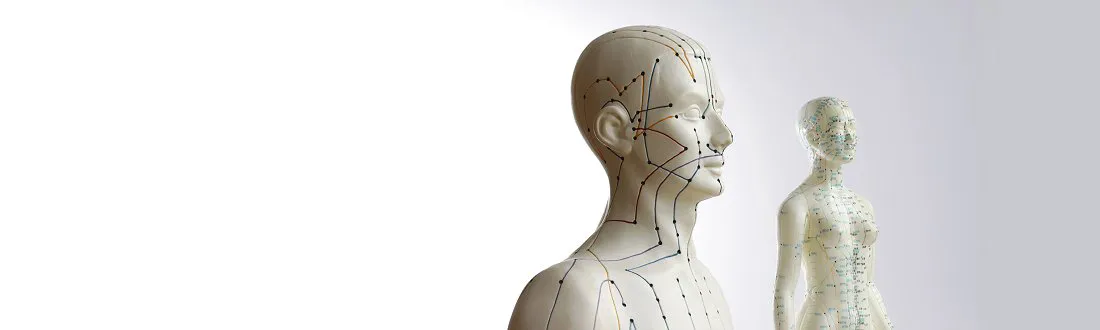
Core acupuncture points include SP 3 (Taibai) (Yuan-source), SP 6 (Sanyinjiao) (meeting of the three Yin), SP 9 (Yinlingquan) (drains Damp), ST 36 (Zusanli) (the master Earth point), BL 20 (Pishu) as the Back-Shu, and CV 12 (Zhongwan) as the Stomach Front-Mu (also strengthens Spleen). Moxibustion is particularly valuable for Spleen Yang deficiency. Foundational formulas include Si Jun Zi Tang (Spleen Qi deficiency), Li Zhong Wan (Spleen Yang deficiency), Bu Zhong Yi Qi Tang (Spleen Qi sinking with prolapse), Shen Ling Bai Zhu San (Spleen with Damp/loose stools) and Gui Pi Tang (Spleen failing to hold Blood, with anxiety/insomnia).
For a detailed clinical reference on Spleen and Stomach disorders — a translation of Professor Shi’s work on pattern differentiation and herbal treatment — see disorders of the Spleen and Stomach in Chinese medicine.
Return to Zang-Fu organ overview. Paired with the Stomach. Read about the other Zang organs: Heart, Lung, Liver and Kidney; or the other Fu organs: Large Intestine, Small Intestine, Bladder, Gallbladder, Triple Burner and the Pericardium.















