


Acupuncture and acupressure for knee pain
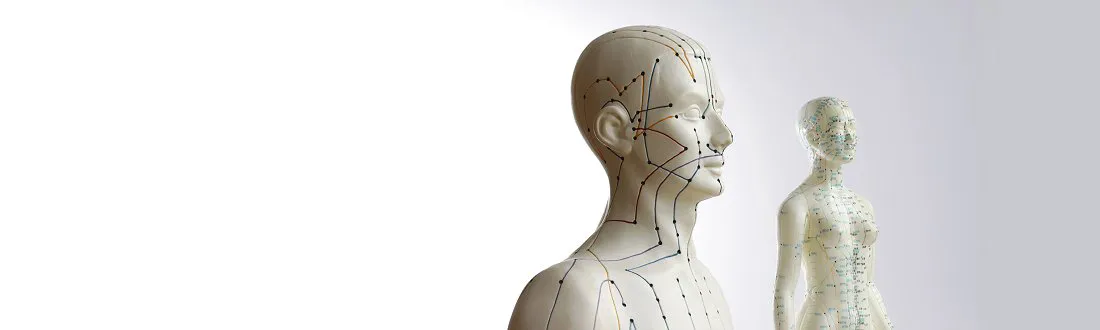
Acupuncture is recommended by NICE for knee osteoarthritis and is one of the best-researched non-drug treatments for chronic knee pain, with meta-analyses confirming meaningful pain relief and improved function — and acupressure on the same points gives useful self-help relief between sessions. This page explains the types and causes of knee pain, the Chinese-medicine patterns behind it, the evidence for acupuncture, and the best points you can press yourself. I treat knee pain with acupuncture and electroacupuncture at my Berkshire clinic.
On this page
- Overview
- Types of knee pain
- Causes
- Knee pain in Chinese medicine
- Acupuncture for knee pain
- Acupressure points for knee pain
- Other treatments
- Self-care
- Treatment at my clinic
- Frequently asked questions
- References
1. What is knee pain?
Knee pain is one of the most prevalent musculoskeletal complaints in the UK, affecting people of all ages and activity levels. It is a leading cause of disability, reduced mobility and impaired quality of life, particularly in the over-50 population where osteoarthritis is the primary driver. An estimated 8.75 million people in the UK have sought treatment for osteoarthritis of the knee alone, and the number continues to rise with an ageing population and increasing rates of obesity.
Conventional management of knee pain typically progresses from analgesia and physiotherapy through to corticosteroid injections and ultimately joint replacement surgery — a pathway that many patients find unsatisfactory, either because the early interventions provide insufficient relief or because they wish to avoid or delay surgery. Acupuncture, as part of a traditional Chinese medicine (TCM) approach, offers a well-evidenced, non-invasive alternative that can produce significant and sustained reductions in knee pain, improve function and mobility, and reduce reliance on pain medication — with no risk of the side effects associated with long-term NSAID use or the complications of surgery.
Acupuncture for knee pain is specifically supported by the National Institute for Health and Care Excellence (NICE) guidelines for chronic primary pain, and by a landmark individual patient data meta-analysis of over 20,000 patients that confirmed acupuncture as significantly superior to both sham treatment and no treatment for osteoarthritis pain.
2. Types of knee pain
- Knee osteoarthritis — the most common cause of chronic knee pain in adults over 50, characterised by the progressive degeneration of the articular cartilage within the knee joint. Symptoms include deep, aching pain worsened by weight-bearing, stiffness after rest (especially in the morning), swelling, crepitus (grinding or clicking) and progressive loss of range of movement. Osteoarthritis typically affects the medial (inner) compartment first, producing a characteristic varus (bow-legged) deformity over time
- Patellofemoral pain syndrome (runner’s knee) — a very common condition in active people, particularly runners, cyclists and those who spend prolonged periods sitting, involving pain around or behind the kneecap (patella). The pain is typically worsened by stairs, squatting, prolonged sitting and running, and is produced by abnormal tracking of the patella in its groove on the femur
- Iliotibial band syndrome (ITB syndrome) — a common overuse injury in runners and cyclists, presenting as sharp or burning pain on the outer side of the knee, produced by friction of the iliotibial band as it crosses the lateral femoral condyle during repetitive knee flexion and extension
- Meniscal pain — the menisci are the two C-shaped cartilage discs that cushion and stabilise the knee joint. Meniscal tears can be acute (usually from a twisting injury) or degenerative (increasingly common in middle-aged and older adults, often without a specific injury). Symptoms include joint-line pain, swelling, locking or catching sensations and difficulty fully extending or flexing the knee
- Patellar tendinopathy — degeneration or inflammation of the patellar tendon connecting the kneecap to the tibia, producing pain directly below the kneecap, particularly on loading activities such as jumping, running and descending stairs. Common in athletes but also in sedentary individuals
- Bursitis — inflammation of one of the bursae (fluid-filled sacs) around the knee, most commonly the prepatellar bursa (housemaid’s knee) or the pes anserine bursa on the inner side of the knee. Produces localised swelling, warmth and tenderness
- Post-surgical knee pain — persistent pain following knee replacement, arthroscopy or ligament reconstruction, where residual pain, stiffness and reduced function remain despite the surgical intervention
3. Causes
- Age-related degeneration — articular cartilage deteriorates progressively with age, reducing its capacity to absorb and distribute the mechanical loads placed on the knee during walking, climbing stairs and other daily activities. This is the primary driver of osteoarthritis
- Overuse and repetitive loading — running, cycling, jumping sports and occupations involving prolonged kneeling or repetitive squatting all place cumulative stress on the knee structures, predisposing to patellofemoral syndrome, ITB syndrome and tendinopathy
- Biomechanical imbalances — weakness of the quadriceps (particularly the vastus medialis oblique), hip abductors and gluteal muscles, combined with tightness of the hamstrings, hip flexors and ITB, alters knee loading patterns and is a major driver of most overuse knee conditions
- Excess body weight — each kilogram of excess body weight adds approximately three to four kilograms of additional force through the knee joint during walking. Excess weight is one of the most significant modifiable risk factors for knee osteoarthritis
- Acute trauma — direct impact, twisting injuries and falls can cause ligament sprains (ACL, MCL, PCL), meniscal tears, fractures and bone bruising, any of which may produce acute knee pain and, if inadequately rehabilitated, persistent chronic pain
- Inflammatory joint disease — rheumatoid arthritis, gout and other inflammatory arthropathies can affect the knee joint, producing synovitis, swelling, warmth and pain that differs in character from mechanical osteoarthritis
4. Knee pain in Chinese medicine
In traditional Chinese medicine, the knee is governed primarily by the Kidney and Liver organ systems — the Kidney rules the bones and provides the fundamental constitutional energy of the joint, while the Liver nourishes the tendons and sinews. The classical TCM principle — “where there is free flow, there is no pain” — applies directly to the knee: knee pain arises from the obstruction of qi and Blood in the local meridians, combined in most chronic cases with underlying Kidney or Liver deficiency. The main TCM patterns in knee pain are:
- Bi syndrome (painful obstruction) with Cold-Damp — the most common pattern in chronic knee osteoarthritis, where Cold and Damp pathogenic factors have invaded and obstructed the knee meridians. The pain is typically deep, aching and heavy, markedly worse in cold and damp weather, relieved by warmth, and associated with stiffness especially after rest. The joint may feel cold to the touch. This pattern corresponds directly to the clinical observation that osteoarthritis patients consistently report worse symptoms in cold, wet weather
- Bi syndrome with Wind-Damp-Heat — an inflammatory pattern characterised by swollen, warm, red and painful joints. Corresponds to inflammatory arthritis, acute gout and active synovitis. Pain may be more variable in location and is associated with systemic heat signs
- Kidney and Liver deficiency — the pattern underlying most degenerative knee conditions, particularly in older patients. When the Kidney Jing and Liver Blood are insufficient, the bones and tendons of the knee are inadequately nourished, leading to progressive structural deterioration. Associated with generalised weakness and aching of the lower limbs, low back ache, fatigue and a constitutional tendency to feel cold (Kidney Yang deficiency) or to heat signs, dry eyes and night sweats (Kidney Yin deficiency)
- Qi and Blood stagnation — the pattern following trauma or surgery, where local injury disrupts the circulation of qi and Blood, producing fixed, sharp or stabbing pain, swelling, bruising and restricted movement. Also seen in chronic cases where long-standing Bi syndrome has progressed to Blood stagnation in the joint
- Spleen deficiency with Damp accumulation — when the Spleen’s function of transforming and transporting fluids is impaired, Damp accumulates in the joints. This produces swollen, boggy knees, a sensation of heaviness in the legs, fatigue and digestive weakness
5. Acupuncture for knee pain
Acupuncture is one of the most thoroughly researched and evidence-supported treatments for knee pain, particularly knee osteoarthritis. It works through several complementary mechanisms:
- Stimulating the release of endogenous opioid peptides — endorphins, enkephalins and dynorphins — which bind to pain receptors in the spinal cord and brain to produce natural analgesia
- Reducing local and systemic inflammation through anti-inflammatory neuroimmune mechanisms, including modulation of pro-inflammatory cytokines such as TNF-α and IL-1β — the primary inflammatory mediators in osteoarthritis
- Improving synovial fluid production and joint lubrication, reducing the friction and pain associated with cartilage degeneration
- Increasing local blood flow and circulation to the joint, improving the delivery of oxygen and nutrients to cartilage and periarticular tissues
- Releasing myofascial trigger points in the quadriceps, hamstrings and calf muscles that generate referred pain into the knee and contribute to abnormal joint loading
- Modulating central sensitisation — the neurological process by which chronic pain becomes amplified and self-sustaining — which plays an important role in the persistence of chronic knee pain beyond the degree of structural damage
Research evidence
The evidence base for acupuncture in knee pain is among the strongest of any acupuncture indication. The landmark individual patient data meta-analysis by Vickers et al. (2018), published in the Journal of Pain, pooled data from 39 high-quality RCTs involving over 20,000 patients and found that acupuncture was significantly superior to both sham acupuncture and no treatment for osteoarthritis pain — with effects that were sustained at long-term follow-up, confirming that acupuncture produces genuine, lasting benefit rather than a placebo response. A Cochrane systematic review of acupuncture for peripheral joint osteoarthritis (Manheimer et al., 2010), examining 16 RCTs, found that acupuncture produced statistically significant and clinically meaningful reductions in knee pain and improvements in function. A further RCT by Scharf et al. (2006), published in the Annals of Internal Medicine, involving 1,007 patients with chronic knee osteoarthritis, found that both real and sham acupuncture outperformed conventional orthopaedic care for pain and function over 26 weeks — highlighting that the specific needling effects of acupuncture are additive to its non-specific therapeutic context.
I am a member of the British Acupuncture Council and use acupuncture and electroacupuncture in the treatment of knee pain.
6. Acupressure points for knee pain
Between treatments you can press several of the same points yourself to ease knee pain at home. Acupressure uses firm finger pressure instead of needles — gentler than acupuncture but genuinely useful for the aching of osteoarthritis, runner's knee and overuse pain. Press each point firmly for one to two minutes while breathing slowly, then release and repeat. The most useful pressure points for knee pain are:
- ST 35 (Dubi) — the “lateral eye of the knee,” in the hollow just outside the patellar tendon when the knee is bent; the main local point for the knee joint and one of the most effective points for osteoarthritic knee pain.
- Xiyan (Eyes of the Knee) — the two hollows either side of the patellar tendon; classical local points for knee pain, swelling and stiffness, used as a pair with ST 35.
- SP 9 (Yinlingquan) — on the inside of the lower leg, in the hollow just below the bony bump of the inner shin (medial condyle of the tibia); clears swelling and dampness from the knee — particularly useful when the knee feels stiff, heavy or worse in damp weather.
- GB 34 (Yanglingquan) — on the outside of the lower leg, in the hollow just in front of and below the head of the fibula; the influential point for sinews (tendons and ligaments) — the key distal point for almost any musculoskeletal knee problem.
- ST 36 (Zusanli) — four finger-widths below the lower edge of the kneecap, one finger-width outside the shin bone; tonifies Qi locally and strengthens the lower limb, supporting recovery from chronic knee pain.
For the full step-by-step routine, see the acupressure for knee pain guide. Acupressure complements but does not replace clinical acupuncture, which is stronger and addresses the underlying TCM pattern; for cold, deficient knee pain that is worse with damp, gentle moxibustion over these same points adds penetrating warmth.
7. Other treatments
Electroacupuncture — attaching a gentle electrical current to the acupuncture needles — significantly enhances the analgesic effect and is particularly useful for chronic knee osteoarthritis and post-surgical knee pain where a stronger therapeutic stimulus is needed.
Moxibustion and heat therapy are applied directly over the knee for Cold-Damp Bi syndrome patterns, dispersing the cold and damp from the joint and dramatically improving the warmth, circulation and range of movement of the knee. Many patients with osteoarthritis find heat therapy at the knee provides significant immediate relief.
Cupping therapy applied around the knee and along the thigh and calf muscles relieves the muscle tension and fascial restriction that contributes to abnormal knee loading and chronic pain.
Chinese herbal medicine can be prescribed for chronic or complex knee conditions, particularly for Kidney deficiency patterns where constitutional treatment with daily herbal tonics accelerates the structural repair and strengthening of the joint over time. Topical herbal preparations applied directly to the knee can also reduce local inflammation and pain.
8. Self-care
- Maintain a healthy body weight — the single most impactful lifestyle measure for knee osteoarthritis. Even a modest weight reduction of 5–10% significantly reduces the mechanical load on the knee and pain levels
- Strengthen supporting muscles — targeted strengthening of the quadriceps (particularly VMO), gluteus medius and hip abductors reduces knee joint loading and improves patellar tracking. Tai chi has particularly strong evidence for improving pain and function in knee osteoarthritis
- Apply warmth — for Cold-Damp patterns (pain worse in cold and damp), consistent application of heat to the knee between sessions — using a heat pad, hot water bottle or warm bath — significantly extends the benefit of each acupuncture and moxibustion session
- Anti-inflammatory diet — reducing processed foods, refined sugars, alcohol and red meat while increasing oily fish, turmeric, ginger, leafy greens and berries supports the reduction of systemic inflammation driving arthritic joint pain. See Chinese food therapy for detailed guidance
- Stay active within your limits — low-impact exercise such as swimming, cycling and walking maintains joint mobility, muscle strength and cartilage health without overloading the knee. In TCM terms, gentle movement maintains the free flow of qi and Blood and prevents stagnation from accumulating in the joint
- Avoid prolonged kneeling and squatting — activities that place the knee in end-range flexion under load should be minimised during active flares, while maintaining general activity at other times
9. Treatment at my clinic
I treat knee pain at my clinic in Berkshire. Treatment combines acupuncture and electroacupuncture with moxibustion, heat therapy and cupping therapy as appropriate to the individual’s pattern and condition. Most patients with knee osteoarthritis notice a meaningful improvement in pain and mobility within four to six sessions; a full course typically runs six to ten sessions for sustained benefit. For post-surgical knee pain or severe chronic osteoarthritis, a longer course may be needed. Chinese herbal medicine can be added for patients with significant Kidney or Liver deficiency patterns where constitutional strengthening will accelerate and deepen the response to local treatment. Visit the prices page for treatment costs.
10. Frequently asked questions
Can acupuncture help knee osteoarthritis?
Yes — knee osteoarthritis is one of the most thoroughly researched indications for acupuncture. A landmark meta-analysis of over 20,000 patients across 39 RCTs found acupuncture significantly superior to sham treatment and no treatment for osteoarthritis pain, with sustained effects at follow-up. Acupuncture reduces pain, improves function and mobility, reduces the need for pain medication and can delay or reduce the need for surgical intervention.
How many acupuncture sessions are needed for knee pain?
Most patients with knee osteoarthritis notice a meaningful improvement within four to six sessions. A full initial course of six to ten weekly sessions is recommended to achieve sustained benefit. Acute knee injuries may respond faster, within two to four sessions, particularly if treatment starts promptly after the injury. Progress is reviewed throughout and the treatment plan adjusted accordingly.
Can acupuncture help knee pain without surgery?
Yes — acupuncture can produce significant and sustained reductions in knee pain and improvements in function that enable many patients to avoid or substantially delay surgery. It is most effective as part of an integrated approach combining needling with appropriate exercise, weight management and dietary measures. Even patients who ultimately proceed to surgery benefit from acupuncture in improving their pre-operative function and post-operative recovery.
Is acupuncture good for runner’s knee?
Yes. Patellofemoral pain syndrome (runner’s knee) responds well to acupuncture targeting the local knee points, the quadriceps trigger points and the hip and gluteal muscles that contribute to abnormal patellar tracking. Combining acupuncture with targeted rehabilitation exercises produces the best results for this condition.
Can acupuncture help after knee replacement surgery?
Yes. Post-surgical knee pain, stiffness and reduced function respond well to acupuncture, which can reduce residual pain, improve range of movement and support rehabilitation. Acupuncture is safe to use following knee replacement and does not interfere with the implant.
11. References
Vickers AJ, Vertosick EA, Lewith G, MacPherson H, Foster NE, Sherman KJ, Irnich D, Witt CM, Linde K; Acupuncture Trialists’ Collaboration. Acupuncture for chronic pain: update of an individual patient data meta-analysis. J Pain. 2018 May;19(5):455–474. https://doi.org/10.1016/j.jpain.2017.11.005. PMID: 29198932.
Manheimer E, Cheng K, Linde K, Lao L, Yoo J, Wieland S, van der Windt DA, Berman BM, Bouter LM. Acupuncture for peripheral joint osteoarthritis. Cochrane Database Syst Rev. 2010 Jan 20;(1):CD001977. https://doi.org/10.1002/14651858.CD001977.pub2. PMID: 20091527.
Scharf HP, Mansmann U, Streitberger K, et al. Acupuncture and knee osteoarthritis: a three-armed randomized trial. Ann Intern Med. 2006 Jul 4;145(1):12–20. https://doi.org/10.7326/0003-4819-145-1-200607040-00005. PMID: 16818924.
National Institute for Health and Care Excellence. Chronic pain (primary and secondary) in over 16s. NICE Guideline NG193. Published 7 April 2021. https://www.nice.org.uk/guidance/ng193.
Related Chinese herbal formulas
Classical Chinese herbal formulas that may be clinically relevant for knee pain, depending on TCM pattern differentiation:
- Niu Che Shen Qi Wan — with cold-deficient pattern
A practitioner selects from these based on the individual TCM pattern identified in consultation. Read more about Chinese herbal medicine or book an online herbal consultation.
Knee pain treatment across Berkshire
I treat patients with knee pain from across Berkshire — Reading, Bracknell, Twyford, Crowthorne, Sandhurst and the surrounding Thames Valley. The clinic is easily accessible by car with on-street parking nearby, and by rail from Reading and Bracknell. Online Chinese herbal medicine consultations are available throughout the UK; for the in-clinic acupuncture, cupping and moxibustion treatments described above, patients travel to the Berkshire clinic.















