



Gui Shao Di Huang Wan (归芍地黄丸) — Angelica, Peony & Rehmannia Decoction
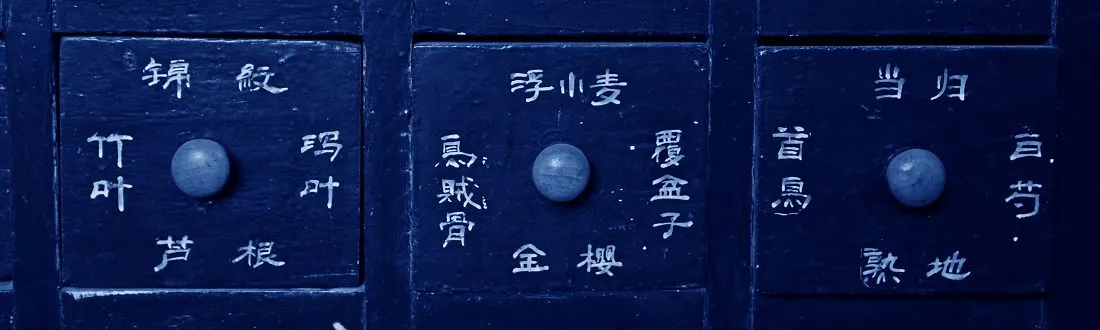
归芝地黄丸 | Guī Sháo Dì Huáng Wán
Overview
Gui Shao Di Huang Wan is a modification of the classical Liu Wei Di Huang Wan (Six Flavour Rehmannia Pill) with the addition of Dang Gui (Angelica sinensis) and Bai Shao (white peony root). It is one of the most important formulas in Chinese medicine for fertility and gynaecology and is widely used as a follicular-phase formula in TCM fertility cycle therapy — the approach of prescribing different formulas at different points in the menstrual cycle to match the physiological demands of each phase.
The formula nourishes Kidney Yin and Liver Blood, gently clears Empty Heat, and gives the body the yin substance it needs to produce a mature, high-quality follicle. It is particularly well suited to women with low AMH, high FSH, thin endometrial lining, or irregular cycles with light or delayed periods.
I prescribe pharmaceutical-grade granules from Sun Ten in Taiwan, tested to the highest international quality and safety standards, and dose-adjusted across the menstrual cycle.
Composition
The formula comprises the six herbs of Liu Wei Di Huang Wan with two additions:
- Shu Di Huang (wine-prepared Rehmannia root, 8-30g) — the chief herb; powerfully nourishes Kidney Yin, Jing and Blood
- Dang Gui (Angelica sinensis root, 3-15g) — the first named addition; nourishes and moves Blood
- Bai Shao (white peony root, 5-30g) — nourishes Liver Blood, preserves Yin, softens the Liver
- Shan Yao (Chinese yam, 4-15g) — tonifies the Kidney, Spleen and Lung; supports Jing
- Shan Zhu Yu (Cornus fruit, 4-20g) — astringes the essence and nourishes Liver and Kidney
- Fu Ling (Poria, 3-15g) — supports the Spleen and balances the richness of the Yin tonics
- Mu Dan Pi (Moutan bark, 3-15g) — clears Empty Heat and invigorates Blood
- Ze Xie (Alisma rhizome, 3-15g) — drains Dampness and prevents the Yin tonics from creating stagnation
The three cooling/draining herbs (Mu Dan Pi, Ze Xie, Fu Ling) balance the three tonifying herbs (Shu Di Huang, Shan Yao, Shan Zhu Yu) — the classical "three tonifications, three drainings" structure of Liu Wei Di Huang Wan — with Dang Gui and Bai Shao adding Blood nourishment and movement that makes the formula particularly suited to gynaecology and fertility.
Actions
- Nourishes Kidney Yin and Jing
- Nourishes Liver Blood
- Gently moves Blood
- Clears Empty Heat
- Softens the Liver
TCM Pattern Treated
Gui Shao Di Huang Wan is designed for Kidney Yin deficiency with Liver Blood deficiency, frequently with mild Empty Heat and Liver Qi stagnation. In reproductive terms, this is the pattern underlying many of the most common causes of subfertility in women in their late 30s and 40s — declining egg quality, diminishing ovarian reserve, thin endometrial lining and irregular menstruation with short or absent follicular-phase bleeding.
Clinical Indications
The characteristic presentation includes:
- Declining ovarian reserve — low AMH, rising FSH, short follicular phase
- Light or delayed periods, scanty menstrual flow
- Spotting before or after the period
- Thin endometrial lining on scan
- Irregular or short cycles with difficulty conceiving
- Hot flushes, particularly in perimenopause or after fertility medication
- Night sweats, five-palm heat, a sensation of heat in the afternoon
- Dry skin, dry hair, dry eyes
- Dizziness, tinnitus, lower back ache
- Insomnia, particularly difficulty falling asleep with restless mind
- Tongue: red or pale with thin coating, often with scalloped edges
- Pulse: thready, sometimes rapid or wiry
Conditions Commonly Treated
Gui Shao Di Huang Wan is a cornerstone formula in my fertility practice, particularly for the follicular phase of the cycle:
- Low AMH and diminished ovarian reserve
- High FSH and poor follicle development
- Thin endometrial lining in natural cycles and IVF
- Luteal phase defect arising from follicular-phase deficiency
- Preparation for IVF — particularly for women over 38 and for those with a poor response to stimulation
- Perimenopausal symptoms with reproductive involvement
- Post-pill amenorrhoea with Yin depletion
- Unexplained infertility with Kidney Yin and Liver Blood deficiency pattern
Use in Fertility Cycle Therapy
In TCM fertility cycle therapy, different formulas are prescribed in different phases of the menstrual cycle to match the physiological demands of each phase. Gui Shao Di Huang Wan is the classical follicular-phase formula — typically prescribed from day 6 to day 11 (approximately from the end of menstruation until a few days before ovulation). This is when the body is building Yin, Blood and Essence to mature the follicle and thicken the endometrial lining, and when Yin-nourishing formulas have their greatest impact.
The formula is then typically succeeded by an ovulation-phase formula (moving Qi and Blood to support ovulation itself) and by a luteal-phase formula (tonifying Yang to support implantation and early pregnancy). This phase-based approach produces consistently better results than a single formula used throughout the cycle, in my clinical experience.
Research Evidence
A meta-analysis of 40 RCTs (n=4,247) of Chinese herbal medicine for female infertility reported that Chinese herbal medicine was associated with a higher pregnancy rate than Western medical therapy alone in the trials studied; the formulas examined included Gui Shao Di Huang Wan and related Yin-and-Blood-nourishing formulas.[1] Preclinical work has reported that constituents promote angiogenesis-related signalling in uterine endothelial cell models, consistent with the formula's traditional role in nourishing Liver and Kidney Yin and Blood for follicular-phase development.
Prescribing Notes
Where Yang deficiency is significant alongside the Yin deficiency — cold hands and feet, low basal body temperature in the luteal phase, frequent pale urination — I combine with Yang-tonifying herbs such as Tu Si Zi (cuscuta seed) and Du Zhong (eucommia). Where Liver Qi stagnation dominates with premenstrual irritability, breast tenderness and cycle irregularity, I often alternate or combine with Xiao Yao San. For women with significant Blood stasis (dark clots, fixed pelvic pain, endometriosis), blood-moving herbs are added in the luteal phase rather than the follicular phase when the formula is used.
Cautions
Gui Shao Di Huang Wan is rich and moistening. It is not appropriate during acute illness (colds, flu, fever) or in patients with strong Spleen Qi deficiency with significant Damp accumulation (loose stools, heavy abdomen, thick greasy coating). Like all Chinese herbal formulas it should only be taken under the supervision of a qualified practitioner, particularly in the context of fertility treatment and IVF.
Online Consultation
For patients unable to attend the clinic in person, I offer online herbal consultations, including full cycle-based protocols for fertility. After a detailed assessment of your cycle, blood work and any imaging available, pharmaceutical-grade granules from Sun Ten are dispensed phase-by-phase and posted directly to your home.
Return to the Chinese herbal formulas directory or the Chinese herbal medicine main page.
Prefer to be treated from home? Chinese herbal medicine online consultations are available throughout the UK and worldwide. After a full video consultation, Dr (TCM) Attilio D'Alberto formulates a bespoke herbal prescription and posts your Chinese herbs directly to your door.
References
[1] Ried K. Chinese herbal medicine for female infertility: an updated meta-analysis. Complement Ther Med. 2015 Feb;23(1):116-28. https://doi.org/10.1016/j.ctim.2014.12.004. PMID: 25637159.















