



Cellular Memory and Zangfu Theory
On this page
- Introduction
- Zangfu, emotions and spirit
- Yin-Yang and the holographic principle
- The Heart as the seat of the Shen
- Cellular memory in transplant recipients
- Conclusion and clinical implications
Introduction
“Cellular memory” is defined as the capacity of living tissue cells to memorise and recall characteristics of the body from which they originated. Organ transplantation has applied the advances of technologically driven orthodox medicine for more than 50 years. However, only in recent years have the recipients of donated organs begun to report strange phenomena — atypical newfound memories, thoughts, emotions and preferences that are uncharacteristic of themselves and that “seem not to belong” to the recipient. These phenomena are perceived to “belong” to their donor. How could this be, and does the phenomenon of cellular memory have applications in medicine?
Host rejection of donated organs is commonplace, with considerable failure rates. Orthodox medicine uses potent immunosuppressive drugs and other technologies to prevent organ rejection. Does the phenomenon of cellular memory elicit the cause of organ rejection? If so, are there applications to prevent or treat organ rejection?
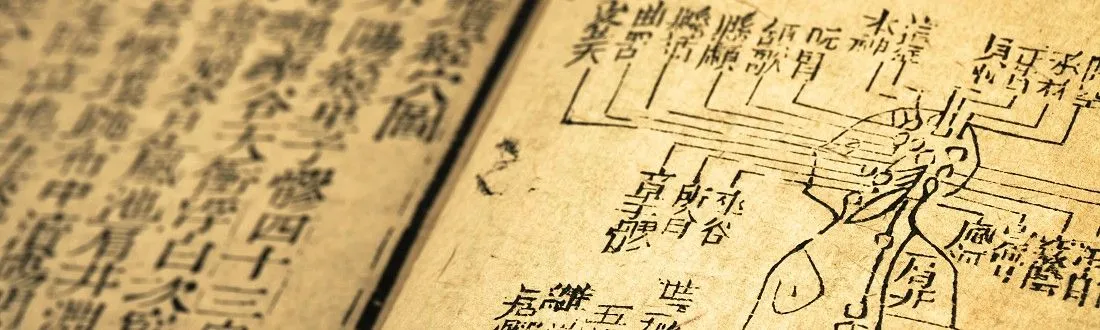
The Huang Di Nei Jing (Yellow Emperor’s Internal Medicine Classic) is the oldest and most important medical book to originate from China. Its author is unknown, but it is thought to have been written during the Warring States period (475–221 BC) by numerous authors. The basic foundations of Traditional Chinese Medicine came from this ancient classic, comprised of two books — the Suwen “Plain Questions” and the Lingshu “Miraculous Pivot”. The Huang Di Nei Jing introduced Five-Element Theory, Yin-Yang Theory, internal and external causes of disease, Zangfu pathology and physiology, the interaction of Qi-Xue (energy and blood) and the Jing-Luo-Mai (channels and collaterals) system. The aim of this paper is to ask: can Zangfu Theory shed new light on the modern findings known as cellular memory?
Zangfu, emotions and spirit
The Zangfu consist of 5 Yin (Zang, solid) organs and 5 Yang (Fu, hollow) organs. Each Yin organ has a function, an element, an associated Fu, taste, emotion, spirit, tone, planet, animal, season and colour. In orthodox medicine, it is mainly the heart, lung, liver and kidneys — the solid Zang organs — that are transplanted.
| Element | Fire | Earth | Metal/Air | Water | Wood |
|---|---|---|---|---|---|
| Zang (Yin organ) | HT (Heart) | SP (Spleen) | LU (Lung) | KI (Kidney) | LV (Liver) |
| Related Fu (Yang organ) | SI | ST | LI | BL | GB |
| Emotion | Joy | Pensiveness | Grief | Fear | Anger |
| Spirit | Shen — Mind | Yi — Intellect | Po — Corporeal Soul | Zhi — Will | Hun — Ethereal Soul |
| Spirit acupoint | Shentang — Spirit Hall (BL44) | Yishe — Idea Abode (BL49) | Pohu (BL42) | Zhishi — Will Chamber (BL52) | Hunmen — Soul Gate (BL47) |
TCM practitioners apply acupuncture, moxibustion, tuina or other stimuli at these points to normalise dysfunction of the related emotion or spirit.
Yin-Yang and the holographic principle
TCM is a holistic medicine that views the body-mind-spirit as one and is based upon the theory of Yin and Yang as introduced by the Huang Di Nei Jing. Yin and Yang originate from original Qi (Yuan Qi), which underlies the entire theoretical infrastructure of Chinese medicine. In its primordial state, the existence of original Qi meant that all things were One. The Qi of Yin and Yang retains this connective or unifying potential (Zhang and Rose 1999).
In Yin-Yang theory, everything within the world is made up of two opposing forces, each containing the seed of its opposite. As Suwen, Chapter 5, states: “Yin-Yang principles guide all things. In the mutual victory or defeat of Yin-Yang, the situation will be of numerous varieties, so Yin-Yang are the parents of variations”. Everything on earth and in heaven is created from Qi, and the qualities of Qi as described by Yin and Yang are rigorously expressed in all creation. Therefore, everything contains the essence (seed) of the whole.
Yin-Yang theory shares ground with its modern western equivalent — the holographic principle — and is the basis of cellular communication with the body-mind in dynamic interplay. As Gerber (1996, p48–9) points out, the holographic principle prescribes that “every piece contains the whole”, and this can be seen in the cellular structure of all living bodies. Every cell contains a copy of the master DNA blueprint. From these two identical theories we may conclude that although each Zang organ contains its own function, emotion and spirit, each organ also contains the functional essence of all the characteristics of the Zangfu and the body as a whole.
The Heart as the seat of the Shen
The Heart houses the Shen (mind). As Pearce (cited in Mercogliano and Debus 1999) points out, the idea that we can think with our hearts is no longer just a metaphor. Molecular biologists have discovered that the heart is the body’s most important endocrine gland. In response to our experience of the world it produces and releases a major hormone, ANF (Atrial Natriuretic Factor), that affects every operation in the limbic structure — the emotional brain — including the hippocampal area where memory and learning take place, and the control centres for the entire hormonal system.
Neurocardiologists have found that 60–65% of the cells of the heart are neural cells, not muscle cells as was previously believed. They are identical to the neural cells in the brain, operating through the same ganglia, with the same axonal and dendritic connections and the same neurotransmitters. Quite literally there is a brain (Shen) in the heart, whose ganglia are linked to every major organ in the body and the entire muscle spindle system that uniquely enables humans to express their emotions.
About half of the heart’s neural cells are involved in translating information sent to it from all over the body, keeping the body working as one harmonious whole. The other half make up a very large, unmediated neural connection with the emotional brain in our head, carrying on a twenty-four-hour-a-day dialogue between the heart and the brain that we are not even aware of.
The Suwen Chapter 8 stated: “Heart is the sovereign of all organs and represents the consciousness of one’s being. It is responsible for intelligence, wisdom and spiritual transformation.” An analogy: the Zangfu are the hardware, the emotions and belief systems are the software, the mind or Shen is the operating system, and the brain is the microchip.
Biophysicists have discovered that the heart is also a very powerful electromagnetic generator. It creates an electromagnetic field that encompasses the body and extends 8–12 feet beyond it. The field is holographic, meaning you can read it from any point on the body and from any point within the field. The radio spectrum of the heart is profoundly affected by our emotional response to the world — our emotional response changes the heart’s electromagnetic spectrum, which is what the brain feeds on.
Cellular memory in transplant recipients
Since the seed (cell) contains the whole, we need to look closer at what makes up the cells of the Zangfu. The word “cell” derives from the Latin cellula, meaning “small chamber”. Every cell is 99.999% empty space with subatomic bundles of energy travelling through it at the speed of light.
As Gerber (1996, p69) points out, at the quantum level all matter is literally frozen, particularised energy fields (frozen light). Complex aggregates of matter are specialised energy fields. The higher the frequency of matter, the less dense or more subtle it is. Yin and Yang are in essence light: they make up everything that is matter (physical cells) when light vibrates at a lower frequency, and everything non-matter (emotions and spirits) when light vibrates at a higher frequency.
When an organ such as the Heart is transplanted, the energy or cellular memory housed in the cells of the tissues also carries the higher frequencies of light. This can be attributed to Einstein’s E=mc². If each cell contains 99.999% energy then the cell is in essence light. This allows the cell to contain the seed of the whole organism. Each Zang spirit can also contain the seed of each other and are therefore able to communicate with each other at a higher frequency of light. If a heart is transplanted, the memory at the cellular and spiritual level — the Shen — will be moved with the donated organ. The seed of the Hun, Yi, Po and Zhi housed in the other Zang organs will also be transported to the recipient.
Case report one: feeling the impact
A 19-year-old donor was killed in a car accident. The recipient was a 29-year-old woman diagnosed with cardiomyopathy. The donor’s mother reported that before her daughter died she kept saying how she could feel the impact of the car hitting them. The heart recipient reported that she could actually feel the accident her donor had been in (Pearsall et al. 2002, p198).
This corresponds to Maciocia’s (1993, p11) theory that the mind — and therefore the Heart — can feel emotions. From a holographic perspective, all the Zang-related emotions and spirits of the donor, especially the strong final emotions of her injury, will be transplanted within the Heart cells.
Case report two: the flash of light
A 34-year-old donor, a police officer, was killed while trying to arrest a drug dealer. The recipient was a 56-year-old college professor with atherosclerosis and ischaemic heart disease. The donor’s wife reported that a man with long hair and a beard shot her husband in the face — the last thing he must have seen was a terrible flash. The recipient began to have dreams a few weeks after his Heart transplant: a flash of light right in front of his face that began to feel really hot, preceded by a flash of a Jesus-like man (Pearsall et al. 2002, p202). Again, the Heart transplant carried memories of the donor.
Acupuncture, the soul and the departing consciousness
According to Abd-ru-shin, it appears that the soul, or etheric body (LV), draws the astral body with it out of the physical body, but in reality the soul only pulls it off the physical body. The Heart seed atom does not depart until the astral form is fully built — depending on the person’s karma, this may take from one to fifteen hours after death (Tymn 2001; Goble 1993). Organs that are to be used for transplantation have to be removed immediately after death has been pronounced; removing any organs, especially the heart, before this is completed may severely hinder the soul’s progress.
In Rinpoche’s The Tibetan Book of Living and Dying, he states that it might take up to three-and-a-half days for the consciousness to leave the body. If the body is touched in a certain place — by an injection or acupuncture needle — it may draw the consciousness to that spot. Perhaps by using acupoints such as Shentang (BL44) and Hunmen (BL47, “Soul Gate”), the soul may be allowed to leave and the quantity of organ rejections may be reduced.
Conclusion and clinical implications
Recent medical literature has begun to publish the fact that recipients of transplanted organs report strange phenomena after surgery, including atypical newfound memories, thoughts, emotions and preferences. To explain this, orthodox researchers suggest that immunosuppressant drugs and the stress of surgery modulate brain perception, causing the patient to imagine the phenomena. In other words, the phenomena are imaginary, neurochemically-induced and as unreal as those of a “bad trip” on LSD or alcohol.
I disagree. I suggest that transferred cellular memory may explain them. The concept of organs having emotions, and therefore memories, has existed for thousands of years, but orthodox researchers have difficulty accepting that the concept could be true.
It is important to continue researching this area. If “organ memory” can be confirmed, it has profound medical implications:
- Can TCM assist recipients of donated organs to overcome “transferred cellular memories” that upset them — for example, by treating dream-disturbed sleep, and releasing or balancing the unexpressed emotion of their donors via the spirit acupoints?
- Based on the theory that organ rejection may relate partly to the rejection of adverse “transferred cellular memories”, can TCM play a role in overcoming the rejection of donated organs by the same means?
References
- Cheng, X. (1997). Chinese Acupuncture and Moxibustion (revised ed.). Beijing: Foreign Languages Press.
- Diebschlag, F. (1997). Psychospiritual Aspects of Traditional Chinese Medicine [online].
- Gerber, R. (1996). Vibrational Medicine. Santa Fe: Bear & Company.
- Goble, D. (1993). Through the Tunnel. Palm Harbour: S.O.U.L. Foundation Inc.
- Maciocia, G. (1989). The Foundations of Chinese Medicine. Edinburgh: Churchill Livingstone.
- Maciocia, G. (1993). ‘The Psyche in Chinese Medicine’, European Journal of Oriental Medicine, 1(1), p10–18.
- Maoshing, N. (1995). The Yellow Emperor’s Classic of Medicine. Boston: Shambhala.
- Mercogliano, C. & Debus, K. (1999). ‘The Neuroscience of the Heart’, Journal of Family Life, 5(1).
- Pearsall, P., Schwartz, G. & Russek, L. (2002). ‘Changes in Heart Transplant Recipients That Parallel the Personalities of Their Donors’, Journal of Near-Death Studies, 20(3), p191–206.
- Pert, C. (1999). Molecules of Emotion. London: Simon & Schuster.
- Rinpoche, S. The Tibetan Book of Living and Dying. San Francisco: Harper.
- Tymn, M. (2001). ‘Are Organ Transplants Metaphysically Contraindicated?’, Journal of Religion and Psychical Research, July.
- Wu, N.L. & Wu, A.Q. (1997). Yellow Emperor’s Canon Internal Medicine. Beijing: China Science & Technology Press.
- Yanchi, L. (1995). The Essential Book of Traditional Chinese Medicine. New York: Columbia University Press.
- Zhang, H. & Rose, K. (1999). Who Can Ride the Dragon? Brookline: Paradigm Publications.















