

Yin Chen Hao Tang (茵陈蒿汤) — Artemisia Capillaris Decoction
On this page
What is Yin Chen Hao Tang?
Yin Chen Hao Tang — Artemisia Capillaris Decoction — is the classical Chinese herbal formula for clearing Damp-Heat from the Liver and Gallbladder to treat jaundice (huang dan) and liver conditions. Originating from Zhang Zhongjing’s Shang Han Lun, it is the primary formula for yang-type jaundice characterised by bright yellow-orange skin and eyes from Liver-Gallbladder Damp-Heat. Its principal herb, Yin Chen Hao (Artemisia capillaris), has well-documented choleretic (bile-stimulating), hepatoprotective and anti-inflammatory actions and is one of the most researched hepatological herbs in Chinese medicine.
Yin Chen Hao Tang TCM pattern
Prescribed for Liver and Gallbladder Damp-Heat causing yang-type jaundice, characterised by: bright orange-yellow coloration of the skin and sclera, dark (tea-coloured) urine, possible fever, abdominal fullness, nausea[12], a greasy yellow tongue coating, and a wiry, rapid and slippery pulse.
Key herbs
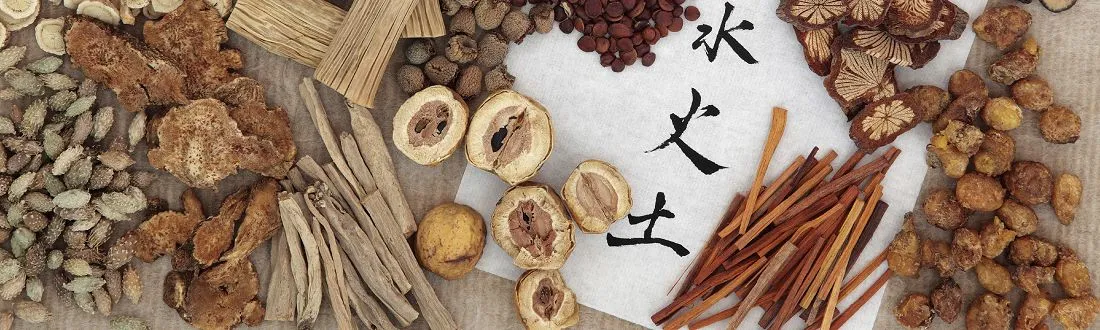
- Yin Chen Hao (Artemisia capillaris herb) — the principal herb (in a very large dose); clears Damp-Heat from the Liver and Gallbladder and has documented hepatoprotective and choleretic actions
- Zhi Zi (Gardenia jasminoides fruit, 3-15g) — clears Heat and promotes elimination of Damp-Heat via urination
- Da Huang (Rheum palmatum root, 1-10g) — clears Heat and purges Damp-Heat from the intestines; assists the elimination of bilirubin
Formula actions
- Clears Heat
- Resolves Dampness
- Reduces jaundice
Conditions treated
- Jaundice from Liver-Gallbladder Damp-Heat — the formula’s classical and primary indication
- Acute and chronic hepatitis with elevated liver enzymes and Damp-Heat pattern
- Non-alcoholic fatty liver disease (NAFLD) — Yin Chen Hao has documented effects on reducing liver fat and inflammation
- Gallbladder conditions including cholecystitis and cholelithiasis with Damp-Heat pattern
- Digestive disorders with prominent Liver-Gallbladder Damp-Heat — nausea, bitter taste, right hypochondriac discomfort
Contraindicated in pregnancy and in Cold-type (yin) jaundice from Yang deficiency. Gallbladder disease should always be assessed by a medical practitioner.
Cautions
Always consult a qualified Chinese herbalist registered with the Register of Chinese Herbal Medicine (RCHM). Online herbal consultations are available. See the prices page for costs.
Prefer to be treated from home? Chinese herbal medicine online consultations are available throughout the UK and worldwide. After a full video consultation, Dr (TCM) Attilio D'Alberto formulates a bespoke herbal prescription and posts your Chinese herbs directly to your door.
References
[12] Zhai X, He Q, Chen M, Yu L, Tong C, Chen Y, et al. Pinellia ternata-containing traditional Chinese medicine combined with 5-HT3RAs for chemotherapy-induced nausea and vomiting: A PRISMA-compliant systematic review and meta-analysis of 22 RCTs. Phytomedicine. 2023 Jul;115:154823. https://doi.org/10.1016/j.phymed.2023.154823. PMID: 37099981.