





Human chorionic gonadotrophin (hCG)
On this page
- What is hCG?
- Where is hCG produced?
- Function of hCG
- Pregnancy tests and hCG
- Normal hCG levels in pregnancy
- hCG doubling time
- Low or slow-rising hCG
- High hCG
- When and how to test hCG
- hCG in traditional Chinese medicine
- Acupuncture and hCG
- Chinese herbal medicine and pregnancy
- My Fertility Guide
- Related pages
1. What is hCG?
Human chorionic gonadotrophin (hCG) is a glycoprotein hormone produced by the trophoblast cells of the embryo as soon as it implants into the uterine wall. hCG is often called "the pregnancy hormone" because it is its presence in the blood and urine that allows pregnancy tests to detect a pregnancy at the earliest stages. Beyond its role as a marker, hCG actively maintains the corpus luteum and its production of progesterone during the early weeks of pregnancy, until the placenta takes over.
Reference ranges vary from country to country and between laboratories. Always interpret your own result against the reference range provided by the laboratory that performed your test.
2. Where is hCG produced?
hCG is produced by the syncytiotrophoblast cells of the developing embryo, which form the outer layer of the placenta. Production begins as soon as the embryo implants into the uterine wall — usually 6–8 days after ovulation — and rises rapidly. Small amounts of hCG are also produced by the pituitary gland in non-pregnant individuals, but at levels too low to be picked up by pregnancy tests.
3. Function of hCG
The main functions of hCG are:
- Maintaining the corpus luteum past its usual 14-day lifespan, so it continues to produce progesterone.
- Supporting the production of oestrogens in early pregnancy.
- Modulating the maternal immune system to tolerate the implanting embryo.
- Supporting the development of the fetal organs in early pregnancy.
4. Pregnancy tests and hCG
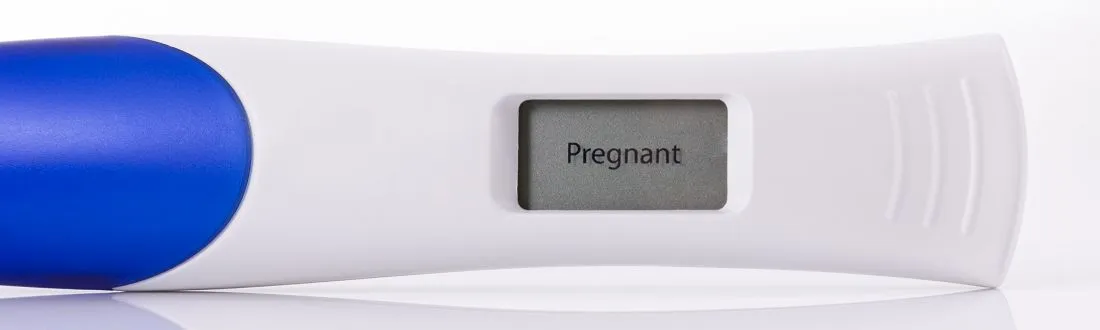
Home urine pregnancy tests detect hCG above approximately 25 mIU/mL — typically reached around 12–14 days after ovulation, equivalent to the date of an expected period or the day after. Blood (serum) hCG tests are more sensitive and can detect levels as low as 1–5 mIU/mL, picking up a pregnancy 8–10 days after ovulation.
A faint line on a urine pregnancy test usually indicates a positive result — hCG is the only hormone that triggers the test, so any visible line, however faint, almost always means pregnancy. Repeat testing 48 hours later or a serum hCG test will give a clearer picture.
5. Normal hCG levels in pregnancy
Typical serum hCG levels in early pregnancy are approximately:
| Weeks from last period | hCG (mIU/mL) |
|---|---|
| 3 | 5–50 |
| 4 | 5–426 |
| 5 | 18–7,340 |
| 6 | 1,080–56,500 |
| 7–8 | 7,650–229,000 |
| 9–12 | 25,700–288,000 |
| 13–16 | 13,300–254,000 |
| 17–24 | 4,060–165,400 |
| 25–term | 3,640–117,000 |
Note the very wide normal ranges. Reference ranges vary from country to country and between laboratories. The trend over 48 hours is more useful than a single value.
6. hCG doubling time
In a healthy early pregnancy, hCG doubles approximately every 48–72 hours up to about 6 weeks. Doubling time slows after this and hCG plateaus around weeks 9–11. A doubling time of less than 48 hours is reassuring; more than 72 hours can indicate a problem with the pregnancy and should prompt closer review.
7. Low or slow-rising hCG
Low or slow-rising hCG can indicate:
- Miscarriage or impending miscarriage.
- Ectopic pregnancy — the embryo implanted outside the uterus, typically in the fallopian tube. hCG often rises slowly or plateaus.
- Inaccurate dating — earlier in pregnancy than thought.
- Chemical pregnancy — very early pregnancy loss before ultrasound can confirm a sac.
Slow-rising hCG should always prompt urgent medical assessment, particularly to exclude ectopic pregnancy.
8. High hCG
High hCG can indicate:
- Multiple pregnancy — twins, triplets etc. produce more hCG.
- Inaccurate dating — further along in pregnancy than thought.
- Molar pregnancy — a rare condition in which abnormal placental tissue develops without a viable embryo.
- Some forms of cancer — particularly trophoblastic disease and some germ cell tumours.
9. When and how to test hCG
Home urine tests are usually the first test, performed from the day of expected period or shortly after. Serum hCG tests are used by fertility clinics, in IVF, and in early pregnancy where confirmation or trend monitoring is needed. Two tests 48 hours apart give a much more reliable picture than a single value.
Reference ranges vary from country to country. Always interpret your own result against the laboratory's reference range and discuss it with your doctor or fertility specialist.
10. hCG in traditional Chinese medicine
In traditional Chinese medicine, hCG is the western marker for what TCM understands as the "fixing" of pregnancy — the embedding of the embryo in the Bao Mai (uterine vessels) and the establishment of the new yang life. A strong rise in hCG corresponds to strong Kidney Yang and Spleen Qi supporting the implanting embryo. Slow-rising hCG corresponds to deficiency of Kidney essence, Spleen Qi or Blood and may benefit from supportive treatment.
11. Acupuncture and hCG
Acupuncture supports a healthy early pregnancy by improving blood flow to the uterus, regulating the maternal immune system to tolerate the embryo, supporting progesterone production, and reducing stress. I recommend acupuncture treatment throughout the first trimester for women with a history of miscarriage or low/slow-rising hCG, ideally continuing to 20 weeks.
12. Chinese herbal medicine and pregnancy
Chinese herbal medicine has a long tradition of supporting early pregnancy. Specific pregnancy-safe formulae such as Tai Shan Pan Shi San, Shou Tai Wan and Bao Tai Zi Sheng Wan are used to nourish the Kidney essence, support the Spleen and stabilise the pregnancy. Treatment must always be supervised by a qualified Chinese herbalist familiar with pregnancy contraindications.
13. My Fertility Guide
My Fertility Guide by Dr (TCM) Attilio D’Alberto is a comprehensive, evidence-based guide to natural conception, based on over 350 peer-reviewed research studies and 25 years of clinical experience. It blends cutting-edge science with the proven theories of traditional Chinese medicine to give you a complete, practical and easy-to-understand resource for improving your fertility.
The book covers the menstrual cycle and how to identify your fertile window, how to improve egg quality and sperm quality, optimising your diet, lifestyle and environment for conception, evidence-based supplements for both men and women, the most common fertility conditions including PCOS, endometriosis and low AMH, and the role of acupuncture and Chinese herbal medicine in improving fertility outcomes. Available in paperback, Kindle and ebook from Amazon, Waterstones and all major bookshops.
Once you conceive — My Pregnancy Guide by Dr (TCM) Attilio D’Alberto is the companion week-by-week guide to a healthy pregnancy and labour, combining evidence-based medicine with traditional Chinese medicine.















