

Acupuncture needles: types, sizes and safety
The needle most people picture when they think of acupuncture — a single, hair-thin, solid pin — is only one of several tools a Chinese medicine practitioner may use. The everyday filiform needle does the great majority of the work, but the tradition also includes tapping needles, pricking needles and tiny press needles, each shaped for a different job. This page explains the main types of acupuncture needle, what they are made of, how their sizes are described, and the single-use sterile standards that make modern needling safe.
On this page
- What an acupuncture needle is
- The filiform needle (hao zhen)
- Needle sizes: gauge and length
- Other traditional needle types
- Modern and regional variations
- What acupuncture needles are made of
- Single-use, sterile and safe
- How I choose the needle in practice
- Frequently asked questions
- Related pages
1. What an acupuncture needle is
An acupuncture needle is a solid, extremely fine, flexible pin — and that word "solid" is the single most important thing to understand about it. Unlike the hollow hypodermic needle used for injections and blood tests, an acupuncture needle has no bore and delivers nothing into the body. Nothing is injected and nothing is withdrawn; the needle simply passes through the skin to a precise depth and is a fraction of the thickness of an injection needle. This is why acupuncture feels nothing like an injection, and why most people are surprised at how little there is to feel.
The needles used in a modern UK clinic are pre-sterilised, individually packaged and single-use. After treatment each needle is placed straight into a sharps bin and never reused. The days of re-sterilised needles are long gone in British practice.
2. The filiform needle (hao zhen)
The filiform needle — hao zhen (毫针), literally "fine hair needle" — is the workhorse of acupuncture and the needle almost everyone means when they say "an acupuncture needle". It has three parts:
- The handle — usually a coil of wound wire (copper, or steel) or a moulded plastic grip, which the practitioner holds and, on some needles, uses to apply gentle rotation or warmth.
- The shaft — the fine, smooth, flexible body of the needle that enters the skin, made of stainless steel.
- The tip — a very slightly rounded, highly polished point that separates the tissue rather than cutting it, which is part of why insertion is so comfortable.
Most filiform needles today come with a guide tube — a small plastic or metal tube that holds the needle steady and allows a quick, light tap to pass the tip painlessly through the surface of the skin. This guide-tube method was popularised through Japanese acupuncture and is now used almost universally.
3. Needle sizes: gauge and length
Acupuncture needles are described by two measurements, diameter and length, and a practitioner chooses both to suit the area of the body, the depth of the point and the individual patient.
Diameter (gauge)
The diameter of the shaft typically ranges from about 0.16mm to 0.35mm. To put that in perspective, a fine acupuncture needle is roughly the thickness of a human hair, and several would fit inside the bore of a standard injection needle. Finer needles (0.16–0.20mm) are used on delicate areas such as the face and on sensitive patients; slightly thicker needles (0.25–0.30mm) are used where a stronger sensation or a firmer needle is wanted, such as large muscles of the back and limbs.
Length
Common lengths run from about 15mm to 75mm, though only a portion of the needle is usually inserted. Short needles suit shallow points on the face, hands and feet; longer needles reach points in thick muscle such as the buttock or thigh. Length is chosen so the point can be reached comfortably and safely, never so that the whole needle is buried.
4. Other traditional needle types
Beyond the filiform needle, classical Chinese medicine developed a small family of specialised needles, several of which remain in use:
Seven-star and plum-blossom needle (mei hua zhen)
These are dermal (skin) needles: a small hammer or pen-like handle tipped with a cluster of short needles — five in the "plum-blossom" and seven in the "seven-star". They are tapped lightly and repeatedly over an area of skin rather than inserted, giving a superficial stimulation used over regions rather than single points. They are applied to the scalp, along the spine and over areas of skin, and are always single-use.
Three-edged needle (san leng zhen)
A short, sturdy needle with a three-sided cutting point, used for a quick, shallow prick to release a drop or two of blood from a fingertip, a small vein or an acupuncture point — the technique of "bloodletting" or pricking, used in TCM for certain heat and stasis patterns. It is a specialist technique used sparingly, under strict hygiene, and always with a single-use needle.
Intradermal and press needles
These are very small needles designed to stay in place for a period of time. A tiny press needle mounted on an adhesive patch may be left in an ear or body point for a few days to give gentle continuous stimulation between treatments. Ear (auricular) press needles are the classic example — see auricular acupuncture. The non-needle version of the same idea, ear seeds, uses a small seed or metal bead on a plaster instead of a needle.
The nine classical needles
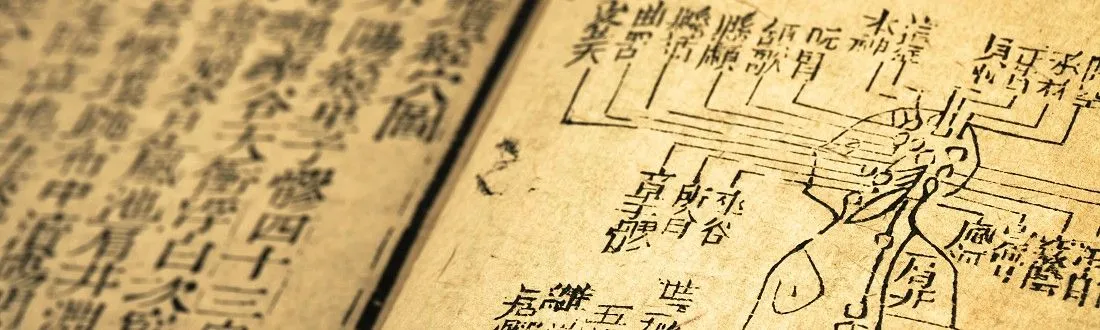
The foundational text of Chinese medicine, the Huangdi Neijing, described nine ancient needles of different shapes — including arrow-headed, round, blunt-pressure and lance-shaped forms — each for a different purpose, from superficial stroking to lancing. Most are of historical interest today, but they are the ancestors of the modern filiform, dermal and three-edged needles.
5. Modern and regional variations
The same basic filiform needle is used within several different styles and techniques:
- Japanese acupuncture tends to use the very finest needles inserted shallowly, often with guide tubes and a gentle technique.
- Electroacupuncture uses ordinary filiform needles connected to a small device that passes a mild electrical current between them for stronger, sustained stimulation.
- Dry needling uses the same solid acupuncture needle, applied to myofascial trigger points within a Western musculoskeletal framework rather than a TCM one.
- Scalp and auricular needles are simply short filiform needles selected for those specialised maps of points on the head and ear.
In every case the needle itself is the familiar fine, solid filiform pin — what changes is where it is placed and how it is stimulated.
6. What acupuncture needles are made of
Modern acupuncture needles are made almost entirely of surgical stainless steel, which is strong, flexible, corrosion-resistant and holds a fine polished point. The shaft is often given a very thin medical-grade silicone coating so that it passes through the skin smoothly. Handles are usually wound copper or steel wire, or moulded plastic. Historically needles were also made of gold and silver, and a few practitioners still use gold or silver needles for particular techniques, but stainless steel is the standard everywhere today. Every needle is manufactured to a medical-device standard, sterile-packed and marked accordingly.
7. Single-use, sterile and safe
In the UK, acupuncture needles are regulated as medical devices. Reputable needles are pre-sterilised, individually sealed, CE-marked and single-use. A responsible practitioner opens a fresh needle in front of you, uses it once, and disposes of it directly into a sharps bin as clinical waste. This single-use standard, together with clean-technique training, is what makes modern needling very low-risk. Acupuncture is generally very safe when performed by a qualified practitioner; the common side effects are minor and short-lived, such as a little bruising or tiredness. For a full and honest account, see acupuncture safety and side effects. In the UK, choosing a practitioner registered with the British Acupuncture Council ensures they are trained to these hygiene and safety standards.
8. How I choose the needle in practice
In my clinic the choice of needle is part of the treatment, not an afterthought. I match the diameter and length to the point being used, the build and sensitivity of the patient, and the effect I am aiming for — a very fine, short needle for a facial point or a nervous first-timer, a slightly firmer needle for a deep point in a large muscle, and press needles or ear seeds where I want a gentle effect to continue between sessions. Part of the skill of acupuncture, after more than 25 years of practice, is selecting and handling the right needle so that treatment is both comfortable and effective.
9. Frequently asked questions
Do acupuncture needles hurt?
Most people are surprised by how little there is to feel. Because the needles are so fine and solid with a polished tip, insertion is usually painless or close to it. Once the needle is in place you may feel a dull, heavy or tingling sensation at the point — called de qi — which is a normal part of the treatment, not pain.
Are acupuncture needles hollow like injection needles?
No. Acupuncture needles are solid, with no bore. Nothing is injected or drawn out. This is the key difference from a hypodermic (injection) needle, and it is why acupuncture feels completely different from an injection or blood test.
How thin is an acupuncture needle?
Typically between 0.16mm and 0.35mm across — roughly the thickness of a human hair. Several acupuncture needles would fit inside the hollow of a standard injection needle.
Are acupuncture needles reused?
Not in reputable modern practice. Needles are single-use, pre-sterilised and individually packaged; each is used once and then disposed of in a sharps bin. They are never reused on the same or another patient.
What are acupuncture needles made of?
Almost always surgical stainless steel, usually with a fine silicone coating for smooth insertion and a wound-wire or plastic handle. Gold and silver needles exist and are occasionally used for specific techniques, but stainless steel is the standard.
What is the difference between an acupuncture needle and the needle used for injections?
An injection needle is hollow, comparatively thick and delivers a substance into the body. An acupuncture needle is solid, many times finer, and delivers nothing — it simply stimulates a point. The two are entirely different tools.















