


Vietnamese Acupuncture
By Dr (TCM) Attilio D'Alberto | Traditional Chinese Medicine Practitioner, Wokingham
Vietnamese acupuncture (châm cứu) is a regional tradition with roots in classical Chinese medicine that has developed distinctive techniques over many centuries, including a uniquely Vietnamese system called Diện Chẩn — multi-reflex facial therapy — developed in the 1980s and now practised internationally. Most Vietnamese practitioners work within a framework very similar to TCM acupuncture but with a strong cultural and clinical identity of its own.
Acupuncture has been practised in Vietnam for over two thousand years. Vietnam shares its core medical theory with China but the long history of independent practice, integration with Buddhist medicine and innovation by leading Vietnamese physicians has produced a recognisable tradition.
On this page
- What is Vietnamese acupuncture?
- A brief history
- Diện Chẩn — multi-reflex facial therapy
- Châm cứu — classical Vietnamese needling
- Vietnamese vs TCM acupuncture — the differences
- Who does Vietnamese acupuncture suit?
- Vietnamese acupuncture in Wokingham
- FAQs
1. What is Vietnamese acupuncture?
Vietnamese acupuncture is the umbrella term for the styles of acupuncture practised in Vietnam. The mainstream of practice (châm cứu) is closely related to Chinese medicine and uses the same channels, points and pattern-based diagnosis. Alongside this, Vietnam has developed two unique microsystems: Diện Chẩn (facial reflexology) and a strong tradition of moxibustion that often takes the lead over needling.
Two figures shaped twentieth-century Vietnamese acupuncture internationally: Dr Nguyễn Văn Nghi, who systematised the Vietnamese reading of the classics in French-language texts that became standard references, and Professor Bùi Quốc Châu, who developed Diện Chẩn in 1980.
2. A brief history
Acupuncture arrived in Vietnam via China during the period of Chinese rule (111 BC to 939 AD) and continued to develop after Vietnamese independence. By the time of the Hồng Đức Code of the fifteenth century, medical practice including acupuncture was already a regulated profession. The two great names of pre-modern Vietnamese medicine — Tuệ Tĩnh (fourteenth century) and Hải Thượng Lãn Ông (eighteenth century) — produced massive medical works that integrated Chinese theory with native Vietnamese herbs and clinical practice.
In the twentieth century, French colonial influence brought Vietnamese physicians into contact with Western biomedicine, and figures such as Nguyễn Văn Nghi worked to make the Vietnamese classical tradition available to French and European readers. After 1980, the development of Diện Chẩn by Professor Bùi Quốc Châu gave Vietnam its own internationally recognised contribution to modern East Asian medicine.
3. Diện Chẩn — multi-reflex facial therapy
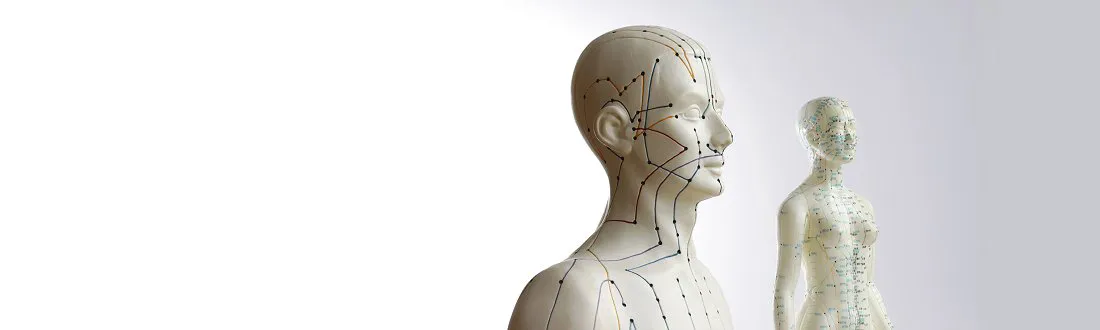
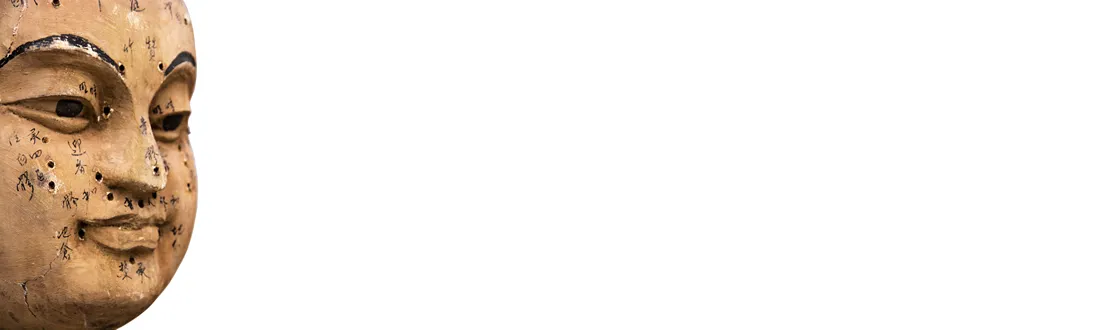
Diện Chẩn (sometimes called Vietnamese Multi-Reflexology or Face Diagnosis-Cybernetic Therapy) is a face-based reflex system in which specific zones and points on the face correspond to the body's organs and structures. Unlike traditional acupuncture, Diện ChẀn does not insert needles — it stimulates points using small instruments such as rollers, hammers, brushes, scrapers, the heat from a moxa stick, or simply the fingers. It can be self-administered, which has made it popular as a home-care tool.
The system identifies several hundred reflex points and a number of large reflex maps overlaying the face. Diện Chẩn is widely taught in France, Brazil and Spain as well as Vietnam, and is generally used as a complement to other treatment rather than as a stand-alone medical system.
4. Châm cứu — classical Vietnamese needling
Châm cứu (literally “needle and moxa”) is the mainstream of Vietnamese clinical practice. It uses the same meridians, points, pattern diagnosis and therapeutic principles as Chinese medicine, but moxibustion is generally given more weight than in modern Chinese clinics. Many treatments combine fine-needle insertion with direct or indirect moxibustion on the same points.
Vietnamese practitioners trained in the classical tradition tend to use needling techniques that are intermediate between Chinese and Japanese styles — not as deep or strongly stimulated as some Chinese-style needling, but more invasive than Japanese contact needling.
5. Vietnamese vs TCM acupuncture — the differences
- Shared theory — Both use the same channels, points and pattern differentiation framework.
- Moxibustion — Vietnamese practice gives moxa more clinical weight; needling and moxa are routinely paired.
- Microsystems — Vietnam contributed Diện Chẩn (facial multi-reflexology) as a distinct microsystem.
- Herbal medicine — Vietnamese herbalism (Đông y) draws on native plants alongside Chinese herbs; many formulas have a Vietnamese identity.
- Influence of French biomedicine — Twentieth-century Vietnamese acupuncture absorbed Western anatomy and physiology earlier than mainstream Chinese practice.
6. Who does Vietnamese acupuncture suit?
- Patients of Vietnamese heritage looking for treatment within their cultural tradition.
- Patients interested in self-care via Diện Chẩn-style facial reflexology between sessions.
- Patients who respond particularly well to moxibustion alongside needling.
- Patients with cold-pattern conditions (where moxa is particularly indicated).
7. Vietnamese acupuncture in Wokingham
My own training is primarily in TCM acupuncture and Chinese herbal medicine. The classical TCM approach overlaps closely with mainstream Vietnamese châm cứu, and I make extensive use of moxibustion alongside needling when the pattern calls for it. If you are specifically looking for Diện Chẩn facial reflexology, you should seek a practitioner trained directly in that system.
To discuss whether a TCM-led approach with moxibustion suits you, contact me at my Wokingham clinic.
8. FAQs
How is Vietnamese acupuncture different from Chinese acupuncture?
The theoretical framework is essentially the same. The differences are in clinical emphasis: Vietnamese practice gives moxibustion a more central role, has its own herbal tradition (Đông y), and has produced Diện Chẩn as a distinct facial reflex microsystem.
What is Diện Chẩn?
Diện Chẩn (or Dien Chan) is a Vietnamese reflex therapy in which zones and points on the face correspond to parts of the body. It is stimulated with rollers, hammers, brushes and heat rather than with inserted needles, and is often used as a self-care tool.
Does Vietnamese acupuncture use the same points as Chinese acupuncture?
Yes — mainstream Vietnamese châm cứu uses the same meridians and points as Chinese medicine. The Diện Chẩn microsystem uses its own facial points in addition.
Is Diện ChẀn recognised medical treatment?
Diện Chẩn is taught and practised internationally but is not regulated as medical treatment in the UK. It is generally used as a self-care or adjunctive technique rather than as a stand-alone medical therapy.
Where can I learn Diện Chẩn?
Courses are taught internationally, including in the UK and Europe. The official Diện Chẩn / Multireflexology school in France maintains a teacher directory.
To discuss a treatment approach that suits you, contact me or book a consultation at my Wokingham clinic.
Related reading: About acupuncture | Japanese acupuncture | Moxibustion | Traditional Chinese medicine















