




Concepts of Chinese Medicine
On this page
- History
- Diagnostic procedures
- Treatment strategies
- Formulation of herbal prescriptions
- Evaluation of safety
- Appendix: Five Phases correspondence table
History
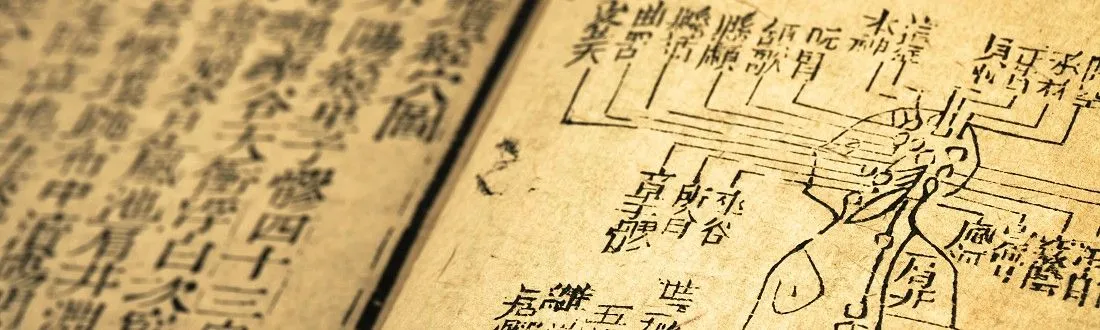
The history of Chinese medicine dates back thousands of years and is clouded in an ancient culture, which has survived time, religion, politics and war. One of the most important shifts in theory came from the transcendental texts of the I Ching. It was from there that the theories of Qi movement within nature derived: the theory of Yin and Yang. This theory represents the duality of our universe — water and fire, descending and rising, contraction and expansion — where Yin and Yang are in a constant state of dynamic transformation, interplay and balance. It is a philosophical concept in constant flux: never fixed, but in a state of continuous mutual change, consumption and support.
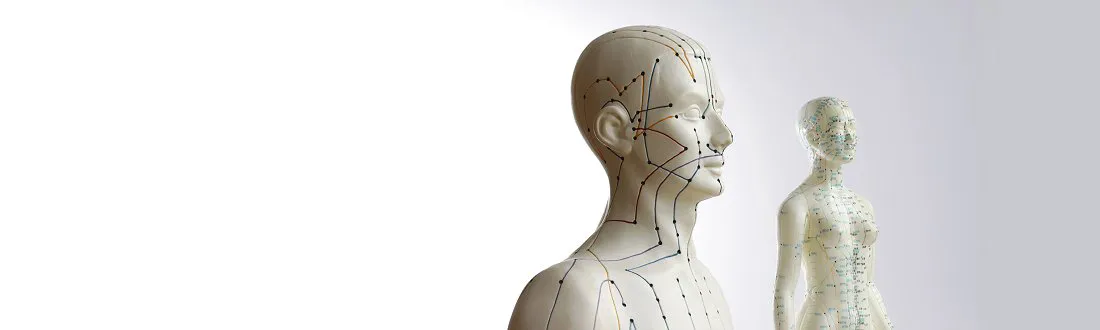
Chinese medicine has been more notably concerned with the nature of the cosmos in relationship to the human being. In ancient China, medicine changed its explanations of disease and healing from a transcendental basis to one in which the natural elements were governed within the law of the cosmos. It is not surprising that there are twelve major meridian channels which correspond to the months in a year, and the 365 acupuncture points which relate to the number of days in a year.
The first written text, the Huang Di Nei Jing Su Wen, first appeared around 200 BCE. Chinese theory was orientated greatly and politically with the shifting of views from Daoism to Confucianism to Buddhism to Communism. However, at the heart of this continual adaptation to its social, cultural, religious and political surroundings lie four major classical texts:
- Huang Di Nei Jing Su Wen (Yellow Emperor’s Classic of Medicine)
- Shen Nong Ben Cao (Divine Husbandman’s Materia Medica)
- Nan Jing (Canon of Problems)
- Shang Han Lun (Treatise on Cold-Damage Disorders)
Herbal medicine, acupuncture, gua sha, moxibustion and cupping make up the healing system of Chinese medicine. The literature discussing these different styles is vast and out of the scope of this paper; the focus here is restricted to Chinese herbal medicine.
Diagnostic procedures
A patient’s signs and symptoms are broken down and categorised into a pattern differentiation (Bianzheng). This allows the physician to understand which organ(s) are disharmonised, the pattern and movement of the disharmony from one organ to another, and its origin.
The internal organs are divided according to Yin and Yang. The hollow, empty organs (Fu) are Yang — Large Intestine, Urinary Bladder, Gallbladder, Stomach and Small Intestine — whilst the full (Zang) organs are Yin: the Heart, Liver, Spleen, Lung and Kidney. Together they are known as the Zangfu. Each Yin organ is paired with a Yang organ.
Disease pathology is categorised according to Wu Xing (Five Phase theory): metal, water, wood, fire and earth. Each Zangfu presents not only a phase, but also a colour, emotion, animal, planet, season etc. (see the table at the bottom of this page).
The Five Phases is one of the most important theories in Chinese medicine. It forms the cornerstone of Zangfu interaction. For example, the Heart is Fire and generates Earth, the Spleen. Earth in turn generates Metal, the Lung — thus the Spleen is the mother of the Lung as well as being the son of the Heart. Within Five Phase theory is also the controlling sequence (Water controls Fire, Fire controls Metal, Metal controls Wood etc.) and the insulting sequence, where the controlling sequence is reversed.
A patient’s signs and symptoms correspond to identifiable patterns. These illustrate a particular organ disharmony as well as the nature of the disharmony, falling within one of the eight principles: organ Yin or Yang aspect, Xu (deficiency/emptiness) or Shi (excess/fullness), Nei (interior) or Wai (exterior), and Re (hot) or Han (cold). Chinese medicine focuses chiefly on the differences of the pathogenesis — that being the syndrome rather than the disease itself. From there a treatment strategy (Lunzhi) is used to treat either the branch (Biao, often the presenting symptoms) or the root (Ben) cause, or both.
A number of pathogenic factors cause or trigger disease: extremes in the environment, when the six normal climatic conditions (Feng-Wind, Re-Heat, Han-Cold, Shi-Damp, Shu-Summerheat and Zao-Dryness) transform into the Liu Xie (Six Climatic Evils). Chinese medicine also recognises other pathogenic factors, including Du (toxins), Dieda (trauma), Chong (parasites), Wen Bing (febrile diseases) and Li (pestilence). Lifestyle factors also play an important role in the formation of disharmony: diet, sexual activity, exercise and emotions.
Treatment strategies
The Huang Di Nei Jing Su Wen was the first text to record the treatment strategies used in Chinese herbal medicine. It wasn’t until the Qing (1644–1911) dynasty that the physician Cheng Zhong-Ling organised and categorised the eight basic strategies known as the Yimen Bafa (Eight Methods in Therapy) and recorded them in the classical text Yixue Xinwu (Medical Revelations). The eight strategies are:
- Han Fa (Sweating) — induces perspiration to regulate Lung Qi, facilitating interaction between the Ying (Nutritive) and Wei (Protective) Qi and allowing for the release of pathogens from the exterior of the body. Used in Wind-Heat or Cold patterns.
- Tu Fa (Vomiting) — rarely used today except in acute Neishi (interior excess) conditions or emergencies. Its violent action injures Yin and the stomach and should only be used in patients with a strong constitution.
- Xia Fa (Draining downward, purgation, diuresis) — induces defecation to purge the bowels by stimulating the intestines to treat Neishi conditions, e.g. to drain heat and move stools, warm Yang and guide out accumulation, moisten the intestines, or drive out excessive water.
- He Fa (Harmonising) — expels pathogenic factors and tonifies the Zheng Qi. Used to harmonise the Shao Yang when the pathogen lays halfway between exterior and interior, or to harmonise Zangfu organs that are affected simultaneously. Also used for complex hot-cold combinations or emptiness-with-fullness.
- Wen Fa (Warming) — warms the Yang. Used to eliminate pathogenic cold of both excess and deficiency type, either interior or exterior. For example, to warm the channels and disperse cold, restore devastated Yang, or warm the menses.
- Qing Fa (Clearing) — clears heat. Used for febrile diseases and heat patterns of the interior.
- Xie Fa (Draining, reducing) — drains and reduces excess pathogens.
- Bu Fa (Reinforcing, tonifying) — supplements deficiency by tonifying Qi, Blood, Yin or Yang.
For an in-depth treatment of these strategies as they apply to herbal formulary, see my companion paper A discussion of the Eight Strategies (Ba Fa) from the aspect of herbal formulary.
Formulation of herbal prescriptions
Once a pattern differentiation has been concluded and an appropriate treatment plan formulated, the practitioner must select from the vast array of individual herbs and herbal formulas to create a balanced prescription to meet the unique needs of the patient.
Herbal formulas are strong, fast-acting and can be modified to meet any requirements. They are the preferred method of choice for most practitioners. Powders, pills and tablets are easier to administer but are weaker and cannot be modified as easily. All formulas use a hierarchy that divides up the importance of each herb and its relevant function:
- The emperor (king or chief) has the greatest effect upon the principal pattern or disease.
- The minister (deputy) aids the emperor and treats coexisting symptoms.
- The assistant reinforces the emperor and minister, treats less important coexisting symptoms and moderates any adverse effects.
- The envoy (messenger, guide) guides the formula to a particular channel and harmonises the other ingredients.
Herbal formulas are made up of herbs, minerals and animal products. Individual medicines have actions, indications, contraindications and dosages, plus more characteristics than formulas: five different tastes (acrid, sweet, bitter, sour, salty — and bland), properties (hot, cold, warm, cool and neutral), antagonist and agonist effects, and Zangfu channel aspects. There are over 5,000 different individual medicines. They can be made up of root, bark, leaf, flower, fruit, peel, sap, resin or combinations.
Evaluation of safety
The safety of herbal medicine has been controversial in recent years. Some notable bans have been placed upon certain herbs. This has arisen chiefly from unqualified persons selling Chinese herbs in various forms on the open market without the use of Chinese theory, diagnostics or treatment strategies. As statutory regulation sweeps through many countries, the standards of herbal medicine shall improve, placing restrictions on those prescribing herbs. As this happens, calls for the reintroduction of banned herbs can begin.
Other issues of safety include the efficacy of individual medicines and those of formulas. As each formula is tailor-made to the exact needs of the patient’s disharmony, it does not allow itself to be effectively tested using the standard research protocols of randomised controlled trials (RCTs). In certain instances, where standard formulas in pill form treat specific disorders, tests can be conducted. Researchers test a formula’s effectiveness without including the theories of Chinese medicine. For example, in allopathic medicine a headache is treated using a common analgesic. In Chinese medicine, headaches are categorised into ten different syndromes, each with a unique diagnosis, treatment strategy and corresponding formula. The inclusion and exclusion criteria set in all RCTs do not take these further categorisations into account, so results end up being muddled and flawed.
Conclusion
Chinese medicine is as vibrant and useful today in our multicultural society as it was thousands of years ago in ancient China. For those interested in Chinese medicine’s theories, a good place to start is the book The Web that has no Weaver: Understanding Chinese Medicine by Ted Kaptchuk (2000).
Appendix: Five Phases correspondence table
| Element | Wood | Fire | Earth | Metal | Water |
|---|---|---|---|---|---|
| Season | Spring | Summer | Late Summer | Autumn | Winter |
| Direction | East | South | Centre | West | North |
| Colour | Green | Red | Yellow | White | Black/Blue |
| Taste | Sour | Bitter | Sweet | Pungent | Salty |
| Climate | Wind | Heat | Dampness | Dryness | Cold |
| Yin-Yang | Lesser Yang | Utmost Yang | Centre | Lesser Yin | Utmost Yin |
| Zang (Yin organ) | Liver | Heart | Spleen | Lungs | Kidneys |
| Fu (Yang organ) | Gallbladder | Small Intestine | Stomach | Large Intestine | Bladder |
| Emotion | Anger | Joy | Pensiveness | Grief | Fear |
| Spirit | Hun (Ethereal Soul) | Shen (Mind) | Yi (Intellect) | Po (Corporeal Soul) | Zhi (Will) |
| Sense organ | Eyes | Tongue | Mouth | Nose | Ears |
| Sense | Sight | Speech | Taste | Smell | Hearing |
| Tissue | Sinews | Vessels | Flesh, muscles | Skin, pores | Bones, teeth, marrow |















