



Traditional Chinese Medicine for Weight Loss
By Dr (TCM) Attilio D'Alberto | Traditional Chinese Medicine Practitioner, Wokingham
Chinese medicine helps weight loss by treating the underlying TCM patterns — phlegm-dampness, Spleen Qi deficiency, Liver Qi stagnation and Kidney Yang deficiency — that make weight loss difficult. Meta-analyses show acupuncture adds roughly 1–3 kg of additional loss versus diet and exercise alone over 8–12 weeks. Ear (auricular) acupuncture, Chinese herbs and food therapy work best alongside sustained dietary change, and can be combined safely with GLP-1 medication or metformin.
Weight management is one of the most common reasons people walk into my Wokingham clinic — usually after years of trying everything: low-carb, low-fat, intermittent fasting, calorie counting, gym memberships, weight-loss apps and now GLP-1 medications. The honest truth is that traditional Chinese medicine is not a quick-fix weight loss system, and any practitioner who promises magical results from acupuncture alone is overstating what we can do. What TCM is genuinely effective at is addressing the underlying metabolic, hormonal, digestive and emotional patterns that make weight loss difficult — and in doing so making dietary and lifestyle changes more effective and sustainable. The most common patterns I see are phlegm-dampness, Spleen qi deficiency, Liver qi stagnation and Kidney yang deficiency — each producing a different body shape, weight pattern and treatment plan.
On this page
- The TCM view of weight
- TCM patterns and what they look like
- Hormonal contributors
- A realistic assessment
- Diet — the foundation
- Supplements with evidence
- Acupuncture
- Ear acupuncture (auricular)
- Chinese herbal medicine
- Exercise
- Sleep, stress and the cortisol picture
- Combining with GLP-1, metformin and other medications
- Realistic timeline
- FAQs
The TCM view of weight
In Chinese medicine, healthy weight depends on the Spleen's ability to transform food and fluids into clean qi and blood. When the Spleen is weak — whether from constitutional weakness, chronic stress, cold/raw food intake, or poor diet — food doesn't get properly metabolised. Instead it accumulates as damp (water, fluid retention) and phlegm (denser accumulation, including fat). This corresponds in modern terms to insulin resistance, fatty liver, fluid retention and adipose tissue accumulation. Different organ patterns produce characteristic body shapes:
TCM patterns and what they look like
- Spleen qi deficiency with phlegm-damp — soft, doughy weight; particularly around the middle and hips; bloating after eating; sugar cravings; sluggish digestion; loose stools; pale tongue with thick coat; tongue teethmarks. The most common modern pattern.
- Liver qi stagnation — stress-related weight gain particularly around the middle and breasts; emotional eating; PMS-driven cravings; cycle of stress/eat/regret. Often coexists with phlegm-damp.
- Kidney yang deficiency — cold, sluggish metabolism; fluid retention; weight around lower abdomen, hips and thighs; cold extremities; low BBT; subclinical hypothyroidism picture.
- Damp-heat — heavier, denser weight with high inflammation; oily skin and acne; metabolic syndrome picture; fatty liver; insulin resistance.
- Stomach heat — large appetite that's never satisfied; constant hunger; weight increase from overeating despite trying to control intake.
- Heart-Spleen deficiency — anxious-eating pattern; sugar cravings driven by low mood; postnatal weight retention.
- Mixed — most patients present with combinations.
Hormonal contributors
- Insulin resistance — the dominant driver in most weight-gain cases.
- PCOS — insulin resistance + androgen excess; weight around the middle; resistant to weight loss.
- Hypothyroidism / subclinical hypothyroidism — slows metabolism.
- Perimenopause and menopause — oestrogen decline shifts fat to abdomen; sleep disruption worsens weight.
- High cortisol — chronic stress; abdominal fat; sleep disruption; insulin resistance.
- Low testosterone in men — reduces muscle mass, increases fat.
- Leptin resistance — common in obesity; reduces satiety.
- Disrupted ghrelin — increases hunger.
- Fatty liver (NAFLD) — both consequence and cause of weight issues.
- Sleep deprivation — directly increases hunger, reduces satiety, raises cortisol.
- Some medications — antidepressants (particularly mirtazapine, paroxetine, olanzapine), insulin, steroids, gabapentinoids, beta-blockers.
A realistic assessment
- Baseline tests: TSH, free T4, free T3, HbA1c, fasting insulin, fasting glucose, HOMA-IR, lipids, LFTs, liver ultrasound (for fatty liver), vitamin D, B12, ferritin.
- For women: AMH, cycle hormones, sex hormones if PCOS or perimenopause suspected.
- For men: total and free testosterone, SHBG.
- Address insulin resistance, thyroid, fatty liver, PCOS as identified.
- Identify patterns of disordered eating that need psychological support.
- Be realistic about timeframes: sustainable weight loss is 0.5-1 kg per week; faster is mostly water and lean mass.
- Set non-scale goals: energy, sleep, mood, blood markers, fitness, clothing fit.
Diet — the foundation
The diet is more important than any supplement, herb or acupuncture session. Principles:
- Reduce ultra-processed food and refined carbohydrates — biggest single intervention.
- Build meals around protein and healthy fats — eggs, fish, meat, beans, nuts, olive oil, avocado.
- Adequate protein — 1.5-2 g/kg/day; supports satiety, lean mass, metabolism.
- Plenty of vegetables at every meal — fibre and satiety.
- Time-restricted eating (12-14 h overnight fast) — improves insulin sensitivity for many.
- Reduce added sugar — particularly sugary drinks.
- Reduce alcohol — high in empty calories; affects sleep, hormones and liver.
- Mediterranean-style diet pattern — best long-term evidence.
- For phlegm-damp types specifically — reduce dairy, wheat, refined sugar, alcohol, cold/raw food. These all worsen damp accumulation in TCM.
- Damp-draining foods (TCM) — barley, adzuki beans, mung beans, Yi Yi Ren (Job's tears), bitter greens, daikon radish, pearl barley.
- Warm cooked foods over cold raw — supports digestion in Spleen-deficient types.
- Eat slowly, sit down to eat, chew thoroughly — supports satiety signalling.
- Don't skip meals or graze constantly — both disrupt insulin signalling.
- Hydrate properly — 2 litres of water daily; thirst is often mistaken for hunger.
Supplements with evidence
- Inositol 4 g + 100 mg d-chiro — improves insulin sensitivity; particularly useful in PCOS-pattern weight gain.
- Berberine 500 mg twice daily — comparable effect to metformin on insulin and weight.
- Vitamin D3 — deficiency associated with worse weight outcomes.
- Magnesium glycinate — supports stress regulation and insulin sensitivity.
- Omega-3 (EPA/DHA, 1-2 g) — anti-inflammatory; modest fat-loss support.
- Chromium picolinate 200 mcg — small effect on insulin sensitivity.
- Green tea extract (EGCG) — modest thermogenic effect.
- L-carnitine 1-2 g — supports fat metabolism in deficiency states.
- Probiotic with Lactobacillus gasseri or Akkermansia — emerging evidence for weight management.
- NAC 600-1,200 mg — supports liver function and insulin sensitivity.
- Selenium 100-200 mcg — supports thyroid function.
- Iodine — supports thyroid; only with confirmed need.
- Adaptogens (ashwagandha, rhodiola) — for stress-driven weight gain.
Acupuncture
Meta-analyses of acupuncture for weight loss show modest but real benefit — roughly 1-3 kg additional loss compared with diet and exercise alone over 8-12 weeks. Mechanisms include:
- Modulation of hypothalamic appetite centres.
- Effects on ghrelin (hunger) and leptin (satiety).
- Improved insulin sensitivity.
- Reduced cortisol and stress eating.
- Better sleep, which independently supports weight loss.
- Reduced bloating and improved digestion.
- HPA axis regulation.
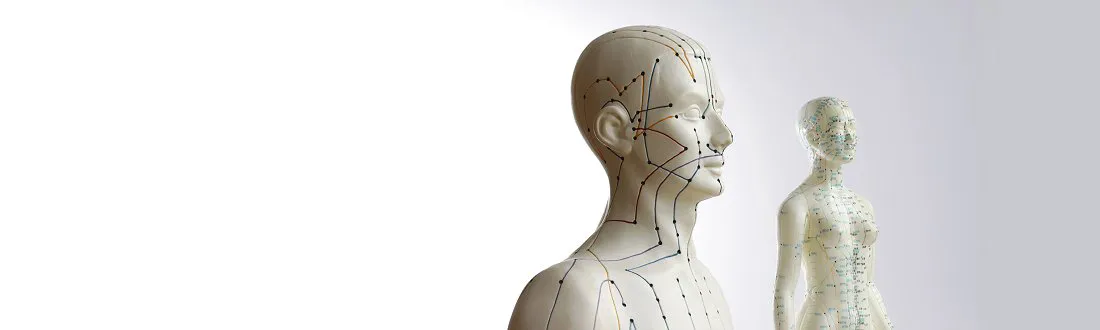
Typical points: ST 36, ST 25, ST 40, SP 6, SP 9, CV 12, CV 6, LR 3, LI 4, BL 23, with electroacupuncture across abdominal points often added. Treatment weekly for 8-12 weeks, then monthly maintenance.
Ear acupuncture (auricular)
Auricular acupuncture is widely used as an adjunct for appetite control. Specific ear points:
- Shen Men — calms the spirit; reduces stress eating.
- Stomach — appetite regulation.
- Mouth — reduces oral cravings.
- Endocrine — hormonal balance.
- Hunger point — appetite suppression.
- Sympathetic / Subcortex — stress modulation.
Often used with ear seeds (small adhesive seeds taped to ear points) that the patient presses 3-4 times daily and before meals to extend the effect between sessions.
Acupressure you can do at home
Between sessions, self-applied acupressure on the same points can support appetite control and digestion. Press each point with the fingertips for 1–2 minutes:
- Ear “Hunger” point (on the tragus, in front of the ear canal) — press about 15 minutes before meals, or wear an ear seed to press when a craving strikes; it is the most-studied point for appetite control
- Ear Shenmen (upper triangular hollow of the ear) — calms the mind and reduces stress-driven eating
- ST 36 (Zusanli) — on both legs, morning and evening, to support digestion and energy
- SP 6 (Sanyinjiao) — on both legs (avoid in pregnancy)
- ST 25 (Tianshu) and CV 12 (Zhongwan) — gentle abdominal pressure for bloating and sluggish digestion, but not straight after a large meal
Chinese herbal medicine
- Modified Liu Jun Zi Tang — Spleen qi deficiency with damp; the workhorse for the soft-doughy weight pattern.
- Modified Er Chen Tang — phlegm-damp accumulation.
- Wu Ling San — fluid retention with weight.
- Ping Wei San — damp accumulation in the middle jiao with bloating.
- Cang Fu Dao Tan Tang — phlegm-damp with PCOS pattern.
- Bao He Wan — food stagnation; useful for after-meal bloating and indigestion.
- Long Dan Xie Gan Tang — damp-heat pattern with high inflammation.
- Da Chai Hu Tang — Liver and Gallbladder heat with metabolic syndrome.
- Modified Xiao Yao San — Liver qi stagnation overlay.
- Bu Zhong Yi Qi Tang — Spleen qi sinking with prolapse-feeling and fatigue.
- You Gui Wan — Kidney yang deficiency overlay.
Key herbs include Cang Zhu, Bai Zhu, Chen Pi, Ban Xia (resolve damp/phlegm); Fu Ling, Ze Xie, Yi Yi Ren (drain damp); Shan Zha (hawthorn) for food stagnation; Huang Qi for qi tonification. Pharmaceutical-grade granules from Sun Ten Taiwan, blended individually.
Exercise
- Strength training 2-3 times per week — most important intervention; preserves and builds lean mass.
- 30+ minutes daily walking — minimum baseline; insulin-sensitising.
- Walk after meals — even 10-15 minutes substantially improves post-meal glucose.
- HIIT 1-2 times per week — efficient for fat loss and metabolic health.
- Don't over-exercise — chronic high-intensity training raises cortisol and can worsen the picture.
- Yoga and breathwork — supports stress reduction.
- Daily activity — non-exercise movement (walking, gardening, taking stairs) matters as much as gym time.
- Be patient — body composition change takes 8-12 weeks to be visible.
Sleep, stress and the cortisol picture
- Sleep 7-9 hours — sleep deprivation causes weight gain through ghrelin, leptin, cortisol and insulin pathways.
- Address sleep apnoea if present — major hidden weight-loss obstacle.
- Manage stress daily — meditation, yoga, breathwork, walking; chronic cortisol drives abdominal fat.
- Address emotional eating — counselling, CBT, journaling, mindful eating practices.
- Treat depression and anxiety — both worsen weight independently.
- Limit alcohol — calories plus sleep disruption plus willpower depletion.
- Social support — partner, friend, group; enormously protective.
Combining with GLP-1, metformin and other medications
- GLP-1 agonists (semaglutide, tirzepatide — Ozempic, Mounjaro, Wegovy) — TCM combines well; reduces nausea, fatigue and constipation side effects of GLP-1s; supports muscle preservation. See my post on TCM support for GLP-1 medications.
- Metformin — combines well; TCM herbs support insulin sensitivity from a different angle.
- Inositol — combines well with all of the above (don't combine with metformin without specialist input).
- Bariatric surgery (gastric sleeve, bypass) — TCM particularly useful in the recovery period and for nutritional repletion.
- Levothyroxine — combines well; TCM supports thyroid function generally.
- HRT — combines well; supports weight management in perimenopause.
- SSRIs causing weight gain — TCM may reduce the severity of the weight effect.
Always tell your prescriber what you are taking.
Realistic timeline
- Weeks 1-2: dietary and lifestyle changes produce initial water weight loss; energy and sleep often improve first.
- Weeks 4-8: 2-4 kg loss typical with combined approach; clothes fit better.
- Months 3-6: 5-15 kg sustainable loss for most patients; metabolic markers (HbA1c, lipids, liver enzymes) improve.
- Months 6-12: consolidation; for larger losses (20+ kg), longer time needed.
- Maintenance — ongoing lifestyle is essential; rebound is common without sustained habits.
- For metabolic syndrome / fatty liver / PCOS — biomarker improvements often visible at 3-6 months, sustained at 12+ months.
Frequently asked questions
Can acupuncture really help me lose weight?
Modestly — meta-analyses show acupuncture adds roughly 1-3 kg of additional loss compared with diet and exercise alone over 8-12 weeks. It works best when combined with sustained dietary and lifestyle change.
Which TCM pattern produces weight gain around the middle?
Most commonly Spleen qi deficiency with phlegm-damp, often combined with Liver qi stagnation. Stress and cortisol drive the pattern; insulin resistance drives the metabolism.
Will Chinese herbs make me lose weight?
By themselves, only modestly. They work best at addressing the underlying patterns (insulin resistance, fluid retention, sluggish digestion, stress eating) that make weight loss difficult, supporting genuine dietary change.
Should I avoid dairy for weight loss?
If you have phlegm-damp signs (bloating, oily skin, sinus issues, sluggish digestion), reducing dairy for 6 weeks is often informative. Many patients find it helps. Cold dairy worse than fermented.
Can TCM combine with Ozempic or Wegovy?
Yes — and TCM is particularly useful for managing GLP-1 side effects (nausea, fatigue, constipation) and for supporting muscle preservation.
Why can't I lose weight despite eating less?
Common reasons: insulin resistance, hypothyroidism, sleep deprivation, chronic stress with high cortisol, perimenopause, low protein intake, undereating triggering metabolic adaptation. Get tested and assess all factors before assuming it's just calories.
Does ear acupuncture suppress appetite?
Yes for many patients. Ear seeds left in place between sessions and pressed before meals extend the effect.
To discuss weight management or related concerns, contact me or book a consultation at my Wokingham clinic.
Related reading: Stress belly fat | Ozempic and TCM support | Hormonal weight gain















