




The Interstitium: A New Clue to How Acupuncture Works
By Dr (TCM) Attilio D'Alberto | Traditional Chinese Medicine Practitioner, Wokingham
The discovery of the interstitium may help us understand, in modern biomedical terms, how acupuncture works. The principles of the practice invoke two circulating elements: chi and blood. Traditional Chinese medicine describes chi as flowing along one of 12 main tracks, called meridians. For centuries, Western science had no anatomical structure to map these tracks onto. The 2018 identification of the interstitium — a continuous, fluid-filled network running throughout the body — has given researchers a plausible physical candidate for the very channels that acupuncture has worked with for over two thousand years.
On this page
- Chi, blood and the meridians
- What is the interstitium?
- Why the interstitium was missed for so long
- The connection to acupuncture
- Connective tissue, acupuncture points and the needle
- What this does — and doesn't — tell us
- Frequently asked questions
- References
Chi, blood and the meridians
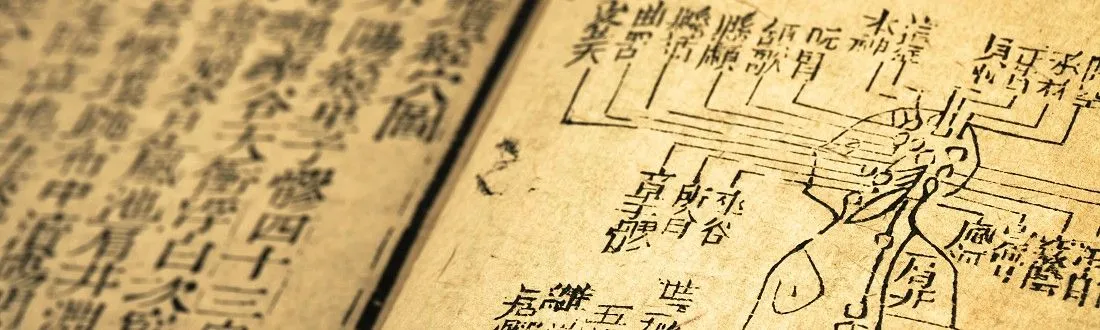
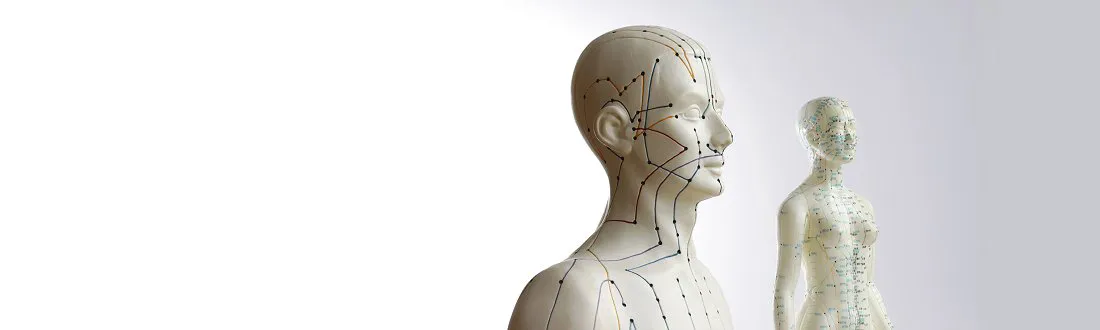
Traditional Chinese medicine rests on the idea that health depends on the smooth, abundant circulation of two substances: chi (also written qi — the vital energy that animates the body) and blood. Chi is described as flowing along a network of pathways called meridians or channels, of which there are 12 main tracks, each associated with an internal organ, together with eight extraordinary vessels and a web of smaller branches. Acupuncture works by inserting fine needles at specific points along these meridians to regulate the flow of chi and blood and restore balance.
This model has guided successful clinical practice for more than two millennia, but it has long presented a puzzle for Western anatomy. When the body is dissected, no obvious system of discrete tubes corresponds to the meridian map. For much of the twentieth century this absence was used to dismiss the meridian system as pre-scientific metaphor. The discovery of the interstitium suggests the meridians may instead correspond to a real, physical — and previously overlooked — anatomical structure.
What is the interstitium?
In March 2018, a team of researchers led by Petros Benias and Neil Theise published a paper in Scientific Reports (a journal in the Nature Portfolio) describing what they called an unrecognised interstitium — a body-wide network of fluid-filled spaces.
The interstitium is the space between cells and the structures around them. The researchers showed that, rather than being dense, compacted connective tissue, much of this space is in fact an open, fluid-filled lattice: interconnected compartments supported by a mesh of strong, flexible collagen bundles, and bathed in interstitial fluid. These spaces are found beneath the skin, lining the digestive tract, lungs and urinary system, surrounding arteries and veins, and wrapping the fascia between muscles.
Critically, the interstitium is continuous. It is not a series of isolated pockets but a connected, body-spanning network through which fluid moves. It is also a major source of lymph: interstitial fluid drains into the lymphatic system, which makes the interstitium directly relevant to immune function and to how signalling molecules travel through the body. Some of the researchers involved suggested that, given its scale and distinct structure, the interstitium might reasonably be considered one of the largest organs in the human body.
Why the interstitium was missed for so long
If the interstitium is so extensive, how did anatomists overlook it for centuries? The answer lies in how tissue is prepared for examination under a microscope. The standard process involves fixing tissue with chemicals and cutting it into thin slices — a procedure that drains away fluid and causes the fluid-filled compartments to collapse. For generations, pathologists were therefore looking at a flattened, drained version of the tissue and saw only dense connective tissue, never suspecting that in the living body those spaces were open and full of moving fluid.
The 2018 team were able to see the interstitium because of a newer technology called probe-based confocal laser endomicroscopy, which images living tissue in place, before it is removed and fixed. Examining the bile duct of living patients, they saw the open, fluid-filled lattice for the first time — and then confirmed it throughout the body. In other words, the interstitium had always been there; the tools to see it correctly simply did not exist until recently.
The connection to acupuncture
The relevance to acupuncture is striking. Traditional Chinese medicine has always insisted that chi flows along continuous channels that follow definite routes through the body — routes that do not map onto the blood vessels or the nerves. The interstitium is precisely that: a continuous, fluid-filled, body-spanning network, distinct from the circulatory and nervous systems, capable of carrying fluid and signalling molecules along defined planes of tissue.
This idea did not begin in 2018. For two decades before the interstitium was formally described, the American researcher Helene Langevin had been investigating the relationship between acupuncture and connective tissue. In an influential 2002 study published in The Anatomical Record, Langevin and Yandow mapped acupuncture points and meridians against the planes of connective tissue that run between and within muscles. They found a remarkably high correspondence: more than 80% of acupuncture points and the majority of meridian pathways lay along intermuscular or intramuscular connective tissue planes. The meridians, in other words, appear to track the body's connective tissue architecture — the very architecture in which the interstitium is embedded.
Connective tissue, acupuncture points and the needle
Langevin's later work examined what actually happens at the needle. When an acupuncture needle is inserted and gently rotated — the manipulation a practitioner uses to obtain the characteristic sensation known as de qi — the surrounding connective tissue winds around the needle like spaghetti around a fork. This “winding” creates a measurable mechanical coupling between the needle and the tissue, and pulls on the connective tissue network over a surprisingly wide area.
Langevin proposed that this mechanical signal — the physical tug transmitted through the connective tissue and its resident cells — could be a mechanism by which acupuncture produces effects far from the needle site. Connective tissue cells (fibroblasts) respond to mechanical stretch by changing shape and releasing signalling molecules. If acupuncture creates a mechanical signal that travels through a continuous tissue network, and if that network is the fluid-filled interstitium, then there is a coherent, testable, biomedical account of how needling at one point can influence distant parts of the body — something the meridian model has always claimed.
What this does — and doesn't — tell us
It is important to be measured here. The discovery of the interstitium does not prove that meridians exist as traditionally drawn, nor does it confirm every claim of classical theory. The interstitium is a fluid-filled tissue network; it is not labelled with organ names or divided into 12 tracks. The correspondence between meridians and connective tissue planes is strong but not perfect. And acupuncture's clinical effects almost certainly involve the nervous system, local biochemistry and the immune response as well as connective tissue mechanics.
What the interstitium does offer is something Western science previously lacked: a real anatomical structure with the right properties — continuous, fluid-filled, body-spanning, distinct from blood vessels and nerves, involved in fluid transport and immune signalling — onto which the meridian concept can plausibly be mapped. It moves the conversation from “there is no structure, therefore meridians are imaginary” to “here is a candidate structure, and here is how we might test it.” For a system of medicine that has been used effectively for over 2,000 years, that is a meaningful step. The likely picture emerging from modern research is that acupuncture works through several integrated mechanisms — neurological, biochemical, immunological and connective-tissue-mechanical — and the interstitium may be the physical substrate that helps tie them together.
Traditional Chinese medicine never needed the interstitium to work; centuries of clinical practice came first. But for patients and practitioners who want to understand how acupuncture works in modern terms, the interstitium is one of the most promising leads science has produced.
Frequently asked questions
What is the interstitium?
The interstitium is a continuous, body-wide network of fluid-filled spaces, supported by a lattice of collagen and bathed in interstitial fluid. It sits beneath the skin, lines the gut, lungs and urinary tract, surrounds blood vessels and runs through the fascia between muscles. It was formally described in a 2018 paper in Scientific Reports, and is a major source of the fluid that drains into the lymphatic system.
Does the interstitium prove that acupuncture meridians are real?
Not on its own. The interstitium is a real anatomical structure with properties that fit the meridian concept — it is continuous, fluid-filled and body-spanning — and research has shown that acupuncture points and meridians correspond closely to connective tissue planes. But the interstitium is not divided into 12 named tracks, and acupuncture also works through the nervous and immune systems. It is best described as a strong candidate structure, not final proof.
How does this relate to chi?
Traditional Chinese medicine describes chi as a vital substance that circulates along the meridians. Some researchers have proposed that the movement of interstitial fluid and the mechanical signalling carried through the connective tissue network may be part of the physical reality underlying what classical theory calls the flow of chi. This remains a hypothesis under investigation rather than a settled fact.
Who discovered the interstitium?
The 2018 paper describing the interstitium as an unrecognised, body-wide structure was led by Dr Petros Benias and Dr Neil Theise, working with colleagues including Rebecca Wells. They were able to see it using probe-based confocal laser endomicroscopy, a technique that images living tissue before it is fixed and collapses.
Does this change how acupuncture is practised?
No — acupuncture is practised the same way it has been for centuries, guided by traditional diagnosis and point selection. What the interstitium changes is our understanding of why it may work, helping to build a bridge between traditional Chinese medicine and modern biomedical science.
References
Benias PC, Wells RG, Sackey-Aboagye B, Klavan H, Reidy J, Buonocore D, Miranda M, Kornacki S, Wayne M, Carr-Locke DL, Theise ND. Structure and distribution of an unrecognized interstitium in human tissues. Scientific Reports (Nature Portfolio). 2018;8:4947. doi: 10.1038/s41598-018-23062-6.
Langevin HM, Yandow JA. Relationship of acupuncture points and meridians to connective tissue planes. The Anatomical Record. 2002;269(6):257–265. doi: 10.1002/ar.10185.
Langevin HM, Churchill DL, Cipolla MJ. Mechanical signaling through connective tissue: a mechanism for the therapeutic effect of acupuncture. The FASEB Journal. 2001;15(12):2275–2282. doi: 10.1096/fj.01-0015hyp.
Langevin HM, Konofagou EE, Badger GJ, Churchill DL, Fox JR, Ophir J, Garra BS. Tissue displacements during acupuncture using ultrasound elastography techniques. Ultrasound in Medicine & Biology. 2004;30(9):1173–1183. doi: 10.1016/j.ultrasmedbio.2004.07.010.
Cheng KJ. Neurobiological mechanisms of acupuncture for some common illnesses: a clinician's perspective. Journal of Acupuncture and Meridian Studies. 2014;7(3):105–114. doi: 10.1016/j.jams.2013.07.008.
To discuss acupuncture treatment, contact me or book a consultation at my Wokingham clinic.
Related reading: Acupuncture | Traditional Chinese medicine | History of traditional Chinese medicine















