




Jet lag, the body clock and Chinese medicine
By Dr (TCM) Attilio D'Alberto | Traditional Chinese Medicine Practitioner, Wokingham, Berkshire
Jet lag is what happens when you travel faster than your body clock can follow. Cross several time zones and your internal 24-hour rhythm — which governs sleep, alertness, digestion, hormones and body temperature — is left pointing at the wrong time, out of step with the daylight and mealtimes of your destination. The result is the familiar misery of daytime exhaustion, night-time wakefulness, brain fog and an unhappy gut. Traditional Chinese medicine has its own detailed model of this internal clock — the organ “body clock” — and, alongside well-evidenced measures like light timing and melatonin, offers a helpful framework for understanding and easing the disruption.
On this page
- What jet lag actually is
- Symptoms — and why east is worse
- The TCM organ body-clock
- Melatonin and light — the evidence
- Where acupuncture fits
- Practical tips to reset faster
- Frequently asked questions
- References
1. What jet lag actually is
Your body runs on a roughly 24-hour internal rhythm — the circadian rhythm — set by a master clock in the brain and synchronised to the outside world chiefly by light. It controls when you feel sleepy and alert, when the sleep hormone melatonin is released, when you are hungry, and the daily rise and fall of body temperature and cortisol. When you fly across time zones, the external clock jumps forward or back by several hours in a single day, but your internal clock can only shift by about an hour a day. Jet lag is the gap between the two — a temporary misalignment that resolves as your body slowly re-synchronises.
2. Symptoms — and why east is worse
Typical jet lag includes daytime sleepiness and fatigue, difficulty falling or staying asleep at the new local night, poor concentration and irritability, and digestive upset — because the gut has its own clock and is now expecting meals at the wrong time. As a rule of thumb, symptoms last roughly a day per time zone crossed. Eastward travel is usually harder than westward, because it requires you to fall asleep and wake earlier than your body wants — advancing the clock is more difficult than delaying it, which is why flying home east often feels worse than the outbound trip west.
3. The TCM organ body-clock
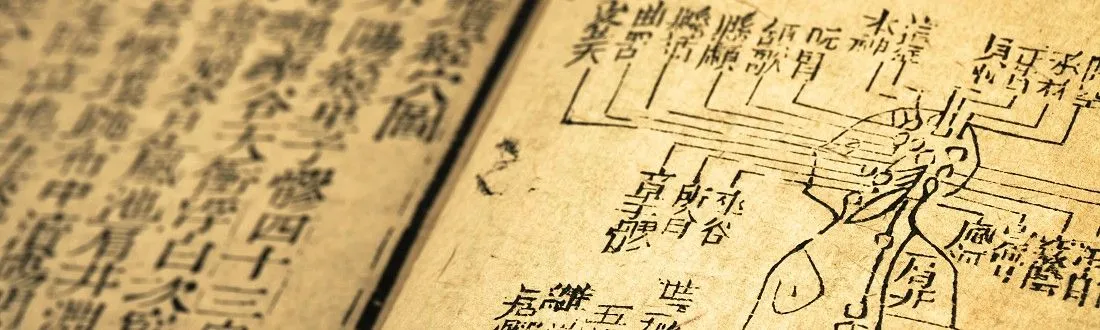
Long before circadian biology, traditional Chinese medicine described a 24-hour cycle in which the body’s vital energy (qi) flows in turn through the twelve organ systems, each having a two-hour window when it is at its peak — the Lung at 3–5am, the Stomach at 7–9am, the Heart at 11am–1pm, the Liver at 1–3am, and so on around the clock. This organ body-clock is the TCM version of the circadian rhythm, and it is deeply tied to the daily movement between yang (the active, daytime phase) and yin (the restful, night-time phase).
Seen this way, jet lag is a sudden dislocation of the entire organ clock: the body is trying to run its Liver-restoration hours while the destination expects lunch, and to fire up its digestive and active yang phase in the middle of the local night. The same framework explains why people so often wake at a consistent hour when their rhythm is disturbed — a phenomenon I explore in detail in my article on waking at the same time every night. The practical goal, in both the modern and the TCM model, is the same: help the clock re-anchor to the new day as quickly as possible.
4. Melatonin and light — the evidence
Two measures have the strongest evidence for jet lag, and both are about resetting the clock rather than simply sedating you. Light is the master signal: getting bright daylight at the right time of the destination day (and avoiding it at the wrong time) is the single most powerful way to shift the internal clock. Melatonin — the body’s own darkness hormone — taken close to the destination bedtime, has good evidence for reducing jet lag: a Cochrane systematic review concluded that melatonin is remarkably effective for preventing or reducing jet lag when taken at the right time, and is safe for short-term use[1]. In the UK melatonin is a prescription medicine, so speak to a pharmacist or doctor before using it, particularly if you take other medication.
5. Where acupuncture fits
It is worth being straightforward: there is very little robust clinical trial evidence for acupuncture as a treatment for jet lag specifically, and the claims made for it online often outrun the science. What acupuncture does have a recognised effect on is sleep and the stress response — it can promote relaxation, shift the nervous system into its restful parasympathetic state, and support better sleep quality, all of which are exactly what a jet-lagged body is struggling with. So while I would not present acupuncture as a proven “cure” for jet lag, some frequent long-haul travellers find a session — or self-applied acupressure and ear seeds — a useful, calming support for re-settling their sleep after a big trip, used alongside the light and melatonin measures that do the heavy lifting.
6. Practical tips to reset faster
- Shift before you fly — for an eastward trip, move your bedtime earlier by an hour a day for a few days beforehand; for westward, later
- Get on destination time immediately — set your watch on boarding and eat, sleep and wake by the new clock from the moment you land
- Chase daylight — spend time outdoors in daylight at the destination; morning light helps after eastward travel, late-afternoon light after westward
- Time your meals — eating on the new schedule helps reset the gut clock; keep first meals light and warm to support digestion
- Stay hydrated and go easy on alcohol and caffeine — both disrupt sleep and worsen the fog
- Nap wisely — if you must nap, keep it short (20–30 minutes) and early, so it doesn’t steal from the local night’s sleep
See also my guides to TCM sleep optimisation and, for the travel itself, motion sickness.
7. Frequently asked questions
Does acupuncture cure jet lag?
No — there is little robust evidence that acupuncture treats jet lag directly, and it should not be presented as a cure. What it can do is support sleep and relaxation, which some long-haul travellers find helpful for re-settling after a trip. The measures with the best evidence for the clock itself are well-timed daylight and melatonin.
What is the TCM view of jet lag?
Chinese medicine describes a 24-hour organ “body clock” in which qi flows through each organ system at its peak two-hour window. Jet lag is understood as a sudden dislocation of this clock and of the daily yang–yin cycle, which resolves as the body re-anchors to the new day.
Is melatonin good for jet lag?
A Cochrane systematic review found melatonin effective for preventing and reducing jet lag when taken close to the destination bedtime, and safe for short-term use. In the UK it is a prescription medicine, so check with a pharmacist or doctor first, especially if you take other medication.
References
[1] Herxheimer A, Petrie KJ. Melatonin for the prevention and treatment of jet lag. Cochrane Database of Systematic Reviews. 2002;(2):CD001520. https://doi.org/10.1002/14651858.CD001520. PMID: 12076414.
Prefer to be treated from home? Chinese herbal medicine online consultations are available throughout the UK and worldwide. After a full video consultation, Dr (TCM) Attilio D'Alberto formulates a bespoke herbal prescription and posts your Chinese herbs directly to your door.