

Yin deficient constitution (Yin Xu)
By Dr (TCM) Attilio D’Alberto — registered Traditional Chinese Medicine practitioner (BAcC, RCHM) with over 25 years’ clinical experience.
On this page
- Overview
- How yin deficiency develops
- Recognising the pattern
- Tongue and pulse
- Common health conditions
- Dietary approach
- Foods to favour
- Foods to limit
- Sample day's eating
- Cooking methods
- Lifestyle
- Common mistakes
- Risks if uncorrected
- Frequently asked questions
- Related pages
1. Overview
Yin deficiency (Yin Xu) is a pattern of insufficient cooling, moistening, anchoring, substantial yin. Yin is the body's substance — fluids, blood, essence, the soft and dense matter that grounds and nourishes. When yin is depleted, the body is dry, thin, hot at the surface and edges, restless, and unable to cool itself in the second half of the day or night. The yang remains relatively normal, but with insufficient yin to balance it, "empty heat" (xu re) rises — not a true excess heat, but the consequence of a missing cool counterpart.
The yin of three organs is most often involved: Kidney yin (the deepest reservoir, controlling fluids, bones, hearing, reproductive essence), Liver yin (which governs blood, the eyes, sinews and tendons), and Lung yin (which moistens the throat, skin and bowels). All three yin patterns share dryness, heat, and restlessness; they differ in the symptom emphasis.
Yin-deficient people are typically thin, lean and wiry rather than soft. They run hot rather than cold, sleep restlessly with vivid dreams, wake repeatedly between 1am and 5am, and feel hottest in the late afternoon and evening. The classical formulae Liu Wei Di Huang Wan and Zhi Bai Di Huang Wan address Kidney yin, while Tian Wang Bu Xin Dan addresses Heart yin.
2. How yin deficiency develops
- Chronic late nights — consistently going to bed after 11pm directly drains yin
- Long-term high stress and overdrive (sympathetic dominance "burns" yin)
- Excessive sweating — hot yoga, saunas, hot climates without rehydration
- Excessive talking and emotional output
- Excessive sexual activity, especially over years
- Multiple pregnancies, prolonged breastfeeding without recovery
- Chronic febrile illness or recurrent fever
- Long courses of stimulant drugs — coffee, ephedrine, amphetamines, recreational stimulants
- Smoking, particularly long-term
- Aging — Kidney yin naturally declines, accelerated through perimenopause and into the 70s
- High-protein, high-spice, low-fluid diets
3. Recognising the pattern
- Thin or wiry build; difficulty gaining weight; lean musculature
- Hot palms, soles and centre of chest ("five-centre heat")
- Night sweats — particularly waking with damp pillow or chest
- Afternoon flushing or low-grade fever; rosy cheekbones with pale rest of face
- Dry mouth (especially at night), dry skin, dry hair, dry eyes, dry vagina
- Thirst with preference for cool drinks in small sips
- Restless sleep, vivid or anxious dreams; classic 3am waking
- Constipation with dry, pellet-like stools
- Hot flushes during menopause
- Lower back ache, knee weakness; tinnitus (Kidney yin)
- Tendency to anxiety, worry-fuelled insomnia, racing thoughts
- Loose teeth, receding gums, brittle nails
4. Tongue and pulse
Tongue: red, particularly at the tip and edges; little or no coating in places (peeled, mirror or geographic tongue); often cracked, particularly down the centre. The tongue may look small and dry.
Pulse: thin, rapid, often "floating empty" — feels strong on light touch but disappears on pressure. The Kidney positions (rear) are typically weakest.
5. Common health conditions
- Perimenopausal and menopausal symptoms — hot flushes, night sweats, vaginal dryness
- Insomnia — especially difficulty staying asleep
- Anxiety, panic attacks, restlessness
- Hyperthyroidism (Graves' disease overlap)
- Sjögren's syndrome and other dry-mucous-membrane autoimmune conditions
- Chronic dry skin conditions, eczema with dryness, brittle hair
- Low AMH and diminished ovarian reserve (Kidney yin/jing depletion)
- Recurrent UTIs in postmenopausal women (loss of vaginal moisture)
- Chronic dry cough, particularly evening; bronchiectasis
- Constipation with hard, dry stools
- Tinnitus (high-pitched), age-related hearing loss
- Osteoporosis
6. Dietary approach
The yin-deficient diet is cooling, moistening, blood-and-yin-nourishing — but not cold or raw. The mistake is to confuse "cooling" with "iced": Kidney yin is best nourished by foods that are cool in thermal nature but eaten warm or at room temperature. Pork, eggs, tofu, pear, lily bulb, black sesame, mulberry and seaweed all nourish yin. Spicy, drying, very hot foods are best minimised, as are alcohol, coffee and excess animal protein, all of which generate heat.
Three principles guide the yin-deficient kitchen:
- Moisten with substance, not just water. Yin-rich foods (eggs, pork, fish, black sesame, gelatin, tofu) build yin; plain water alone does not.
- Cooling-neutral thermal nature. Avoid the obviously hot (chilli, lamb, alcohol, deep-fried) and the obviously cold (iced drinks, frozen fruit).
- Slow eating, regular hours, and protected sleep. Late nights and rushed eating undermine the diet.
7. Foods to favour
Yin-nourishing animal foods:
- Pork — the most yin-nourishing meat, particularly slow-cooked with lily bulb or pear
- Duck — cooling and yin-nourishing
- White fish: cod, sea bass, sole, halibut
- Eggs (especially the yolk); egg drop soup
- Oyster, scallop, clam (cooling shellfish)
- Bone broths simmered with pork bones or duck carcass
Yin-nourishing plant foods:
- Tofu, tempeh, soy milk, soy beans
- Black beans, mung beans, kidney beans, adzuki beans
- Black sesame seeds — the foremost yin food
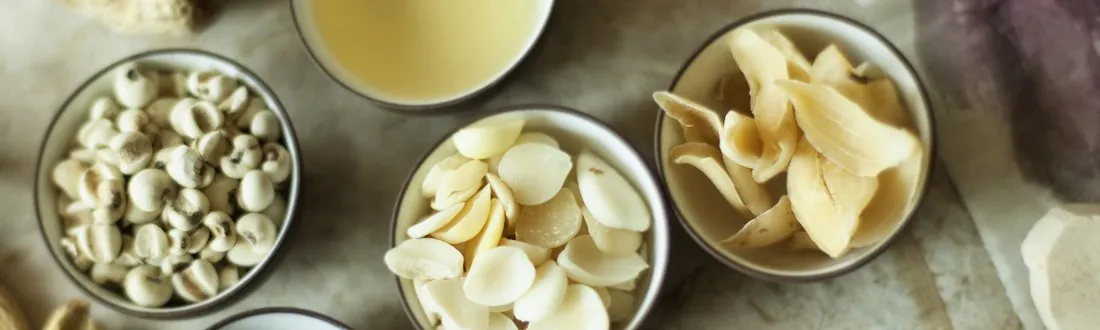
- Lotus seeds (lian zi)
- Lily bulb (bai he) — specifically nourishes Lung yin and calms the Heart
- White fungus (yin er, snow ear) — classical yin tonic
- Black fungus (mu er) — nourishes blood and yin
- Mulberries, goji berries (in moderation), red dates
Cooling-moistening fruit and vegetables:
- Pear (raw or stewed with rock sugar) — the iconic Lung-yin food
- Apple, grape, mulberry, persimmon, banana (in moderation)
- Watermelon (summer only)
- Cucumber, courgette, asparagus, celery
- Spinach, lettuce (lightly cooked), tomato
Sweeteners and oils:
- Honey (in moderation), maple syrup
- Sesame oil, olive oil, walnut oil
- Royal jelly
8. Foods to limit
- Spicy foods: chilli, raw garlic in excess, mustard, horseradish, wasabi
- Lamb (very warming and yang-generating)
- Excess red meat in general; beef in moderation only
- Coffee, strong black tea, alcohol, energy drinks
- Smoking and recreational stimulants
- Excess salty crisps and dried snacks (drying)
- Deep-fried foods, BBQ, overly browned/charred meats
- Hot pots and excessive curries on a regular basis
- Iced drinks (paradoxically depleting; the cold shock damages yin reserves)
9. Sample day's eating
On waking: a glass of room-temperature or warm water, sometimes with a slice of pear or lemon.
Breakfast: oat porridge with black sesame, soaked goji berries and a stewed pear; or scrambled eggs with tomato and a slice of sourdough.
Mid-morning: a small bowl of natural yoghurt with mulberries, or a few walnuts and a pear.
Lunch: steamed white fish with rice and lightly cooked greens; or a tofu and lily-bulb soup; or a pork and black bean stew. Eaten unhurried.
Afternoon: a cup of chrysanthemum or white peony tea with a couple of dates; or fresh seasonal fruit.
Dinner: congee with pork and Chinese yam; or duck with steamed greens and sweet potato. Avoid eating after 8pm.
Evening: warm milk with a teaspoon of honey, or a stewed pear with rock sugar, if a soothing pre-bed comfort is needed.
10. Cooking methods
- Steaming and poaching — preserve moisture without adding heat
- Slow stewing — pork with pear, lily bulb and rock sugar is a classical yin recipe
- Simmering and broth-making — pork bone broth simmered for several hours is deeply yin-nourishing
- Light steaming or wilting of greens — minimal frying, no charring
- Soaking and rehydrating dried fungi and seeds — lotus seed, white fungus, lily bulb
11. Lifestyle
Sleep before 11pm is the single most important lifestyle factor — yin is restored at night, and chronic late nights deplete it faster than any food can rebuild it. Avoid burning the candle at both ends. Adopt gentle yin-supportive practices: yin yoga, meditation, breathing exercises, contemplative walking, journaling. Stay hydrated with cool (not iced) water through the day. Avoid hot yoga, prolonged saunas, sun-bathing, intense HIIT and very heavy weight-training in favour of more measured movement. Limit screens at night; protect a wind-down hour before bed.
12. Common mistakes
- Drinking iced water "to cool down". The cold-shock paradoxically damages yin; cool water is fine, iced water isn't.
- High-protein "carnivore" diets. Heavy red meat and animal protein are heating and dry; they worsen yin deficiency.
- Using stimulants to power through nights. Coffee, energy drinks and modafinil borrow from already-empty yin reserves.
- Hot yoga and saunas as "detox". Excessive sweating drains yin in this constitution.
- Going to bed past midnight habitually. The single most damaging lifestyle pattern.
- Spicy food as routine. Daily chilli, curries and hot pots dry yin and worsen empty heat.
- Treating yin deficiency as "dehydration". Drinking more water alone does little; yin needs substance, not just fluid.
13. Risks if uncorrected
Persistent yin deficiency tends to deepen into yin-yang dual deficiency in later years (cold extremities with hot flushes, exhaustion with insomnia), and predisposes to osteoporosis, accelerated cognitive decline, type-2 diabetes, hypertensive heart disease and recurrent infections of dry mucous membranes (UTIs, oral thrush). Empty heat that remains unaddressed for years can also generate "Liver wind" patterns — tremor, transient ischaemic attacks, vertigo. Early correction is highly worthwhile; restoration after years of depletion is slower.
14. Frequently asked questions
Is yin deficiency the same as menopause?
Menopause is a natural transition during which Kidney yin and essence decline, so most perimenopausal and postmenopausal women have a yin-deficient TCM picture — hot flushes, night sweats, vaginal dryness, insomnia. The two are not identical: men can be yin-deficient, as can young women under chronic stress and sleep deprivation. The TCM dietary approach is, however, used in TCM practice for menopausal symptom management whether or not HRT is also used.
Should I avoid all hot/spicy food permanently?
Most strongly yin-deficient patients feel better with very limited spice while rebuilding. Mild ginger, fennel and small amounts of garlic are usually fine; chilli, raw garlic, hot curries and alcohol are best minimised. As yin rebuilds, modest amounts can be reintroduced, particularly in winter.
How long until I notice changes?
Most patients notice improvement in dryness, sleep and night sweats within 6–12 weeks of consistent dietary and lifestyle change. Deeper restoration of Kidney yin (libido, lower back, AMH, bone density) typically takes 4–9 months. Sleep before 11pm is the most powerful single intervention. Diet works best alongside acupuncture and where indicated, Chinese herbal formulas.
Can vegetarians and vegans nourish yin?
Yes, more easily than yang. Tofu, tempeh, soy milk, eggs (for non-vegans), black beans, black sesame, lily bulb, white fungus, mulberries and pears are all powerful yin-nourishing foods. Strict vegans should pay attention to omega-3, B12 and iron alongside the TCM dietary approach.
Why do I wake at 3am?
The Liver organ-clock window runs 1am–3am, and Liver yin restoration peaks then. When Liver yin is depleted, sleep is most disturbed in this window — classically waking at 3am and lying awake for an hour or more, often with anxious or vivid thoughts. Yin-nourishing diet, sleep before 11pm and stress reduction all reduce this pattern over weeks.















