


Congee (Chinese rice porridge)
By Dr (TCM) Attilio D’Alberto — registered Traditional Chinese Medicine practitioner (BAcC, RCHM) with over 25 years’ clinical experience.
On this page
1. About this recipe
Congee — jook in Cantonese, zhou in Mandarin — is the most foundational dish in Chinese food therapy. A simple slow-simmered rice porridge, congee is the gentlest possible food for the digestive system, prescribed in Chinese medicine for convalescence, weak digestion, post-childbirth recovery, fevers, and as a daily breakfast for anyone with Spleen qi deficiency. The long cooking breaks down the rice almost completely, making it exceptionally easy to digest and a powerful builder of qi and body fluids.
2. Ingredients
- 1 cup short-grain white rice (or jasmine rice)
- 8–10 cups water (or chicken/vegetable broth for richer flavour)
- Salt to taste
- Optional: 2–3 slices fresh ginger
3. Method
- Rinse the rice in a sieve until the water runs clear.
- Place rice and water in a heavy-based saucepan.
- Bring to a boil, then reduce to a very low simmer.
- Cook for 1.5–2 hours, stirring occasionally to prevent sticking, until the rice has broken down into a creamy porridge.
- Salt to taste, and serve hot in bowls.
4. Variations
- Walnut congee — add 6–8 walnut halves for the last 30 minutes; tonifies Kidney yang and brain.
- Goji and red date congee — add 1 tbsp goji berries and 6 jujube dates for the last 20 minutes; tonifies blood and lifts mood.
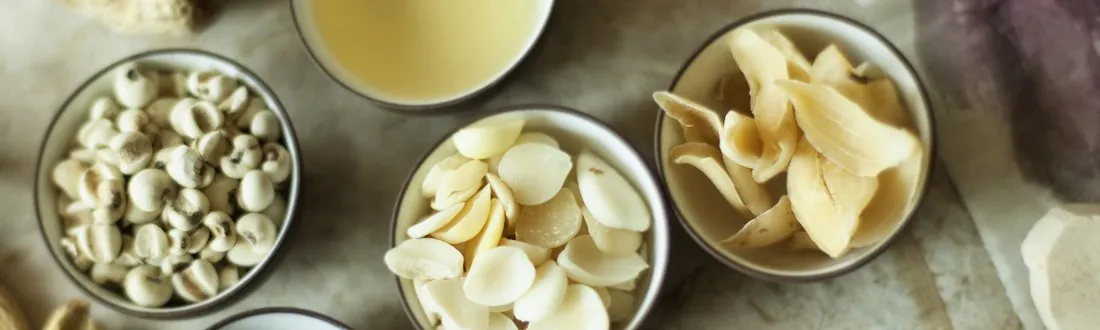
- Lotus seed and Chinese yam congee — add 1/4 cup of each at the start; tonifies Spleen and calms the spirit.
- Adzuki bean congee — add 1/2 cup soaked adzuki beans at the start; clears damp, supports the Heart.
- Black sesame congee — stir 2 tbsp ground toasted black sesame in at the end; nourishes Kidney yin and Liver blood.
- Chicken congee — cook with chicken bones and a few slices of ginger; deeply qi-tonifying.
- Savoury congee — serve with pickled vegetables, soy sauce, sesame oil and sliced spring onion.
5. When to eat it
Daily congee is a cornerstone of recovery from any prolonged illness, postpartum care, weak digestion, IBS, and convalescence after fertility treatment, surgery or chemotherapy. A bowl of congee for breakfast is one of the most consistent dietary recommendations I make for patients with Spleen qi deficiency.















