


Gu Ya (谷芽) — Millet Sprout
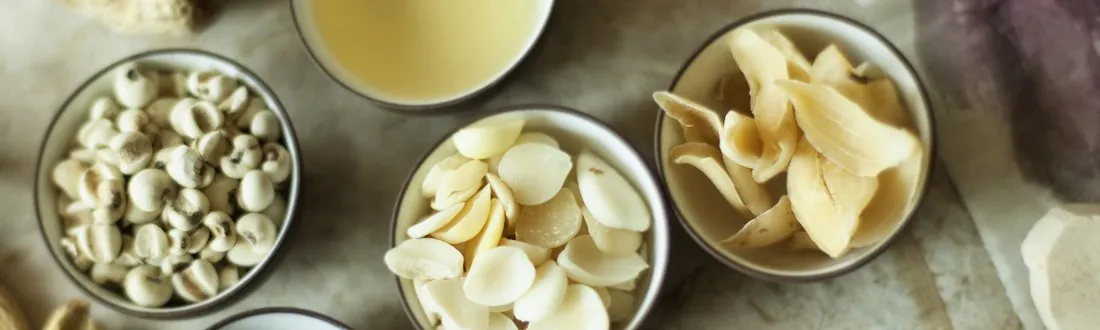
Gu Ya — millet sprout — is the milder partner of Mai Ya (barley sprout) for food stagnation from grain intake. Gentle, neutral, and safe for the elderly and children, it also gently strengthens Spleen digestion.
On this page
- Overview
- Properties
- Actions and indications
- Dosage
- Cautions and incompatibilities
- Key formulas
- Treatment at my clinic
1. Overview
Gu Ya (谷芽) — Millet Sprout (Setaria italica (millet sprout)) — is a Chinese herb in the Reduce Food Stagnation category. I prescribe it as part of bespoke pharmaceutical-grade granule formulas from Sun Ten in Taiwan at my clinic in Wokingham, Berkshire and via online herbal consultations.
2. Properties
| Pinyin name | Gu Ya |
|---|---|
| Chinese characters | 谷芽 |
| Latin name | Setaria italica (millet sprout) |
| English name | Millet Sprout |
| Nature | Neutral |
| Flavour | Sweet |
| Channels entered | Spleen, Stomach |
| Category | Reduce Food Stagnation |
3. Actions and indications
Principal actions
- Reduces food stagnation (rice and grain)
- Strengthens Spleen digestion
Indications
- Food stagnation with belching and abdominal fullness
- Loss of appetite in children
- Poor digestion in the elderly
- Convalescence with weak digestion
4. Dosage
9–30g
5. Cautions and incompatibilities
- No major contraindications; very safe
6. Key formulas
Gu Ya is used in a range of bespoke prescriptions rather than a fixed classical formula in modern practice. Consult a qualified TCM herbalist for individual prescription.
7. Treatment at my clinic
I prescribe Gu Ya where its indications and TCM pattern match the patient’s presentation, always as part of a tailored formula. Return to the Chinese herbs directory or the Chinese herbal medicine main page.















