



Dementia — acupuncture, Chinese medicine and the evidence
By Dr (TCM) Attilio D'Alberto | Traditional Chinese Medicine Practitioner, Wokingham, Berkshire
Dementia is the leading cause of disability and dependence in older adults in the UK, affecting around 900,000 people and rising. No current treatment — conventional or complementary — reverses the underlying disease process in Alzheimer’s, vascular dementia or other major dementia subtypes. But a growing evidence base shows that the right combination of medical management, lifestyle change and supportive therapies can meaningfully slow decline, reduce distressing behavioural symptoms, support carers, and in the pre-clinical and mild-cognitive-impairment phase, may even reduce the risk of progression. This article covers what dementia is, where the conventional medical evidence stands today, the multi-domain prevention work led by the Finnish FINGER trial and the Lancet Commission, the TCM view of cognitive decline as a disorder of Kidney Essence and the Sea of Marrow, and where acupuncture and Chinese herbal medicine fit honestly into the picture — supportive, not curative, and always alongside specialist medical care.
On this page
- What is dementia?
- The main subtypes
- Symptoms and stages
- Diagnosis
- Conventional treatment under NICE NG97
- Prevention — FINGER, Lancet Commission and lifestyle
- The TCM view — Kidney Essence and the Sea of Marrow
- Acupuncture — what the evidence shows
- Chinese herbs for cognition
- Diet, exercise and the brain
- Supporting carers
- Cautions and what TCM cannot replace
- When to see a practitioner
- Frequently asked questions
- Related reading
- References
1. What is dementia?
Dementia is not a single disease but an umbrella term for a progressive decline in cognitive function — memory, language, problem-solving, attention, visuospatial skills and behaviour — severe enough to interfere with daily life. It results from a range of distinct disease processes affecting the brain, of which Alzheimer’s disease is the most common but by no means the only one. Around 900,000 people in the UK currently live with dementia; the figure is projected to rise to around 1.6 million by 2040 as the population ages. Around two-thirds of cases are in women.
The distinction that matters most for treatment is between the disease process driving the dementia (Alzheimer’s, vascular, Lewy body, frontotemporal, mixed) and the clinical syndrome of cognitive and behavioural change. Disease-modifying treatment (where it exists) targets the disease process; symptomatic, supportive and lifestyle interventions can meaningfully improve the lived experience even when the underlying process cannot yet be modified.
2. The main subtypes
- Alzheimer’s disease (around 60–70% of dementia cases) — the prototypical dementia, driven by beta-amyloid plaques and tau-protein tangles in the brain. Begins gradually with short-term memory loss; progresses to language, visuospatial and executive impairment; later behavioural and motor changes.
- Vascular dementia (around 15–20%) — caused by cerebrovascular disease, either after stroke or through accumulated small-vessel ischaemia. Typically stepwise progression with prominent executive dysfunction, mood changes and gait disturbance. The dementia subtype most amenable to risk-factor management.
- Lewy body dementia (around 10–15%, including Parkinson’s disease dementia) — characterised by fluctuating cognition, visual hallucinations, REM sleep behaviour disorder and parkinsonian motor features. Particularly sensitive to neuroleptic medications, which can cause severe reactions.
- Frontotemporal dementia (around 5%) — affects younger patients than typical Alzheimer’s; presents with behavioural change, language difficulty (semantic or progressive non-fluent variants) or both, before significant memory loss.
- Mixed dementia — particularly in older adults, several pathologies often co-exist (most commonly Alzheimer’s with vascular contribution). This is the rule rather than the exception above age 80.
3. Symptoms and stages
Dementia symptoms vary by subtype and stage but a typical progression includes:
- Pre-clinical and mild cognitive impairment (MCI) — subjective memory complaints, mild measurable deficits on testing, function preserved. A meaningful minority of MCI patients do not progress to dementia, and this is the phase where prevention and risk-factor work has the greatest leverage.
- Mild dementia — short-term memory loss interfering with daily activities; word-finding difficulty; getting lost in familiar places; difficulty managing finances and complex tasks. Insight is often preserved and mood symptoms (depression, anxiety) are common.
- Moderate dementia — clear functional impairment in daily activities; need for support with washing, dressing, cooking; sleep disturbance; behavioural and psychological symptoms of dementia (BPSD) including agitation, sundowning, hallucinations or apathy; carer burden becomes substantial.
- Severe dementia — full dependence in daily care; loss of mobility, continence and verbal communication; complications of immobility (pressure sores, pneumonia, malnutrition); end-of-life care considerations.
Behavioural and psychological symptoms (BPSD) — depression, anxiety, agitation, hallucinations, sleep disturbance — are often more distressing for both patients and carers than the cognitive symptoms themselves. Their management is a particularly important area for non-pharmacological approaches, given the limited efficacy and significant side effects of antipsychotics in dementia. From a TCM perspective, the formula Yi Gan San (Yokukansan) — which calms the Liver and settles Wind — is traditionally used for the irritability, restlessness and agitation of a Liver pattern.
4. Diagnosis
Dementia diagnosis is clinical, supported by structured cognitive testing and investigations to identify subtype and exclude reversible causes:
- Clinical history from the patient and an informant (family member, carer) — the single most important diagnostic element
- Cognitive testing — brief tests such as the Mini-Mental State Examination (MMSE), Montreal Cognitive Assessment (MoCA) or Addenbrooke’s Cognitive Examination (ACE-III) in primary care; detailed neuropsychological testing in specialist memory clinics
- Blood tests — to exclude reversible causes: thyroid function, B12, folate, calcium, glucose, full blood count, renal and liver function, sometimes HIV and syphilis serology in atypical cases
- Brain imaging — MRI or CT to identify vascular changes, hydrocephalus, tumours or atrophy patterns; SPECT, PET or amyloid PET in specialist settings
- Specialist memory clinic assessment — required for diagnosis confirmation, subtype identification and access to disease-modifying treatments
Reversible causes of cognitive impairment — B12 deficiency, hypothyroidism, depression presenting as pseudodementia, sleep apnoea, medication side effects, normal-pressure hydrocephalus — should be actively sought and treated. Some of these can produce significant improvement when identified.
5. Conventional treatment under NICE NG97
NICE NG97 (Dementia: assessment, management and support for people living with dementia and their carers, published 20 June 2018, last updated October 2025) provides the UK framework:
Cholinesterase inhibitors
Donepezil, rivastigmine and galantamine for mild-to-moderate Alzheimer’s disease; rivastigmine specifically for mild-to-moderate Parkinson’s disease dementia. These produce modest but real symptomatic benefits in cognition, function and behavioural symptoms; they do not modify the underlying disease.
Memantine
An NMDA-receptor antagonist for moderate-to-severe Alzheimer’s disease, often added to a cholinesterase inhibitor.
Disease-modifying treatments
The new monoclonal antibody class (lecanemab, donanemab) targeting beta-amyloid has demonstrated modest disease-modifying effects in early Alzheimer’s in clinical trials. NHS access in the UK is currently limited; the National Institute for Health and Care Excellence has been cautious about cost-effectiveness, and the side-effect profile (amyloid-related imaging abnormalities, including microhaemorrhages and oedema) requires careful selection and monitoring. This area is evolving rapidly.
Vascular risk-factor management
For vascular and mixed dementia — control of blood pressure, diabetes, cholesterol, atrial fibrillation; smoking cessation; antiplatelet therapy where indicated. The single most important medical intervention in vascular dementia.
Behavioural and psychological symptoms
Non-pharmacological approaches first — environmental modification, structured activity, music therapy, person-centred care. Antipsychotic medications only where strictly necessary, briefly, with careful monitoring; particularly avoid in Lewy body dementia.
Supportive care and care planning
Memory clinic follow-up, occupational therapy assessment, advance care planning, support for carers, social services involvement, eventual care home or end-of-life care planning. These structural supports often matter as much as medication.
6. Prevention — FINGER, Lancet Commission and lifestyle
The evidence base for dementia prevention — modifying risk factors in mid-life and beyond to reduce the lifetime risk of dementia — has matured substantially over the past decade. Two landmark contributions:
The FINGER trial (Ngandu et al, 2015)
The Finnish Geriatric Intervention Study to Prevent Cognitive Impairment and Disability randomised 1,260 at-risk older adults to a multi-domain intervention (diet, exercise, cognitive training, vascular risk monitoring) versus a general health advice control, over two years. Published in The Lancet (2015;385:2255–63), the trial demonstrated significantly better cognitive performance in the intervention group across executive function, processing speed and overall cognition. This was the first large randomised trial to show that a structured multi-domain lifestyle intervention can preserve cognitive function in at-risk older adults. The follow-on global WW-FINGERS network is now replicating and extending this approach internationally.
The Lancet Commission on Dementia Prevention
The Lancet Commission on Dementia Prevention, Intervention and Care (Livingston et al, 2020 and 2024 updates) identified 12–14 modifiable risk factors that account for an estimated 40–45% of dementia risk worldwide. The full list includes:
- Less education in early life
- Hearing loss (a particularly important and under-recognised risk factor — hearing aid use reduces risk)
- High blood pressure in mid-life
- Smoking
- Obesity
- Depression
- Physical inactivity
- Diabetes
- Excessive alcohol consumption
- Traumatic brain injury
- Air pollution
- Social isolation
- Untreated visual impairment (added in the 2024 update)
- Elevated LDL cholesterol (added in the 2024 update)
The practical implication is that what is good for the heart and good for general health is also — with substantial supporting evidence — good for the brain.
7. The TCM view — Kidney Essence and the Sea of Marrow
Traditional Chinese medicine has a sophisticated framework for cognitive decline that maps onto modern neurobiology more elegantly than is often appreciated. The classical model rests on several core concepts:
- Kidney Essence (Jing) — in TCM the Kidney governs the body’s deepest constitutional reserves, including the inherited essence that underlies long-term physical and cognitive vitality. Kidney Essence naturally declines with age; this decline is the constitutional substrate of cognitive ageing.
- The Sea of Marrow (Sui Hai) — the classical Chinese term for the brain. The brain is described as the Sea of Marrow, nourished by Kidney Essence ascending upward. When the Sea of Marrow is depleted — from inherited weakness, chronic illness, exhaustion, head trauma, advanced age — cognitive decline follows.
- Phlegm misting the orifices — a classical pattern for confusional and behavioural symptoms. Phlegm in TCM is a turbid pathological accumulation; when it rises and obstructs the “orifices” (the cognitive and sensory apertures of the brain), confusion, disorientation and altered behaviour result. This pattern maps onto the BPSD picture rather well.
- Heart and Spleen deficiency — the Heart in TCM houses the Shen (mind/spirit) and depends on Blood and Qi nourishment, supplied by the Spleen. Heart Blood deficiency produces poor concentration, sleep disturbance and mood symptoms; Spleen Qi deficiency produces fatigue and impaired transformation.
- Liver Yang rising / Liver Wind — for the agitated, irritable, hyperactive subset; particularly relevant in vascular dementia and behavioural symptoms.
- Blood stasis in the brain — the TCM correlate of cerebrovascular disease and the foundational pattern in vascular dementia.
The classical TCM treatment principle — tonify Kidney Essence, replenish the Sea of Marrow, resolve Phlegm where it obstructs the orifices, move Blood stasis, support Heart and Spleen, and calm the Shen — aligns conceptually with the modern multi-target approach to dementia care.
8. Acupuncture — what the evidence shows
The acupuncture-for-dementia literature is larger than is often realised, and is one of the more substantial complementary therapy evidence bases in any neurological condition. The picture is most positive in vascular dementia and post-stroke cognitive impairment, where multiple systematic reviews and meta-analyses have shown statistically significant improvements in cognitive scores compared with cholinesterase inhibitors alone or sham acupuncture. The evidence in Alzheimer’s disease is more modest but suggests modest cognitive and behavioural benefits when added to cholinesterase inhibitors. Key clinical points:
- Strongest evidence: vascular dementia and post-stroke cognitive impairment. Multiple Chinese-language and English-language systematic reviews show meaningful improvements on Mini-Mental State Examination and Montreal Cognitive Assessment scores. Effect sizes are modest but consistent.
- Moderate evidence: Alzheimer’s disease as an adjunct to medication. Cognitive and behavioural improvements in some trials; quality of evidence variable.
- Supportive evidence for behavioural symptoms (BPSD). Sleep disturbance, anxiety, agitation and depression in dementia all have plausible mechanisms of acupuncture benefit; this is one of the most clinically valuable indications.
- Limitations. Many trials are small, single-centre and from Chinese-language journals with variable methodological quality. Sham-controlled trials in cognitively impaired older adults are difficult to design well. Effect sizes are modest. Acupuncture is not a substitute for medical assessment, vascular risk-factor management or cholinesterase inhibitor treatment.
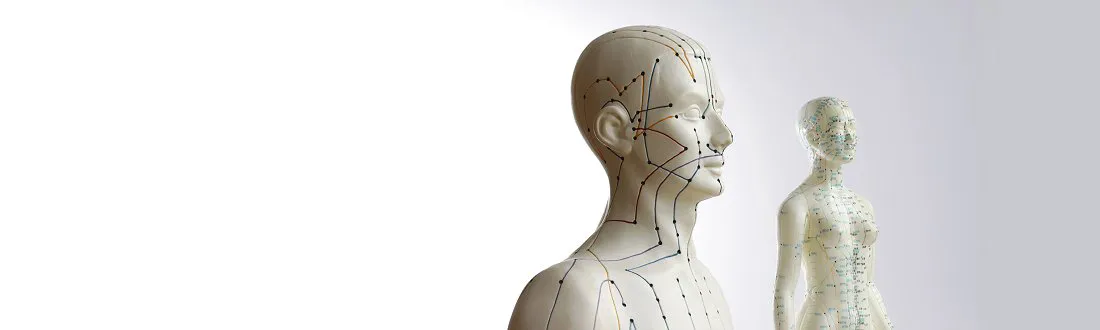
Points commonly used in dementia presentations include GV20 (Baihui, the vertex point widely used for cognitive function), GV24 (Shenting), Yintang and Sishencong (the “four spirits” surrounding GV20) for cognitive support; HT7 (Shenmen), PC6 (Neiguan) and Anmian for Shen calming and sleep; ST36 (Zusanli), SP6 (Sanyinjiao), KD3 (Taixi) and BL23 (Shenshu) for Kidney and Spleen support; and the scalp acupuncture system, with its specific motor, sensory and cognitive zones, is particularly used in post-stroke and vascular dementia presentations.
9. Chinese herbs for cognition
Chinese herbal medicine for cognitive decline has both classical and modern dimensions:
- Yuan Zhi (Polygala tenuifolia) — the classical herb for opening the orifices, calming the Shen and supporting memory. Modern research shows cholinergic and neuroprotective effects; one of the most studied herbs in Chinese cognitive support.
- Shi Chang Pu (Acorus tatarinowii) — the principal “orifice-opening” herb in TCM, paired with Yuan Zhi in many classical cognitive formulae. Modern research suggests neuroprotective and anti-inflammatory effects.
- Ren Shen (Panax ginseng) — constitutional tonic with documented effects on attention, processing speed and mental fatigue.
- Yin Xing Ye (Ginkgo biloba) — familiar to Western readers; standardised ginkgo extracts (most commonly EGb 761) have one of the larger evidence bases in cognitive support, with several systematic reviews showing modest improvements in cognition and behavioural symptoms.
- He Shou Wu (Polygonum multiflorum) — classical Kidney Essence tonic; used with appropriate caution given recorded hepatotoxicity in some products.
- Dan Shen (Salvia miltiorrhiza) — the principal Blood-moving herb in vascular pattern treatment; widely studied in vascular cognitive impairment.
- Chuan Xiong (Ligusticum chuanxiong) — another Blood-moving herb particularly used in cerebral circulation patterns.
- Gou Qi Zi (Lycium barbarum, goji berries) — Kidney and Liver Yin tonic; antioxidant and neuroprotective properties.
Classical formulae used in cognitive support include Liu Wei Di Huang Wan as a foundational Kidney Yin tonic, Jin Gui Shen Qi Wan for Kidney Yang patterns, Gui Pi Tang for Heart and Spleen deficiency presentations, Bu Yang Huan Wu Tang for the vascular and post-stroke pattern, and modified Kong Sheng Zhen Zhong Dan (the classical “memory pillow elixir”) for the orifice-opening role. All herbs prescribed at this clinic are pharmaceutical-grade granules from Sun Ten in Taiwan within individualised formulae. Several cognitive herbs interact with anticoagulants, antiplatelet agents and cholinesterase inhibitors; this is checked on every prescription.
10. Diet, exercise and the brain
The evidence base for lifestyle in dementia — both prevention and slowing progression — is the strongest non-pharmacological intervention area we have. The key components, drawn from FINGER, the Lancet Commission and the broader literature:
- Mediterranean / MIND-style diet — vegetables, whole grains, fish, olive oil, nuts, berries; reduced red meat, processed food, refined sugar. The MIND diet (Mediterranean-DASH Intervention for Neurodegenerative Delay) is specifically designed for brain health and has good observational support.
- Regular aerobic exercise — the single best-evidenced lifestyle factor for both prevention and management. Aim for 150 minutes weekly of moderate aerobic activity, ideally combined with resistance training.
- Cognitive engagement — learning new skills, reading, music, languages, complex social activity. Brain-training apps are less clearly supported than genuine novel learning.
- Social connection — loneliness and social isolation are independent risk factors; meaningful social engagement protects.
- Sleep — deep sleep is when the glymphatic system clears beta-amyloid from the brain. Treating sleep apnoea, addressing insomnia and respecting circadian rhythms all matter.
- Hearing aids if you have hearing loss — one of the highest-yield single interventions identified by the Lancet Commission.
- Vision correction — cataract surgery and adequate glasses prescription reduce dementia risk.
- Blood pressure, cholesterol, glucose and weight — mid-life management of these conventional cardiovascular risk factors is also brain protection.
- Stop smoking, moderate alcohol
- From a TCM perspective — warm cooked foods supporting Spleen Qi, regular meal times, Kidney-tonifying foods (black sesame, walnuts, kidney beans, goji berries), avoidance of cold raw foods that damage Spleen Yang, and adequate rest to preserve Kidney Essence.
11. Supporting carers
Family carers of people with dementia carry a substantial physical, psychological and financial burden. Carer health directly affects patient outcomes and is often inadequately addressed. Important elements include:
- Education about the diagnosis — the Alzheimer’s Society and Dementia UK both provide excellent UK-specific resources
- Access to respite — day care, sitting services, short-stay residential breaks
- Practical and financial support — Carer’s Allowance, attendance allowance, council social care assessment, Power of Attorney
- Treatment of carer’s own health needs — carers have elevated rates of depression, anxiety, sleep disturbance and stress-related illness
- Acupuncture and TCM support for carer stress, sleep, anxiety and burnout is one of the meaningful contributions the integrative approach can make
12. Cautions and what TCM cannot replace
- Suspected dementia needs medical diagnosis. Memory loss, behaviour change or functional decline in an older adult needs doctor and specialist memory clinic assessment first — both to confirm dementia and to exclude reversible causes.
- Cholinesterase inhibitor treatment should not be delayed for a herbal alternative; it is symptomatic and modestly effective, and starting earlier produces better functional outcomes.
- Disease-modifying treatments — the new amyloid-directed monoclonal antibody treatments are evolving rapidly; patients suitable for trial referral should not have access delayed.
- Vascular risk-factor management is medical care, not herbal care. Blood pressure, cholesterol, diabetes and atrial fibrillation need conventional treatment.
- Lewy body dementia and antipsychotics — severe sensitivity reactions are possible; any sedating herb should be used with extreme caution.
- Herb-drug interactions — cognitive herbs interact with anticoagulants, antiplatelet agents, cholinesterase inhibitors and sedatives. Tell your prescriber and your herbalist about everything you take.
- Be cautious of claims of cure — no current therapy reverses Alzheimer’s disease. Anyone claiming a evidence-based support is misrepresenting the evidence.
13. When to see a practitioner
Reasonable indications to consider acupuncture and Chinese medicine support for dementia and cognitive decline include:
- Mild cognitive impairment or early dementia where a multi-domain supportive approach is wanted alongside specialist medical care
- Vascular and mixed dementia where the evidence for acupuncture is strongest
- Behavioural and psychological symptoms (sleep disturbance, anxiety, agitation) that have responded poorly or with significant side effects to medication
- Post-stroke cognitive impairment, where scalp acupuncture has reasonable supporting evidence
- Carer support — managing carer stress, sleep, anxiety and burnout
- The general wish to optimise lifestyle and constitutional factors alongside conventional dementia care
I see patients with cognitive concerns and their carers at my Wokingham, Berkshire clinic and offer online herbal consultations for patients and families elsewhere in the UK.
14. Frequently asked questions
Can acupuncture cure dementia?
No. No current treatment — conventional or complementary — reverses the underlying disease process in established dementia. Acupuncture has a supportive role: meaningful evidence in vascular dementia, modest evidence in Alzheimer’s as an adjunct, and useful effects on behavioural and sleep symptoms. That is worth pursuing, but it is not a cure.
Should I stop my dementia medication if I start acupuncture?
No. Cholinesterase inhibitors and memantine are symptomatically effective and should be continued. Acupuncture and Chinese herbs are supportive additions, not substitutes.
What about Ginkgo biloba?
Standardised Ginkgo extracts (most commonly EGb 761) have one of the larger evidence bases in cognitive support, with several systematic reviews showing modest improvements in cognition and behavioural symptoms in dementia. They are not a cure but are a reasonable adjunct. Coordinate with the prescriber, particularly if anticoagulants or antiplatelet agents are in use.
Does prevention really work?
The evidence is now solid that mid-life lifestyle modification — blood pressure control, hearing aids for hearing loss, exercise, Mediterranean-style diet, social and cognitive engagement — meaningfully reduces lifetime dementia risk. The Lancet Commission estimates that around 40–45% of cases worldwide are potentially preventable through modifiable risk factors. This does not mean every individual case can be prevented; it does mean the levers exist.
Is it ever too late to start prevention work?
No. Even in mild cognitive impairment and mild dementia, lifestyle modification, hearing correction, vascular risk-factor management and cognitive and social engagement all retain meaningful benefit. The earlier the better, but later is still worthwhile.
What about the new amyloid antibody treatments?
Lecanemab and donanemab have shown modest disease-modifying effects in early Alzheimer’s in clinical trials. NHS access in the UK is currently limited, the side-effect profile (amyloid-related imaging abnormalities) requires careful monitoring, and patient selection is demanding. This is the most rapidly evolving area in dementia treatment; anyone with early Alzheimer’s should ask their memory clinic whether they are a candidate.
Are Chinese herbs safe in dementia?
Generally yes when prescribed individually by a qualified practitioner, with awareness of the patient’s full medication list. Several cognitive herbs interact with anticoagulants, antiplatelet agents, sedatives and cholinesterase inhibitors. Some herbs (notably He Shou Wu) carry hepatotoxicity risk and require careful sourcing and monitoring. Self-prescribed herbal protocols from the internet are not recommended in older adults on multiple medications.
15. Related reading
- Chinese herbs for cognitive function and memory
- Tai chi for falls prevention in older adults
- Insomnia
- Anxiety
- Depression
- High blood pressure
- Acupuncture
- Chinese herbal medicine
16. References
- National Institute for Health and Care Excellence. Dementia: assessment, management and support for people living with dementia and their carers. NICE guideline NG97. Published 20 June 2018; last updated October 2025. nice.org.uk/guidance/ng97
- Ngandu T, Lehtisalo J, Solomon A, et al. A 2 year multidomain intervention of diet, exercise, cognitive training, and vascular risk monitoring versus control to prevent cognitive decline in at-risk elderly people (FINGER): a randomised controlled trial. Lancet. 2015 Jun 6;385(9984):2255–63. PMID: 25771249.
- Livingston G, Huntley J, Sommerlad A, et al. Dementia prevention, intervention, and care: 2020 report of the Lancet Commission. Lancet. 2020 Aug 8;396(10248):413–446.
- Livingston G, Huntley J, Liu KY, et al. Dementia prevention, intervention, and care: 2024 report of the Lancet standing Commission. Lancet. 2024 Aug 10;404(10452):572–628.
- Alzheimer’s Society UK. Dementia statistics 2024. alzheimers.org.uk
- Su Z, Han Y, Sun Q, Wang X, Xu T, Xie W, Huang X. Acupuncture for vascular dementia: a systematic review and meta-analysis of randomized controlled trials. Evid Based Complement Alternat Med. 2020;2020:5018675.
This article is for general information and does not constitute medical advice. Suspected dementia requires specialist medical assessment. Always consult a qualified healthcare practitioner before changing treatment.















