



Lotus seed and lily bulb sweet soup
By Dr (TCM) Attilio D’Alberto — registered Traditional Chinese Medicine practitioner (BAcC, RCHM) with over 25 years’ clinical experience.
On this page
1. About this recipe
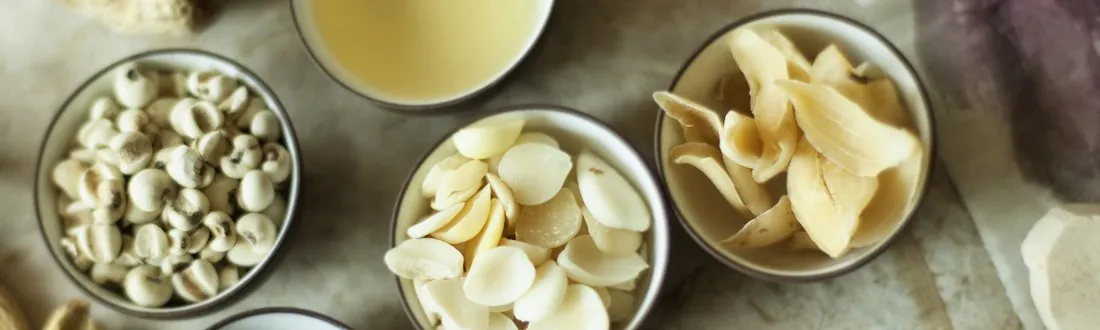
Lotus seed and lily bulb sweet soup — bai he lian zi tang — pairs two of the most quietly powerful ingredients in the Chinese kitchen. Lotus seeds nourish Heart and Kidney and calm the Shen. Lily bulb (bai he) clears residual Heat from the Heart and Lungs, moistens dryness and steadies an unsettled mind. Together they make a gentle, slightly sweet, deeply settling dessert soup that is the classical TCM dish for the wired-tired insomnia of Heart yin deficiency.
It does not knock you out. It does not work in a single bowl. But eaten in the run-up to bed for a week or two, it does a recognisable, gradual job of softening the edge of an over-active mind and supporting the kind of sleep that comes from a settled Heart rather than exhaustion.
2. Ingredients
Serves 4.
- 1/2 cup dried lotus seeds (skinned, with the green germ removed if possible — it is bitter)
- 1/2 cup dried lily bulb (bai he)
- 6 cups water
- 6–8 jujube (Chinese red dates), pitted and torn in half
- 2–3 tablespoons Chinese rock sugar, to taste
- Optional: a small piece of dried longan (long yan rou) for blood-tonifying depth
3. Method
- Rinse the lotus seeds and lily bulb under cold water. If the lotus seeds still carry their green germ, slip it out with a toothpick or fingernail — otherwise the soup turns bitter.
- Soak the lotus seeds in hot water for 30 minutes to soften (lily bulb does not need soaking).
- Place lotus seeds, lily bulb, jujube and water in a heavy-based saucepan. Bring to the boil, then reduce to a low simmer.
- Simmer gently for 45–60 minutes, until the lotus seeds are fork-tender and the lily bulb has softened into translucent petals.
- Stir in the rock sugar until dissolved. The finished soup should be lightly sweet and faintly fragrant.
- Serve warm, in small bowls, in the hour before bed.
4. Variations
- With pear — add one peeled, cubed Conference or Asian pear for the last 20 minutes; adds Lung-moistening Yin support, particularly for autumn use.
- With goji — add 1 tablespoon goji berries in the last 5 minutes; adds Liver-blood support, useful for women in perimenopause or with eye strain.
- With white fungus (snow fungus) — add a small soaked, torn piece at the start; deepens the Yin-nourishing action for skin and chronic dryness.
- With longan — add 1 tablespoon dried longan with the jujube; strengthens the blood- and Heart-tonifying action.
- Lotus seed and lily bulb congee — add 1/2 cup white rice and an extra 4 cups of water; cook 1.5 hours for a warming, deeply settling breakfast for the chronically tired.
5. When to eat it
The classic indications are restless sleep with vivid dreams, waking between 1am and 3am, an unsettled or anxious mind without a specific cause, mild palpitations, dry mouth at night, and the kind of low-grade Empty Heat that builds up in busy modern lives. I recommend it most often to patients in perimenopause, in the run-up to fertility cycles, during periods of bereavement or stress, and as part of any plan for chronic insomnia in someone who is overworked but not in any conventional sense unwell.
A small bowl in the hour before bed, ideally for 7–14 nights in a row, is the standard course. After a fortnight, take a week's break and reassess.
6. Cautions
This is a gentle dessert soup with no significant cautions for most people. Patients with very weak digestion can find lotus seed binding — if constipation worsens, halve the lotus seed and add a little pear. Diabetics should reduce or omit the rock sugar; the soup still works without it, particularly with the natural sweetness of jujube and longan. Avoid the longan variation in pregnancy and in the very Heat-pattern, easily-flushed constitution.















