



Surviving summer heat — a TCM guide to cooling down
By Dr (TCM) Attilio D'Alberto | Traditional Chinese Medicine Practitioner, Wokingham, Berkshire
British summers have changed. Heat that used to arrive for a long bank-holiday weekend now settles in for weeks. Bedrooms that used to cool by midnight stay warm until dawn. And bodies that were built to handle the older, gentler version of summer are quietly struggling — sleeping badly, eating heavily, drinking too much iced water and wondering why they feel both wired and exhausted by August. Traditional Chinese medicine has been thinking about summer heat for two thousand years. It has a coherent picture of what hot weather does to the body, why the Heart in particular suffers, and a long list of small, practical ways to keep cool that work as well now as they did in Tang dynasty Xi'an.
On this page
- Why summer heat is harder on the body than we think
- The TCM view — Fire season and the Heart
- How summer heat affects the Heart and the Shen
- Heat exhaustion and heatstroke — when to act fast
- Cooling foods and drinks for hot weather
- Daily habits that keep you cool
- Sleeping through summer nights
- Acupressure points to cool the body
- A note for perimenopausal women
- When to see a practitioner
- Frequently asked questions
- Related reading
1. Why summer heat is harder on the body than we think
The body has a narrow comfort zone. Core temperature is held within about half a degree of 37°C, day and night, by a constant background effort — sweating, dilating skin blood vessels, breathing harder, slowing digestion. In a temperate climate that effort is invisible. In a heatwave it becomes a major share of the body's metabolic budget. You feel tired not because you've done less, but because internal cooling is doing more.
Older people, children, anyone on diuretics or beta-blockers, anyone with cardiovascular disease and anyone in the perimenopausal transition have a smaller margin to play with. So do people who spend long days in poorly ventilated buildings, who exercise in the heat, or who let mild dehydration accumulate over several days. The crucial point is that summer-heat illness is rarely sudden — it builds quietly over days of inadequate fluids, broken sleep and heavy food, until a single hot afternoon tips the balance.
2. The TCM view — Fire season and the Heart
In the Five Element framework, summer is the season of Fire. Fire is the element of warmth, brightness, sociability, joy and movement. Its organs are the Heart and Small Intestine, its emotion is joy, its colour red, its taste bitter, its climate — unsurprisingly — heat. A healthy person in a healthy summer expresses the season as warmth, energy, sociability and an easy, bright temperament. That is the gift of Fire.
The pathology of summer is what happens when Fire is no longer in balance. External Heat invades the body. Internal Yin (the cool, moist, settling aspect) is dried out by sweating. The Heart, already the most active organ in summer, becomes overworked. The Spleen — the organ of digestion and fluid metabolism — is weakened by iced drinks and raw food. And the result is a familiar summer constellation: hot, irritable, thirsty, headachey, sleeping badly, eating poorly, slightly bloated, slightly anxious. None of it is dramatic on its own, but together it is the unmistakable shape of summer Heat illness.
3. How summer heat affects the Heart and the Shen
The Heart in TCM is more than the pump. It governs the blood vessels (which makes physiological sense — the cardiovascular system is the body's main heat-distribution circuit) and it houses the Shen — the spirit, the consciousness, the felt sense of being yourself. When the Heart is calm, the Shen rests; sleep is settled, mood is steady, the mind is clear. When the Heart is overheated, the Shen is disturbed; sleep fragments, dreams become vivid or anxious, the temper shortens, the mind races at moments when it should be quiet.
Externally, summer heat pushes the cardiovascular system harder — heart rate rises, blood pressure swings, blood vessels dilate to dump heat through the skin. Internally, that same heat pushes the Shen out of its resting place. You feel it as the very specific summer quality of being too hot to settle, too tired to think and too restless to rest. Protecting the Heart in summer means cooling the body, calming the mind and not asking either system to work harder than necessary in the hottest part of the day.
4. Heat exhaustion and heatstroke — when to act fast
Most summer-heat illness can be managed at home. A small minority cannot, and the difference matters. Learn the line between them.
Heat exhaustion presents with heavy sweating, headache, dizziness, thirst, mild nausea, weakness and a fast pulse. The skin is cool and clammy. The person is uncomfortable but coherent. Move them into the shade, lie them flat with feet raised, cool the skin with damp cloths, give cool (not iced) water in small sips. They should improve within thirty minutes.
Heatstroke is a medical emergency. The skin is hot and often dry (sweating has failed), core temperature is above 40°C, the person is confused, agitated, slurring or unconscious. Call 999 immediately. While waiting, move them to shade, strip excess clothes, soak with cool water and fan vigorously. Do not give fluids if they are not fully alert. Heatstroke kills people; do not "wait and see".
Anyone older, very young, on heart, blood-pressure or psychiatric medication, drinking alcohol in the heat, or already unwell, is at higher risk. A daily check-in on elderly relatives during a heatwave is one of the most useful things any of us can do.
5. Cooling foods and drinks for hot weather
TCM classifies foods by their thermal nature, regardless of the temperature they are served at. The summer aim is to favour cooling, moistening, Yin-protecting foods and limit heating, drying, dispersing foods — without going to extremes that hurt the digestion.
Favour: cucumber, courgette, watermelon, pear, mung bean, tofu, lily bulb, mulberry, lotus seed, white fish, lettuce, asparagus, oats, barley, mint, dandelion leaves, seaweed and chrysanthemum tea. Cooked food remains best for the Spleen even when the ingredients are cooling — large quantities of raw salad are heavier on digestion than they look.
Limit: coffee (drying and heating), alcohol (intensely Heat-generating), lamb, beef, ginger and cinnamon (warming), chilli, large amounts of raw garlic, deep-fried food, late-night cheese and hot curry — especially in the evening. A favourite Indian or Chinese takeaway eaten at 8pm in July is a near-perfect recipe for restless, hot sleep.
Hydrate, but warm or room-temperature. Iced drinks shock the Spleen, slow digestion and generate internal Dampness that sits on top of Heat. Plain water at body temperature, weak green tea, chrysanthemum tea or mung-bean soup are the gentlest summer fluids. The classical Chinese summer remedy is mung-bean soup — mung beans simmered with rock sugar until soft, served slightly warm. It clears Summer Heat, replaces fluids and is kind to digestion.
6. Daily habits that keep you cool
- Work with the sun, not against it. Front-load the day. Walks, errands, exercise and demanding work belong in the morning. The hottest two hours (roughly noon to 2pm at peak summer) belong to indoors, stillness and the lightest possible lunch. This is not laziness; it is the same wisdom that built siestas into every Mediterranean culture.
- Honour the Heart hour. The Heart's energy peaks at noon. Ten minutes of stillness at midday — eyes closed, slow breath, ideally in the cool indoors — gives the Shen a daytime resting point and protects the cardiovascular system from the worst of the afternoon.
- Dress for evaporation. Loose, light-coloured, breathable cotton or linen. A wide-brimmed hat. Damp a scarf or wrist cuff and let the breeze do the cooling for you. Synthetic fabrics that don't breathe are a slow heat trap.
- Cool the pulse points. A cold flannel on the back of the neck, the inner wrists or the inner ankles cools the blood that runs close to the surface. More effective than cooling the chest or forehead, and less disruptive to the Spleen than ice on the belly.
- Eat the largest meal at midday. Digestive Fire is naturally strongest around noon and weakest at night. A heavy summer evening meal piles internal heat onto an already hot night.
- Keep alcohol modest, and out of the evening. Alcohol disperses Qi upward, generates Heat, dehydrates and fragments sleep. An evening glass of wine in July almost always makes the night worse.
- Don't skip salt. Heavy sweating loses salt as well as water. Plain water in large volume without any salt at all can drop sodium dangerously over several hot days, particularly in older people. A bowl of clear miso soup, a salted broth or simply salting your food slightly more than usual is enough for most people.
7. Sleeping through summer nights
Sleep is where summer breaks first. The bedroom holds the day's heat; core temperature struggles to drop the way it normally does at sleep onset; the body wakes itself trying to cool down. A few measures consistently help.
- Cool the room before you cool yourself. Open windows in the cool of the evening, close them and the curtains before the sun comes round. A small fan moving air across the bed is more effective than a powerful one blowing at the wall.
- Cotton and linen, not polyester. Bedding matters more than people realise. Polyester traps moisture and heat. Cotton, linen or bamboo lets sweat evaporate.
- Warm feet, cool head. A counter-intuitive but classical TCM instruction. Warming the feet in a bowl of warm water for ten minutes before bed helps Yang descend, which paradoxically allows the head and chest to cool. Cold feet keep the head hot.
- Bed by eleven. The Liver and Gallbladder hours of 11pm–3am are when Yin and Blood are restored. Going to sleep before 11 captures the full window. Going to sleep at midnight halves it.
- No screens after 10. Bright light close to the face mimics daylight, suppresses melatonin and stimulates the Shen at the precise moment it should be settling.
For a deeper treatment of sleep see TCM sleep optimisation and acupuncture for insomnia.
8. Acupressure points to cool the body
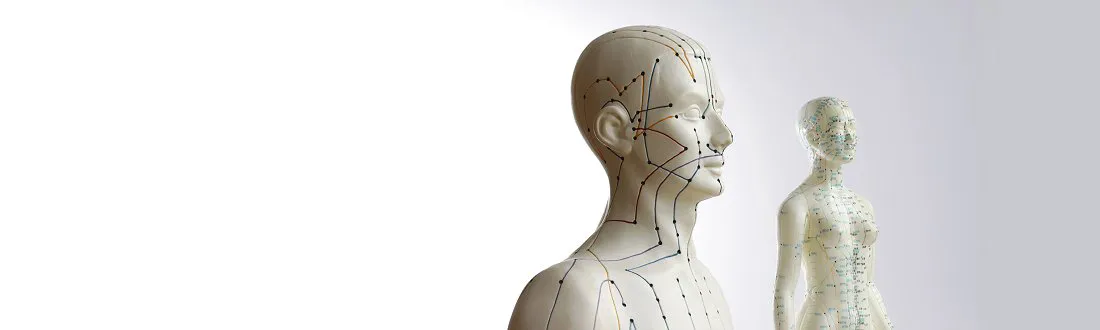
Four points can be pressed at home through the worst of the summer. Acupressure is gentle but genuinely useful for clearing summer Heat and settling the Shen. Press each point firmly for one to two minutes while breathing slowly, then release and repeat.
- HT 7 (Shenmen, “Spirit Gate”) — on the inner wrist crease, on the little-finger side, in the small hollow against the bone. The most important point for sleep and Heart Heat in TCM — calms the Shen and steadies the mind.
- LI 11 (Quchi) — at the outer end of the elbow crease when the elbow is bent. The classical point for clearing Heat from the body; useful for hot, flushed skin and the headache that creeps in on a stifling afternoon.
- KD 6 (Zhaohai) — in the depression directly below the inner ankle bone. Nourishes Yin and gently cools without depleting; the classical point for Empty Heat and broken sleep after midnight.
- Anmian (“Peaceful Sleep”) — in the soft hollow behind the ear, just below the bony bump. An extra point whose name says it all — a reliable adjunct for almost any summer sleep difficulty.
For full routines see the acupressure for insomnia and acupressure for hot flushes guides.
9. A note for perimenopausal women
Summer is the hardest season of the year for perimenopausal sleep, and the reason is worth understanding. In perimenopause, fluctuating and then declining oestrogen disrupts the hypothalamus — the brain's thermostat. The thermoneutral zone (the temperature range in which the body is comfortable doing nothing) narrows from several degrees down to a fraction of a degree. A small rise in core temperature that would have gone unnoticed at thirty-five now triggers a flush. Add the external heat of a July night and a bedroom that doesn't cool down, and the result is the wired-tired 3am wake-up that so many women in their forties and fifties recognise immediately.
TCM describes the same pattern with striking precision. The diagnosis is Kidney Yin deficiency with Empty Heat, often with Heart Yin deficiency layered on top. As Yin declines — and Kidney Yin in particular declines steeply through the perimenopausal transition — the Yang it normally restrains is no longer held in check. Heat rises that has nothing solid behind it. The flush, the night sweat, the dry mouth, the irritability and the difficulty going back to sleep are the textbook description of Empty Heat rising at night, written down in classical texts more than fifteen hundred years before the word "menopause" existed in any language.
Practical adjustments for perimenopausal women in summer:
- Add Yin-nourishing foods daily — black sesame, walnut, mulberry, mung bean, tofu, lily bulb, pear and oats. These build the cool, moist base that runaway heat needs to settle into.
- Be particularly strict with alcohol and coffee from late spring onwards. Both intensify Empty Heat and almost always worsen night sweats.
- Use KD 6 and HT 7 nightly through the summer, not just when you wake hot. Prevention is easier than rescue.
- Acupuncture works well alongside HRT. A 2016 randomised controlled trial in BMJ Open (Lund et al.) found acupuncture significantly reduced perimenopausal hot flush frequency and severity. The 2018 MsFlash Network multicentre trial in the United States reported meaningful improvements in night sweats and sleep quality. Classical Yin-nourishing formulae such as Liu Wei Di Huang Wan add another well-tolerated layer.
For more, see menopause sleep problems — natural remedies and the menopausal symptoms treatment overview.
10. When to see a practitioner
Most summer-heat discomfort responds well to the measures above. Acupuncture is worth considering if hot weather is reliably triggering insomnia, palpitations, headaches, persistent fatigue or breakthrough perimenopausal symptoms; if heat exhaustion is recurring; or if the broken nights are affecting work, driving or mood. A typical course is one session per week for four to six weeks, then maintenance treatments through the worst of the season. I see patients for summer-heat patterns — insomnia, hot flushes, palpitations and the general "fried" feeling of August — at my Wokingham, Berkshire clinic.
11. Frequently asked questions
Is iced water really bad for you in summer?
Not bad in the sense of dangerous, but unhelpful in the sense of counter-productive. The body has to warm cold water to body temperature before it can be absorbed, which slows digestion and, paradoxically, makes you feel warmer afterwards. Cool, not iced, is the TCM compromise — and the same temperature most physiologists recommend.
Why do I feel anxious in hot weather?
Two reasons. Physiologically, dehydration, broken sleep and elevated heart rate all push the body toward sympathetic dominance — the "wired" half of the nervous system. From a TCM angle, summer Heat disturbs the Shen, which lives in the Heart. The internal experience is the same: a slight, persistent edginess that other seasons don't carry.
Should I exercise in a heatwave?
Yes, but adapt. Early morning or late evening; lower intensity; more fluids; shorter sessions; never in the middle of the day. Pushing through midday heat on a long run is the single most common cause of avoidable heatstroke in healthy adults.
Are fans actually useful?
Up to about 35°C, yes — moving air increases evaporative cooling. Above that, blowing very hot air at the body can actually add heat, particularly if humidity is low and skin is dry. In a true heatwave, combine the fan with a damp cloth on the skin so there is moisture to evaporate.
Why does my sleep break at 3am specifically?
In the Chinese clock, 1am to 3am is the Liver hour. The Liver stores Blood at night, and Heat — whether from summer weather, alcohol or perimenopausal Empty Heat — frequently disturbs the Liver during these hours. Waking at this time is a classical sign of the pattern, not just bad luck.















