



Mung bean soup (lü dou tang)
By Dr (TCM) Attilio D’Alberto — registered Traditional Chinese Medicine practitioner (BAcC, RCHM) with over 25 years’ clinical experience.
On this page
1. About this recipe
Mung bean soup — lü dou tang in Mandarin — is the classical Chinese summer remedy for clearing Heat from the body. In hot weather it is eaten the way a Mediterranean might eat watermelon: daily, without ceremony, to keep the body cool and well-hydrated. In TCM terms, mung bean is sweet and cold in nature, enters the Heart and Stomach channels, and is the textbook ingredient for clearing summer Heat (shu re) and detoxifying the body.
Beyond the seasonal use, this soup is one of the gentlest and most useful daily-cooking recipes in the Chinese tradition: cheap, simple, well-tolerated, naturally vegan, and effective against a constellation of summer complaints — thirst, mild headache, hot flushed skin, irritability, mild oedema and the foggy fatigue that hot weather brings.
2. Ingredients
Serves 4–6.
- 1 cup dried mung beans (the small green whole ones, not split or skinned)
- 8–10 cups water
- 2–3 tablespoons Chinese rock sugar, or 1–2 tablespoons honey (added at the end, off the heat)
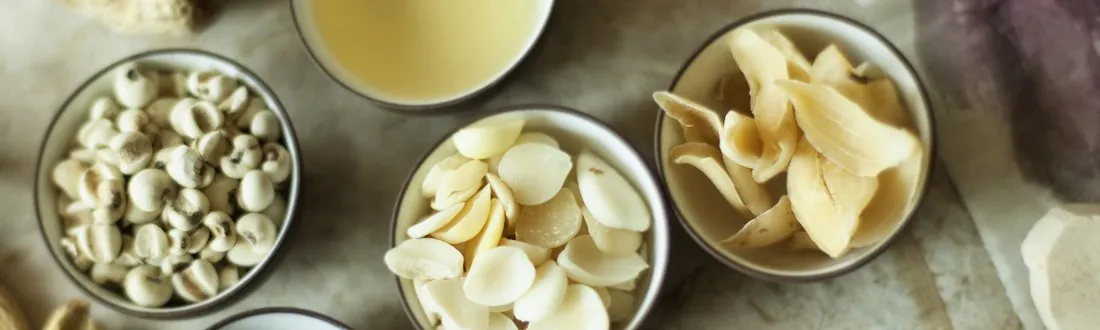
- Optional: a small piece of dried tangerine peel (chen pi) or a handful of dried lily bulb
3. Method
- Rinse the mung beans in a sieve under cold water until the water runs clear. There is no need to soak.
- Place the beans and water in a heavy-based saucepan, bring to the boil, then reduce to a low simmer.
- Cook for 45–60 minutes, until the beans have split open and the broth has turned a soft green-grey. Stir occasionally.
- Stir in the rock sugar until dissolved. Taste; the soup should be lightly sweet, not dessert-sweet.
- Serve at room temperature or lightly chilled in summer. Drink the broth and eat the beans.
4. Variations
- With lily bulb — add 1/4 cup dried lily bulb at the start; adds Heart-clearing and Shen-calming action, helpful when summer Heat is disturbing sleep.
- With dried tangerine peel (chen pi) — add a small piece at the start; counters the cool nature with a gentle qi-moving warmth, kinder to weaker digestions.
- With seaweed (kombu or kelp) — add a small piece for the last 20 minutes; adds clearing minerals and a salty Kidney-supporting note.
- Mung bean and barley — add 1/2 cup pearl barley at the start; combines Heat-clearing with damp-draining, useful for puffy summer ankles.
- Cold mung bean drink — cook as above, strain the liquid, chill in the fridge, drink the clear green broth on hot afternoons. The beans can be served separately with a little sugar as a dessert.
5. When to eat it
The classic indication is in hot weather, particularly during a heatwave or after time spent outdoors in strong sun. Mung bean soup is also eaten daily by patients who run hot constitutionally, for hot flushes (alongside acupuncture), in the early stages of a fever, for prickly heat rashes and as part of any general "cool the system down" prescription. It is the standard household first aid in southern China for sunstroke (zhong shu), though for actual heatstroke a hospital is the first stop, not a saucepan.
A cup of the cool broth taken after time in the garden, or before bed on a humid night, takes the edge off summer in a way that iced drinks cannot — iced fluids paradoxically slow the Spleen and trap Heat inside.
6. Cautions
Mung bean is cooling in nature. Patients with very weak digestion, persistent loose stools, chronic cold hands and feet or a strongly Yang-deficient constitution should eat it sparingly, or with the warming additions above (chen pi, ginger). Avoid in the depths of winter unless balancing a clearly Heat-pattern complaint. Not generally recommended in the first six weeks postpartum, when warming, blood-building soups (Dang Gui chicken, congee) are far more appropriate.















