


Bao Ji Wan (保濟丸) — Po Chai Pills
By Dr (TCM) Attilio D’Alberto — registered Traditional Chinese Medicine practitioner (BAcC, RCHM) with over 25 years’ clinical experience.
Bao Ji Wan — sold across the world in its Hong Kong form as Po Chai Pills — is one of the best-known Chinese patent remedies, kept in millions of households and travel bags for the sudden upset stomach. It is a household first-aid remedy for indigestion, nausea, bloating and mild diarrhoea from over-eating, rich or unfamiliar food and travel. This page explains what it is, how it is traditionally used, what is in it and the safety points to know — it is complementary self-care, not a substitute for medical advice.
On this page
- What is Bao Ji Wan?
- What it is traditionally used for
- The TCM pattern
- Key ingredients
- How it is taken
- Safety and cautions
- When to see a practitioner instead
- Frequently asked questions
- Related formulas
1. What is Bao Ji Wan?
Bao Ji Wan (“Protect and Benefit Pill”) is a classical Chinese patent medicine — a ready-made, over-the-counter herbal formula — used for acute digestive upset. The best-known version is Po Chai Pills, made in Hong Kong and sold as tiny pills in small glass or foil tubes. It sits in the Chinese medicine category of formulas that release the exterior and harmonise the Stomach, and it is reached for at the first sign of a churning, over-full or queasy stomach.
It is a self-care remedy for short-term use, quite different from the bespoke Chinese herbal prescriptions I formulate for individual patients — those are matched to a full diagnosis and taken as a course, whereas Bao Ji Wan is a fixed formula taken for a passing complaint.
2. What it is traditionally used for
In Chinese medicine, Bao Ji Wan is traditionally used for the sudden Stomach upset that comes from food and travel, including:
- Indigestion, over-fullness and bloating after a heavy, rich or unfamiliar meal
- Nausea and mild vomiting
- Mild diarrhoea and “travellers’ tummy”
- Queasiness with a headache and heavy head, as in a hangover or motion sickness
- The stomach side of a summer-heat or early cold-and-damp upset
It is popular with travellers precisely because it targets the everyday combination of unfamiliar food, heat and disrupted digestion. It is used as a complementary measure for minor, self-limiting upsets — not for serious or persistent gastrointestinal illness.
3. The TCM pattern
In Chinese medicine terms, Bao Ji Wan is aimed at food stagnation and Damp obstructing the Stomach and Spleen, often with a mild exterior (Wind or Summer-heat) element: a full, distended, uncomfortable abdomen, nausea, a thick tongue coat, loss of appetite and loose stools. It works by moving stagnant food, transforming Damp and settling the Stomach so that normal digestion can resume.
4. Key ingredients
Bao Ji Wan is a multi-herb formula. Rather than a single active, it combines several groups of herbs that between them settle the digestion:
- Aromatic, Damp-transforming herbs such as Huo Xiang (agastache/patchouli), which settle nausea and clear the “heavy, blocked” feeling of Damp in the stomach.
- Qi-moving and digestive herbs such as Hou Po (magnolia bark) and Chen Pi (tangerine peel), which relieve bloating and distension.
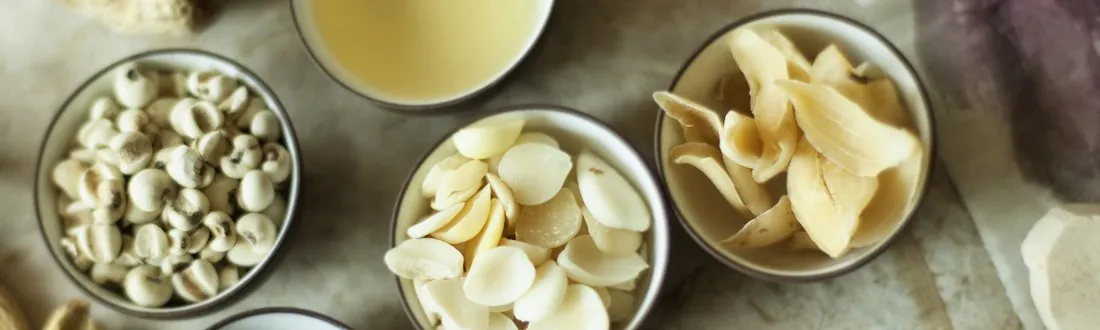
- Spleen-supporting, Damp-draining herbs such as Yi Yi Ren (Job’s tears) and Fu Ling (poria).
- Gently exterior-releasing herbs such as Ge Gen (kudzu), for the head-and-surface element of a summer or travel upset.
Exact commercial recipes vary slightly by manufacturer; always read the packaging for the full ingredient list, particularly if you have allergies.
5. How it is taken
Po Chai Pills are supplied as tiny pills in a tube, taken with warm water at the onset of symptoms and, if needed, repeated after a few hours according to the packet instructions. It is a short-term remedy for an acute episode, not something to take continuously. Follow the dose on the packaging and do not exceed it.
6. Safety and cautions
- Short-term use only. It is for a passing upset. If symptoms last more than a day or two, or keep coming back, stop and seek advice.
- Pregnancy and breastfeeding: do not use without professional advice.
- Children: use only the child-appropriate product and dose, and seek medical advice for a young child with vomiting or diarrhoea, who can dehydrate quickly.
- Dehydration: with vomiting or diarrhoea, replacing fluids and salts matters more than any pill — use oral rehydration and see a doctor if you cannot keep fluids down.
- Other medication: if you take regular prescription medicine, check with your pharmacist before using herbal patent remedies.
- Quality: buy from a reputable source; avoid unbranded imports of uncertain quality.
Red flags — seek urgent medical care for severe or persistent abdominal pain, blood in vomit or stool, high fever, signs of dehydration, or diarrhoea lasting more than a few days. These are not situations for a self-care remedy.
7. When to see a practitioner instead
Bao Ji Wan is fine for the occasional upset stomach, but recurrent indigestion, bloating, reflux, IBS-type symptoms or loose stools point to an underlying pattern that a fixed patent pill will not resolve. For those, an individualised assessment and a tailored Chinese herbal prescription — alongside dietary advice — addresses the root rather than the flare. See digestive disorders and Chinese food therapy, or arrange an online herbal consultation.
8. Frequently asked questions
Is Bao Ji Wan the same as Po Chai Pills?
Yes — Po Chai Pills is the Hong Kong brand name for Bao Ji Wan. It is the same category of digestive patent remedy, sold as tiny pills in a tube. Similar products are made by several manufacturers.
What is Bao Ji Wan used for?
Traditionally for acute, minor digestive upset: indigestion, over-fullness, nausea, bloating and mild diarrhoea from rich or unfamiliar food, over-eating, travel or a hangover. It is a short-term self-care remedy, not a treatment for ongoing digestive disease.
How quickly does it work?
For a simple upset stomach many people feel easier within an hour or two. If there is no improvement, or symptoms worsen, stop and seek advice rather than repeating the dose beyond the packet instructions.
Can I take Po Chai Pills for a hangover?
It is traditionally used for the queasy, over-full, heavy-headed stomach of a hangover, and many people find it settling. It does not treat the effects of alcohol on the rest of the body — rehydration and rest matter more.
Is it safe in pregnancy?
Do not use it in pregnancy or while breastfeeding without professional advice. For pregnancy nausea, see a practitioner for guidance tailored to you.
9. Related formulas
- Kang Ning Wan (Curing Pills) — a closely related digestive patent, also used for nausea and travel upset
- Huo Xiang Zheng Qi Wan — the classical formula for damp-cold stomach upset and “stomach flu”
- Bao He Wan — the classical food-stagnation formula for over-eating
- All Chinese herbal formulas















