




Bell's palsy — acupuncture, recovery timeline and the TCM view
Bell's palsy is sudden, usually one-sided weakness or paralysis of the facial muscles caused by inflammation of the facial nerve (cranial nerve VII). Most cases follow a viral infection and resolve over weeks to months — but early treatment matters. Steroids started within 72 hours improve outcomes. Acupuncture and electro-acupuncture have strong evidence for accelerating facial nerve recovery and reducing the risk of residual weakness when started early, alongside conventional care. Wait-and-see is not the best approach.
Important: sudden one-sided facial weakness must be assessed urgently — usually within 24 hours — to rule out stroke and to start steroids if Bell's palsy is confirmed. Phone 999 if facial weakness is sudden, especially with arm weakness, speech difficulty or visual loss. This page is about supportive Chinese-medicine care alongside conventional treatment, not as a replacement for it.
On this page
- What is Bell's palsy?
- Bell's palsy vs stroke — how to tell them apart
- Symptoms and Bell's sign
- Causes and risk factors
- Diagnosis
- Conventional treatment
- Bell's palsy in TCM — Wind invasion
- Acupuncture and electro-acupuncture
- When to start acupuncture — timing matters
- Chinese herbs
- Self-care, exercises and eye protection
- Prognosis and recovery timeline
- Complications and residual symptoms
- Frequently asked questions
1. What is Bell's palsy?
Bell's palsy is acute, usually unilateral facial paralysis caused by inflammation, swelling and compression of the facial nerve (cranial nerve VII) as it passes through the narrow bony canal in the temporal bone of the skull. The facial nerve controls all the muscles of facial expression, the stapedius muscle in the ear (which dampens loud sound), taste from the front of the tongue, and tear and saliva production.
It is named after the Scottish anatomist Sir Charles Bell (1774–1842), who first described the condition. It affects about 15–30 people per 100,000 each year, with men and women equally affected, and a peak incidence between ages 15 and 45. Most people make a full or near-full recovery within three to six months, but a meaningful minority — around 15–30% — are left with some degree of residual weakness, abnormal movements or sensory symptoms.
2. Bell's palsy vs stroke — how to tell them apart
The single most important distinction is between Bell's palsy and stroke. A stroke is a medical emergency; Bell's palsy is not, but it does need same-day or next-day medical assessment.
- Forehead movement — in Bell's palsy the whole side of the face is weak, including the forehead. You cannot raise the eyebrow or wrinkle the forehead on the affected side. In a stroke, the forehead usually still works on the affected side (because the upper face has bilateral cortical innervation).
- Other neurological signs — stroke usually involves more than just the face: arm weakness, leg weakness, slurred speech, swallowing problems, visual disturbance, loss of balance, confusion.
- Speed of onset — stroke is often instantaneous; Bell's palsy develops over hours to a couple of days.
- Bell's sign — when you try to close the affected eye, it doesn't close fully and the eye rolls upward and outward; this is a sign of true facial-nerve paralysis.
If any doubt — especially if facial weakness is sudden, accompanied by arm or speech symptoms, or you cannot completely rule out stroke — call 999. The "FAST" test (Face, Arms, Speech, Time) is the standard screen.
3. Symptoms and Bell's sign
Bell's palsy comes on suddenly — often noticed on waking, when looking in a mirror or when trying to drink and the liquid spills from the corner of the mouth. The full picture includes some or all of:
- One-sided facial weakness or paralysis affecting forehead, eye, cheek and mouth.
- Drooping of the mouth and inability to smile evenly.
- Inability to close the eye fully or blink on the affected side.
- Bell's sign — the eyeball rolls upward and outward when trying to close the eye.
- Drying of the eye, watering, gritty sensation.
- Dribbling of food, drink or saliva from the corner of the mouth.
- Altered or absent taste on the front two-thirds of the tongue on the affected side.
- Hyperacusis — sounds seeming abnormally loud in the affected ear (because the stapedius muscle is paralysed).
- Pain or ache around the ear, jaw or behind the ear, often before the weakness starts.
- Tearing — either dryness or excessive watering of the eye on the affected side.
- Numbness or tingling on the affected side of the face (the sensory nerves are usually intact, but altered movement creates altered sensation).
- Headache.
4. Causes and risk factors
The exact cause of Bell's palsy is not fully understood, but most cases are thought to follow reactivation of latent herpes simplex virus type 1 (HSV-1) — the virus that causes cold sores — in the geniculate ganglion of the facial nerve. The resulting inflammation causes the nerve to swell within its bony canal and become compressed and ischaemic. Other implicated viruses include varicella zoster (Ramsay Hunt syndrome — not Bell's palsy proper, see below), Epstein–Barr virus, cytomegalovirus and possibly COVID-19.
Risk factors include:
- Recent upper respiratory tract infection or viral illness.
- Pregnancy — especially the third trimester and the first week postpartum (three times the risk).
- Diabetes — particularly poorly controlled type 2 diabetes.
- Hypertension.
- Obesity.
- Pre-eclampsia.
- Family history of Bell's palsy.
- Cold exposure to one side of the face (e.g. sleeping with a fan blowing on the face, riding a motorbike without a visor in cold weather, sitting under air conditioning).
- Severe physical or emotional stress shortly before onset.
Ramsay Hunt syndrome is a related but distinct condition caused by reactivation of varicella zoster virus, producing facial palsy with a painful vesicular rash in or around the ear, hearing loss and vertigo. It carries a worse prognosis than Bell's palsy and needs prompt antiviral and steroid treatment.
5. Diagnosis
Bell's palsy is a clinical diagnosis — based on history and examination — and a diagnosis of exclusion. Important features:
- Sudden onset, reaching maximum severity within 72 hours.
- Unilateral involvement of all branches of the facial nerve (forehead included).
- No other neurological signs.
- No external ear or mastoid lesion (otherwise consider Ramsay Hunt syndrome).
- No middle ear infection (otherwise consider otitis-related facial palsy).
- No parotid gland mass (otherwise consider tumour-related facial palsy).
Investigations are not required for typical cases but may be done for atypical presentations: MRI to exclude stroke, tumour or multiple sclerosis; blood tests for diabetes, Lyme disease, sarcoidosis; nerve conduction studies for severe or non-resolving cases.
6. Conventional treatment
- Oral steroids — prednisolone started within 72 hours of onset improves the likelihood of complete recovery and reduces residual weakness. Typically 50–60 mg daily for 10 days, then a tapered course. This is the most important conventional intervention.
- Antivirals — aciclovir or valaciclovir are sometimes added for severe cases; evidence for added benefit is modest but they are routinely given for suspected Ramsay Hunt syndrome.
- Eye protection — absolutely essential. The affected eye cannot close fully, leaving the cornea exposed to drying and ulceration. Lubricating eye drops by day, an ointment at night, and taping or patching the eye closed at night.
- Facial exercises — gentle mirror-guided exercises to maintain muscle tone and re-train movement.
- Specialist referral — ENT, neurology or maxillofacial surgery if recovery is incomplete by three months, if symptoms recur, or if atypical features are present.
7. Bell's palsy in traditional Chinese medicine — Wind invasion
In traditional Chinese medicine, Bell's palsy is described in classical texts as kou yan wai xie (口眼歪斜) — "deviated mouth and eye". The classical pattern is external Wind invading the channels of the face, exploiting a temporary weakness of wei qi (defensive qi) usually following exhaustion, stress, illness or exposure to cold draughts. The Wind is often combined with Cold (acute, with no inflammation), Heat (with redness, swelling, ear pain) or Phlegm (in chronic or recurrent cases).
The main patterns:
- Wind-Cold attacking the channels — sudden onset after exposure to cold draught; facial weakness with no redness or heat signs; possibly stiff neck and aversion to cold. Tongue: pale with thin white coat.
- Wind-Heat attacking the channels — onset after viral illness; facial weakness with ear pain, swelling, redness, hyperacusis, dry eye. Tongue: red with thin yellow coat.
- Wind-Phlegm obstructing the channels — chronic or recurrent palsy with persistent weakness, facial fullness or numbness. Tongue: pale with greasy coat.
- Qi and blood deficiency with stasis — the chronic phase: long-standing weakness with thin atrophic facial muscles, slow recovery, occasional twitches or contractures. Tongue: pale and possibly purplish.
The principle of treatment shifts with phase: expel Wind, unblock channels and move qi and blood in the acute phase; tonify qi and blood, dispel residual Wind-Phlegm, move blood in the chronic phase.
8. Acupuncture and electro-acupuncture
Acupuncture has been used for facial paralysis in China for centuries and has substantial modern evidence. Several systematic reviews and meta-analyses have concluded that acupuncture — particularly when combined with standard medical treatment — improves recovery rates and reduces residual deficits in Bell's palsy. The British Medical Acupuncture Society lists Bell's palsy among the conditions with reasonable evidence for acupuncture.
Typical point selection
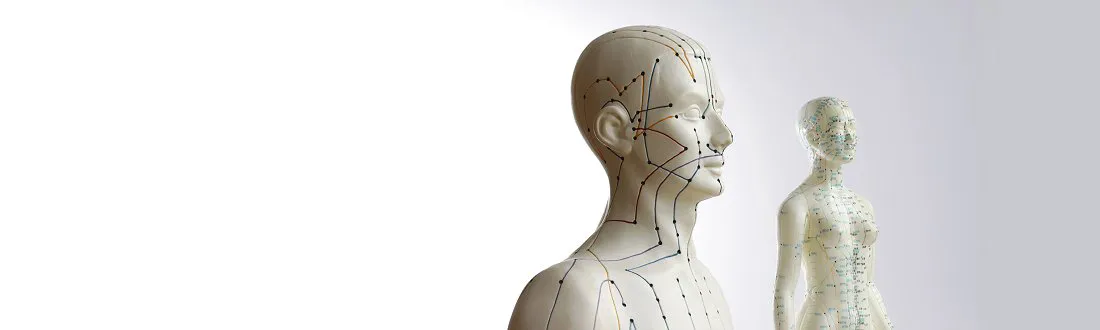
- Local facial points — ST 2 (Sibai), ST 4 (Dicang), ST 6 (Jiache), ST 7 (Xiaguan), GB 14 (Yangbai), BL 2 (Cuanzhu), TB 17 (Yifeng), SI 18, Taiyang, Yintang — chosen to cover all weakened muscle groups.
- Distal points — LI 4 (Hegu) on the contralateral (opposite) hand is the classical pairing for facial paralysis — the "face and head go to Hegu" rule. ST 36 to strengthen qi and blood. SP 6 to nourish blood. LI 11 to clear Heat in Wind-Heat patterns. GB 20 and BL 12 to expel external Wind from the upper body. KI 3 for chronic cases.
- Electro-acupuncture — low-frequency electrical stimulation (1–5 Hz) applied to pairs of facial points after the initial inflammatory phase has settled (usually after the first 7–10 days). This drives muscle contraction and accelerates re-innervation. Avoid electro-acupuncture in the very acute inflammatory phase — some clinicians wait 10–14 days, then add it. Evidence for the optimal timing is mixed but most TCM practitioners avoid strong electrical stimulation in week 1.
- Cupping and gua sha — gentle local cupping around the affected side, and gua sha to the neck and shoulders, can support channel circulation.
- Moxibustion — for Wind-Cold pattern and chronic Qi-deficient cases, gentle warmth from moxa over local facial points and distal points (ST 36, LI 4) supports recovery.
What the evidence shows
- Multiple randomised trials and meta-analyses (Chen et al, Liu et al, Wang et al) show acupuncture combined with conventional treatment improves complete recovery rates compared with conventional treatment alone.
- Earlier intervention is associated with better outcomes — ideally within the first 1–2 weeks alongside steroids.
- Electro-acupuncture appears to provide additional benefit over manual acupuncture in chronic or slow-recovering cases.
- The methodological quality of older Chinese trials is variable; better-designed trials are emerging.
9. When to start acupuncture — timing matters
Best outcomes come from starting acupuncture within the first 1–2 weeks of onset, alongside steroids and eye care. A typical course:
- Acute phase (week 1) — gentle local needling and distal points; expel Wind; do not over-stimulate inflamed tissue; usually no electro-acupuncture.
- Sub-acute phase (weeks 2–6) — main treatment window. Frequent sessions (2–3 per week), full local needling, electro-acupuncture introduced.
- Recovery phase (weeks 6–12) — weekly sessions; focus on tonifying qi and blood; resolve residual stasis.
- Chronic / residual phase (3+ months) — for incomplete recovery; weekly to fortnightly sessions; tonify qi and blood; address synkinesis (abnormal movements).
Even patients who present months or years after the original episode can benefit from acupuncture for residual weakness, tightness or abnormal movements, although the rate of improvement is slower.
10. Chinese herbs for Bell's palsy
Chinese herbs are prescribed according to the pattern and phase. Common formulas:
- Qian Zheng San — the classical formula specifically for facial deviation. Expels Wind and resolves Phlegm in the channels.
- Da Qin Jiao Tang — Wind-Cold or Wind-Heat in the channels with weakness.
- Chuan Xiong Cha Tiao San — external Wind in the head and face.
- Bu Yang Huan Wu Tang — the chronic-phase formula: tonifies qi and moves blood; ideal for slow-recovering Bell's palsy with weakness, atrophy and blood stasis.
- Xiao Chai Hu Tang — if the palsy is linked to a recent viral illness with residual lassitude.
Key single herbs commonly used: Quan Xie (scorpion), Jiang Can (silkworm), Bai Fu Zi — the three components of Qian Zheng San — plus Fang Feng, Qiang Huo, Huang Qi and Dang Gui.
Herbs must be prescribed by a qualified practitioner and used alongside, not instead of, conventional treatment. Always inform your doctor and neurology team about any herbs.
11. Self-care, exercises and eye protection
- Protect the eye — the single most important self-care measure. Lubricating drops by day; ointment at night; patch or tape the eye shut at night; sunglasses outdoors; avoid wind, dust and smoke.
- Facial exercises — mirror-guided exercises practised 2–3 times daily. Try to raise eyebrows, frown, close eyes tightly, smile, pucker, snarl, blow out cheeks. Slow, deliberate movements with the unaffected side helping if needed.
- Gentle massage — warm-handed upward circular strokes from chin to temple on the affected side for 5–10 minutes twice daily. Improves local circulation.
- Warm compresses — a warm flannel over the affected side for 10 minutes twice daily improves circulation and comfort. Avoid in the first 48 hours of acute Wind-Heat pattern (when local area is hot and red).
- Eat carefully — food may pocket on the affected side; chew slowly on the unaffected side; rinse the mouth after meals to prevent food retention and dental caries.
- Avoid cold draughts — particularly on the affected side. No fans, air conditioning or open windows blowing on the face. Scarves and hats in cold weather.
- Sleep well, manage stress and avoid alcohol — these support nerve recovery.
- Speech therapy — for slow recovery or persistent speech difficulties, ask your doctor about referral.
12. Prognosis and recovery timeline
- About 70% of people with Bell's palsy recover completely without treatment within 3–6 months.
- Steroids started within 72 hours raise this to around 85%.
- Adding acupuncture (particularly with electro-acupuncture from week 2) appears to raise complete-recovery rates further in trials.
- Most recovery occurs in the first 2–3 months. If there is no movement by 3 weeks, recovery tends to be slower and less complete.
- By 6 months, most people who will recover have done so. Recovery can continue for up to 12 months.
- Better prognosis — younger age, partial paralysis (vs complete), early steroid and acupuncture treatment, no other risk factors.
- Worse prognosis — older age, complete paralysis at onset, hyperacusis or severe taste loss, diabetes, pregnancy, delayed treatment, recurrent episodes, Ramsay Hunt syndrome rather than Bell's palsy.
13. Complications and residual symptoms
- Synkinesis — involuntary co-movements (e.g. the eye closes when the mouth smiles) caused by misdirected nerve regrowth. The most common residual symptom.
- Contracture — tight, shortened muscles giving an over-active resting appearance on the affected side.
- Crocodile tears — tearing while eating, from misdirected regrowth of nerve fibres.
- Persistent weakness — particularly of the eye closure and mouth corner.
- Cosmetic asymmetry at rest or with movement.
- Recurrence — 7–15% of patients have a second episode at some point.
- Corneal damage — if eye protection is inadequate.
- Psychological impact — low mood, social withdrawal and anxiety are common during recovery and worth addressing directly.
Acupuncture and Chinese herbs continue to be useful in the chronic phase for residual weakness, synkinesis and contracture, particularly when combined with structured facial rehabilitation.
14. Frequently asked questions
Is Bell's palsy a stroke?
No — but sudden one-sided facial weakness must be assessed urgently to rule out stroke. The key difference is the forehead: in Bell's palsy the forehead is weak on the affected side; in stroke the forehead usually moves normally because of bilateral cortical innervation. If unsure, call 999.
What is Bell's sign?
When a person with Bell's palsy tries to close the affected eye, the eyeball rolls upward and outward instead of the lid closing. It is a sign of true facial-nerve paralysis. It is named after Sir Charles Bell.
Can acupuncture cure Bell's palsy?
Most cases of Bell's palsy recover on their own; acupuncture and steroids both increase the chance of complete recovery and reduce residual symptoms. The earlier acupuncture is started (ideally within the first 1–2 weeks alongside steroids), the better the outcome.
How long does Bell's palsy last?
Improvement usually starts within 2–3 weeks. Most people recover fully or nearly fully within 3–6 months. A small number have residual symptoms beyond 6 months.
Should I take steroids?
Yes, if started within 72 hours of onset — prednisolone significantly improves the chance of complete recovery. Steroids are the most important conventional intervention. Acupuncture is complementary to steroids, not a substitute.
Is Bell's palsy permanent?
Usually not. About 85% of treated patients recover completely. About 15% have some residual weakness, abnormal movement (synkinesis) or asymmetry.
Can Bell's palsy come back?
Yes — 7–15% of patients experience a recurrence at some point. Recurrent episodes warrant more thorough investigation for underlying causes (diabetes, hypertension, immune problems).
Does cold cause Bell's palsy?
Cold exposure to one side of the face is a recognised trigger in many cases — sleeping with a fan, riding a motorbike in cold weather, sitting under air conditioning. TCM has described this for centuries as "Wind invading the channels of the face". The underlying mechanism is thought to be reactivation of latent virus and inflammation of the facial nerve in a susceptible person.
Is Bell's palsy a sign of MS or a brain tumour?
Almost never. Typical Bell's palsy is benign. If the presentation is atypical — bilateral, slowly progressive, recurrent, accompanied by other neurological signs, with hearing loss or vertigo — further investigation is warranted to exclude multiple sclerosis, tumour, sarcoidosis, Lyme disease or HIV.
Can acupuncture help years after Bell's palsy?
Yes — acupuncture can still help residual weakness, synkinesis and tight contracture even years after the original episode. Progress is slower than in the acute phase but still possible.
References
- NHS. Bell's palsy.
- NICE Clinical Knowledge Summary. Bell's palsy.
- Madhok VB, et al. Corticosteroids for Bell's palsy. Cochrane Database of Systematic Reviews.
- Chen N, et al. Acupuncture for Bell's palsy. Cochrane Database of Systematic Reviews.
- Liu Y, et al. (2022) Comparative efficacy of different acupuncture therapies for Bell's palsy: a network meta-analysis.
To discuss acupuncture treatment for Bell's palsy or persistent facial-nerve symptoms, contact me or book a consultation at my Wokingham clinic. Early treatment is best — the first two weeks are the most important window.
Related reading: Trigeminal neuralgia | Shingles | Nerve pain | Jaw pain and TMD
I treat Bell’s palsy at my Wokingham, Berkshire acupuncture clinic. Early treatment matters — patients presenting within the first 2–3 weeks of onset typically see the strongest response. See the treatment prices page for consultation fees.
Related Chinese herbal formulas
Classical Chinese herbal formulas that may be clinically relevant for Bell’s palsy, depending on TCM pattern differentiation:
- Da Qin Jiao Tang — (idiopathic facial nerve palsy)
- Jiu Wei Qiang Huo Tang — from Wind exposure — see Bell’s palsy
- Wu Yao Shun Qi San — early stage with Wind-Cold and Qi stagnation pattern
- Yu Zhen San — (modified) — see Bell’s palsy
A practitioner selects from these based on the individual TCM pattern identified in consultation. Read more about Chinese herbal medicine or book an online herbal consultation.
Where can I get bell's palsy treatment in Wokingham?
I treat bell's palsy at my Wokingham clinic at 49 Denmark Street, RG40 2AY. Patients across Berkshire — Reading, Bracknell, Twyford, Crowthorne and Sandhurst — travel here for combined acupuncture and Chinese herbal medicine as a complementary therapy alongside conventional care. The typical course is 8–12 weeks of weekly sessions with monthly maintenance afterwards. Online Chinese herbal consultations are also available across the UK if you cannot attend in person.
Where can I get bell's palsy treatment in Wokingham?
I treat bell's palsy at my Wokingham clinic at 49 Denmark Street, RG40 2AY. Patients across Berkshire — Reading, Bracknell, Twyford, Crowthorne and Sandhurst — travel here for combined acupuncture and Chinese herbal medicine as a complementary therapy alongside conventional care. The typical course is 8–12 weeks of weekly sessions with monthly maintenance afterwards. Online Chinese herbal consultations are also available across the UK if you cannot attend in person.
Where can I get bell's palsy treatment in Wokingham?
I treat bell's palsy at my Wokingham clinic at 49 Denmark Street, RG40 2AY. Patients across Berkshire — Reading, Bracknell, Twyford, Crowthorne and Sandhurst — travel here for combined acupuncture and Chinese herbal medicine as a complementary therapy alongside conventional care. The typical course is 8–12 weeks of weekly sessions with monthly maintenance afterwards. Online Chinese herbal consultations are also available across the UK if you cannot attend in person.
Where can I get bell's palsy treatment in Wokingham?
I treat bell's palsy at my Wokingham clinic at 49 Denmark Street, RG40 2AY. Patients across Berkshire — Reading, Bracknell, Twyford, Crowthorne and Sandhurst — travel here for combined acupuncture and Chinese herbal medicine as a complementary therapy alongside conventional care. The typical course is 8–12 weeks of weekly sessions with monthly maintenance afterwards. Online Chinese herbal consultations are also available across the UK if you cannot attend in person.















