


Snow fungus and red date sweet soup
By Dr (TCM) Attilio D’Alberto — registered Traditional Chinese Medicine practitioner (BAcC, RCHM) with over 25 years’ clinical experience.
On this page
1. About this recipe
Snow fungus (bai mu er, also known as white fungus or tremella) is one of the most prized Yin-nourishing ingredients in the Chinese kitchen. Cooked slowly into a clear, slightly gelatinous broth with red dates and rock sugar, it produces a dessert soup that is gentle, restorative and quietly powerful for skin, body fluids and the kind of chronic dryness that comes from depleted reserves, dry indoor heating, long screen days or perimenopausal Yin decline.
In traditional Chinese households this soup is what an English household might make a custard for — a familiar, quietly luxurious dessert with a clear purpose. The soup is naturally vegan, naturally low-fat, and unusually well-tolerated by patients who otherwise struggle with rich tonics.
2. Ingredients
Serves 4–6.
- 1 medium-sized whole dried snow fungus (about 20g)
- 8–10 jujube (Chinese red dates), pitted and torn in half
- 6 cups water
- 3–4 tablespoons Chinese rock sugar, to taste
- Optional: 1 tablespoon goji berries
- Optional: a small piece of fresh ginger, two thin slices
3. Method
- Soak the snow fungus in a bowl of warm water for 30–45 minutes until it has expanded to several times its dry size and become soft and translucent.
- Trim away the hard yellow base where the fungus was attached to the wood. Tear the rest into bite-sized pieces with your fingers.
- Place the torn fungus, red dates and water in a heavy-based saucepan. Bring to the boil, then reduce to a very low simmer.
- Simmer for 1.5–2 hours, until the snow fungus has dissolved into a soft, slightly thickened broth with a faint silken texture. Stir occasionally.
- Add the rock sugar (and goji berries, if using) in the last 10 minutes. Stir until the sugar has dissolved.
- Serve warm in small bowls. The soup thickens further on cooling; reheat with a splash of water if it sets overnight.
4. Variations
- With pear — add one peeled, cubed Conference pear for the last 30 minutes; particularly good in autumn and for dry cough.
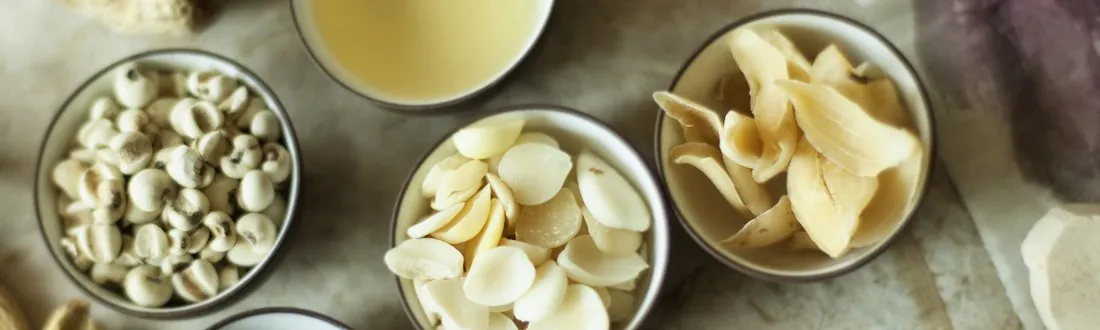
- With lotus seed — add 1/4 cup soaked lotus seeds at the start; layers Shen-calming and Heart-tonifying action onto the Yin support.
- With lily bulb — add 1/4 cup dried lily bulb at the start; intensifies the Lung-moistening and mind-settling effect; excellent for autumn use.
- With papaya — add half a small ripe papaya, cubed, for the last 15 minutes; classical southern Chinese variation for skin and breast-tissue support.
- Cold summer version — cook as above, chill in the fridge, serve cold with a sprinkle of goji on top. Useful in summer when the standard hot dessert is unappealing but the Yin-nourishing effect is still wanted.
5. When to eat it
The classical indications are skin dryness, dull or flaky complexion, dry cough lingering after a cold, dry mouth at night, vaginal or eye dryness, scant body fluids, and the more general sense of "running on empty" that comes after a busy autumn or a stressful year. I recommend it most often to patients in perimenopause, to those recovering from a long illness, to women in the late stages of pregnancy who feel dry and depleted, and to anyone who works in dry indoor environments (offices, hospitals, theatres, planes).
A small bowl, two to three times a week through autumn and winter, is the standard course. The effect on skin is noticeable after about three weeks; the deeper Yin-tonifying effect, after eight to twelve weeks. Like all proper food therapy, it is the steady cumulative effect that matters — not a single bowl.
6. Cautions
This is a gentle Yin tonic with few cautions. Patients with a clearly damp or phlegm-pattern complaint (sluggish digestion, heavy chest, thick coated tongue) should reduce the rock sugar and avoid the papaya variation, both of which tend to generate damp. Diabetics should reduce or omit the rock sugar; the soup still works well with a little stevia or simply unsweetened. Avoid using snow fungus that has been treated with sulphur (it looks unnaturally bright white) — choose the slightly cream-coloured natural variety from a trusted supplier.















