



TCM vs Ayurveda: What's the Difference?
By Dr (TCM) Attilio D'Alberto | Traditional Chinese Medicine Practitioner, Wokingham
Traditional Chinese Medicine (TCM) and Ayurveda are the two great ancient systems of natural medicine — one from China, one from India. From the outside they look alike: both are holistic, both treat the whole person, and both aim to restore balance. But they rest on genuinely different foundations. TCM works with Qi, Yin and Yang and its five elements of Wood, Fire, Earth, Metal and Water; Ayurveda works with prana, the three doshas (Vata, Pitta and Kapha) and the elements of space, air, fire, water and earth.
People often ask how Chinese medicine compares with Ayurveda, and whether one is “better” than the other. Both are living traditions with thousands of years of clinical experience behind them, and both are used today as complementary therapies alongside conventional care. This article sets them side by side — their philosophy, diagnosis, treatments, herbs and diet — and explains where they differ, where they overlap, and how to think about choosing between them.
On this page
- The two systems at a glance
- Origins and history
- Vital energy: Qi vs prana
- Five elements, two different sets
- How each one diagnoses
- The treatments compared
- Herbs and diet
- What they share, and can you combine them?
- Frequently asked questions
1. The two systems at a glance
The quickest way to see the difference is side by side:
| Feature | Traditional Chinese Medicine | Ayurveda |
|---|---|---|
| Origin | China, over 2,000 years (the Huangdi Neijing) | India, over 3,000 years (the Vedas) |
| Vital energy | Qi | Prana |
| Balance model | Yin and Yang | The three doshas: Vata, Pitta, Kapha |
| Constitution | Patterns of Qi, Blood, Yin and Yang across the organ systems | Your dosha make-up (prakriti) |
| The five elements | Wood, Fire, Earth, Metal, Water | Space (ether), Air, Fire, Water, Earth |
| Diagnosis | Tongue and pulse, observation, pattern differentiation | Pulse (nadi pariksha), tongue, constitution assessment |
| Main treatments | Acupuncture, Chinese herbs, moxibustion, cupping, tui na | Herbal medicine, panchakarma cleansing, yoga, marma therapy, oil massage |
| Diet | By temperature, flavour and organ system | By dosha and the six tastes |
| Mind-body practice | Tai chi, qi gong | Yoga, meditation |
2. Origins and history
Ayurveda is generally considered the older of the two. Its name comes from the Sanskrit ayur (life) and veda (knowledge) — “the science of life” — and its roots reach back over three thousand years to the Vedas, the ancient sacred texts of India, later systematised in classical works such as the Charaka Samhita and Sushruta Samhita.
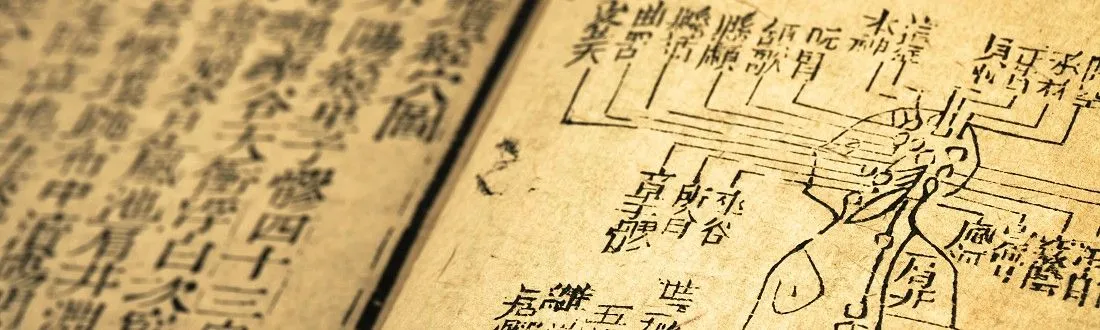
Traditional Chinese Medicine developed independently in China, with its foundational text, the Huangdi Neijing (The Yellow Emperor's Classic of Medicine), compiled around two thousand years ago and refined by generations of physicians since. The two systems arose in different cultures and, as far as the evidence shows, developed largely separately — which is why their striking similarities are all the more interesting.
3. Vital energy: Qi vs prana
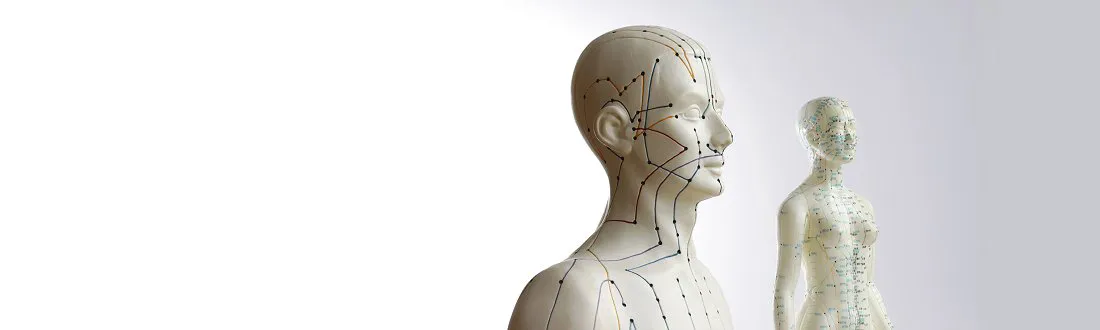
Both systems are built on the idea of a vital life force that flows through the body, and health as the free, balanced flow of that force. In TCM it is Qi, which flows through a network of meridians; in Ayurveda it is prana, which flows through channels called nadis and is concentrated at energy centres known as chakras.
Where they part company is in how they describe balance. TCM frames it as Yin and Yang — two complementary opposites (cool/warm, still/active, substance/function) whose balance underlies health. Ayurveda frames it as the three doshas — Vata (air and space, governing movement), Pitta (fire and water, governing metabolism and transformation) and Kapha (water and earth, governing structure and lubrication). Everyone is born with their own balance of the three, called their prakriti or constitution, and illness is understood as the doshas moving out of that balance.
4. Five elements, two different sets
Here is one of the most confusing overlaps. Both systems use “five elements” — but they are not the same five.
- TCM uses Wood, Fire, Earth, Metal and Water, understood as five phases of transformation that map onto the organ systems, emotions, seasons, tastes and colours, and that generate and control one another in fixed cycles.
- Ayurveda uses the panchamahabhutas — space (ether), air, fire, water and earth — the building blocks of all matter, which combine in pairs to form the three doshas.
So both reduce the world to five elements and both link them to the body, but the elements themselves, and the way they are used, are different: TCM's are dynamic phases in a cycle, Ayurveda's are the raw materials that make up the doshas.
5. How each one diagnoses
Both traditions rely heavily on the pulse and the tongue — another remarkable parallel — but read them differently. A TCM practitioner takes the pulse at three positions on each wrist, each reflecting particular organs, and examines the tongue's body and coating, building a picture through “pattern differentiation” — identifying which patterns (such as damp, heat, deficiency or stagnation) are present.
An Ayurvedic practitioner also reads the pulse (nadi pariksha) and the tongue, but interprets them to work out your underlying constitution (prakriti) and where the doshas have gone out of balance (vikriti). In both cases the goal is the same: not simply to name a disease, but to understand the individual's whole pattern and treat the person rather than the label.
6. The treatments compared
The everyday tools of each system are quite distinct:
- TCM centres on acupuncture, Chinese herbal medicine, moxibustion (warming with mugwort), cupping, tui na massage and dietary therapy, supported by tai chi and qi gong.
- Ayurveda centres on herbal medicine, diet and lifestyle, panchakarma (a programme of cleansing and detoxifying therapies), yoga, meditation, and body therapies such as abhyanga (warm oil massage) and marma therapy (stimulating vital points, comparable to acupressure).
Acupuncture is unique to Chinese medicine — Ayurveda has no direct equivalent of needling, though its marma‑point work touches similar ideas. Panchakarma cleansing, likewise, has no real counterpart in TCM, which tends to rebuild and regulate rather than purge.
7. Herbs and diet
Both are sophisticated herbal traditions, but they draw on completely different pharmacopoeias. Chinese herbal medicine combines herbs into bespoke formulas matched to the individual's pattern, drawn from the Chinese materia medica. Ayurveda has its own distinct herbs — such as ashwagandha, turmeric, triphala and brahmi — chosen to balance the doshas.
Diet is central to both, but organised differently. TCM classifies foods by their temperature, flavour and the organ they support, aiming to warm, cool, dry or nourish according to your pattern. Ayurveda classifies foods by their effect on the doshas and by the six tastes (sweet, sour, salty, pungent, bitter and astringent), recommending the tastes that settle your particular constitution. Both, in other words, treat food as medicine — they just sort it by a different logic.
8. What they share, and can you combine them?
For all their differences, TCM and Ayurveda share a great deal: both are holistic (treating the whole person, not an isolated symptom), individualised (two people with the same complaint may be treated very differently), preventive (emphasising balance and lifestyle before illness takes hold), and rooted in the flow and balance of a vital energy. Their shared reliance on pulse and tongue diagnosis, and on food, breath and movement as medicine, is striking given that they developed independently.
Can you use both? In principle they are compatible, and some people draw on each. In practice, each is a deep system best delivered by a practitioner trained in it — and mixing herbal prescriptions from two traditions at once is not advisable without professional oversight, as herbs can interact. If you are drawn to Chinese medicine, my TCM practice in Wokingham offers acupuncture and Chinese herbal medicine. Whichever system you choose, both are complementary therapies used alongside — not instead of — conventional medical care, and any new or persistent symptom should always be assessed by your doctor.
9. Frequently asked questions
What is the main difference between TCM and Ayurveda?
Both are ancient holistic systems that treat the whole person by restoring the balance of a vital energy, but they describe that energy and its balance differently. Traditional Chinese Medicine works with Qi, Yin and Yang and the five elements Wood, Fire, Earth, Metal and Water. Ayurveda, from India, works with prana, the three doshas (Vata, Pitta and Kapha) and the elements space, air, fire, water and earth.
Which is older, TCM or Ayurveda?
Ayurveda is generally considered the older of the two, with roots reaching back over three thousand years to the Vedas of ancient India. Traditional Chinese Medicine's foundational text, the Huangdi Neijing, was compiled around two thousand years ago. The two systems developed largely independently in different cultures.
Do both use acupuncture?
No. Acupuncture is unique to Chinese medicine. Ayurveda has no direct equivalent of needling, although it uses marma therapy, which stimulates vital points on the body and is closer to acupressure than to acupuncture.
Are the five elements the same in both systems?
No, and this is a common source of confusion. Both use five elements, but they are different sets. TCM uses Wood, Fire, Earth, Metal and Water as phases of transformation linked to the organ systems. Ayurveda uses space (ether), air, fire, water and earth as the building blocks of matter, which combine to form the three doshas.
Can I use TCM and Ayurveda at the same time?
In principle the two systems are compatible and some people draw on both, but each is a deep tradition best delivered by a practitioner trained in it. Taking herbal prescriptions from two different systems at once is not advisable without professional oversight, because herbs can interact. Both are complementary therapies used alongside conventional medical care, not as a replacement for it.















