



Damp-heat constitution (Shi Re)
By Dr (TCM) Attilio D’Alberto — registered Traditional Chinese Medicine practitioner (BAcC, RCHM) with over 25 years’ clinical experience.
On this page
- Overview
- How damp-heat develops
- Recognising the pattern
- Tongue and pulse
- Common health conditions
- Dietary approach
- Foods to favour
- Foods to limit
- Sample day's eating
- Cooking methods
- Lifestyle
- Common mistakes
- Risks if uncorrected
- Frequently asked questions
- Related pages
1. Overview
Damp-heat (Shi Re) combines pathological damp with internal heat. The picture is sticky and inflamed at once: oily, hot skin breaking out in pustular acne; smelly sweat; bitter taste; dark scanty urine; loose foul-smelling stools or constipation; and a strong tendency to inflammatory and infectious conditions of the skin, urinary tract, gallbladder, liver, gut and reproductive organs.
Damp-heat lodges in different organs to produce different syndromes: in the Liver and Gallbladder it produces hepatitis, gallstones, jaundice, bitter taste and rib-side pain; in the Bladder, recurrent UTIs and dark urine; in the Spleen and Stomach, foul breath, oily skin, sticky stools; in the Large Intestine, foul-smelling sticky stools and haemorrhoids; in the lower jiao of women, yellow vaginal discharge, pelvic inflammation and recurrent thrush.
This constitution is created by a recognisable Western lifestyle: rich, fried, spicy and greasy food; daily alcohol; smoking; chronic stress; hot humid climate or overheated indoor environment. It often coexists with qi stagnation in driven, frustrated, hard-living personalities. Diet must clear both damp and heat without overcooling the digestive system. Classical formulae include Long Dan Xie Gan Tang, San Ren Tang and Yin Chen Hao Tang.
2. How damp-heat develops
- Daily alcohol — particularly beer and spirits; "alcoholic damp-heat" is a classical TCM diagnosis
- Daily fried, greasy, spicy and rich food — takeaways, BBQ, deep-fried, hot curries
- Smoking and recreational stimulants
- Chronic stress combined with rich food — the high-functioning city lifestyle
- Hot, humid climates; overheated indoor environments
- Sedentary lifestyle plus rich diet (overlap with phlegm-damp)
- Long courses of antibiotics, hormones, NSAIDs (which can stir Liver damp-heat)
- Chronic Liver disease, fatty liver, viral hepatitis
- Chronic infection of the urinary or gynaecological system
- Genetic predisposition — family history of acne, gout, gallstones, hepatitis, IBD
3. Recognising the pattern
- Oily skin with acne, especially on chest, back, shoulders; pustular and inflamed
- Bitter or metallic taste in the mouth, particularly in the morning
- Yellow, thick, greasy tongue coating
- Dark, scanty, strong-smelling urine; burning urination
- Heavy, sticky, foul-smelling stools that stick to the bowl (or constipation alternating with loose stool)
- Foul body odour, heavy sweating with strong smell, particularly armpits and groin
- Yellow vaginal discharge; recurrent thrush, UTI or pelvic inflammation
- Bad breath, dental and gum problems
- Easy irritability, frustration, short temper; "hot-headed"
- Headaches and migraines, often one-sided and around temples
- Worse with alcohol, fried food and stress; better in cool, dry weather
- Reddish complexion, particularly cheeks, nose and forehead
4. Tongue and pulse
Tongue: red, particularly at the edges (Liver and Gallbladder); coating yellow, thick and greasy — sometimes with a "sticky-yellow" appearance. Lower jiao damp-heat often shows yellow coating particularly at the back of the tongue.
Pulse: slippery and rapid (hua shuo); often wiry as well, particularly at the left middle (Liver) position.
5. Common health conditions
- Acne, particularly inflammatory and pustular; rosacea; seborrhoeic dermatitis
- Eczema with weeping, oozing, hot lesions; psoriasis with red inflamed plaques
- Gallstones, cholecystitis; chronic Liver disease; hepatitis B and C
- Recurrent urinary tract infections; cystitis; interstitial cystitis
- Yeast infections (vaginal thrush, oral thrush); bacterial vaginosis
- Pelvic inflammatory disease, chlamydia, gonorrhoea
- Crohn's disease, ulcerative colitis — particularly during active flares
- Haemorrhoids, anal fissure, rectal abscess
- Gout, hot inflammatory arthritis
- Migraine, particularly menstrual migraine in damp-heat women
- Hypertension with red face and irritability
- Sexually transmitted infections; chronic prostatitis
6. Dietary approach
Damp-heat is cleared with cool, light, slightly bitter foods that drain damp downwards through the urine and stool while also clearing heat. Mung bean, bitter melon, dandelion greens, barley and watermelon (in modest amounts) are key. Spicy, fried, greasy, sugary and alcoholic foods all worsen damp-heat. Three principles:
- Cool but not freezing. Foods of cooling thermal nature, eaten warm or at room temperature; not iced.
- Light, simple, low-fat cooking. Steaming, boiling and brief stir-frying replace deep-frying and rich sauces.
- Bitter and slightly bland flavours. Bitter clears heat; bland (mung bean, Job's tears) drains damp through urine.
7. Foods to favour
Damp-and-heat-clearing grains and pulses:
- Mung bean — soup, sprouts, congee; the foremost damp-heat food
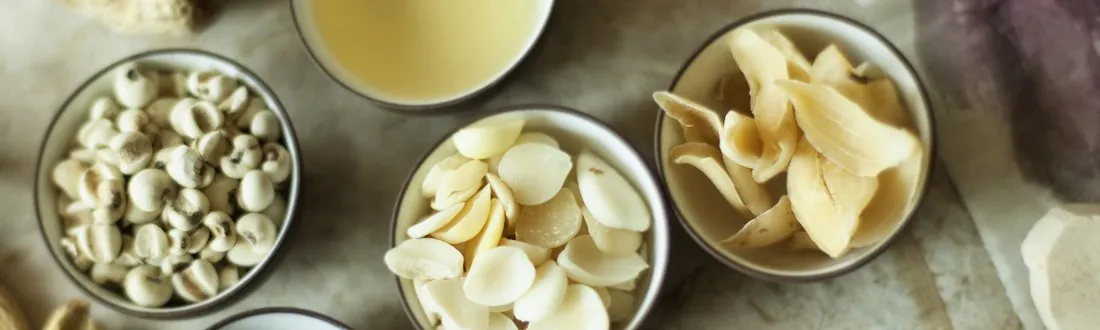
- Job's tears (yi yi ren)
- Barley, brown rice, millet
- Adzuki bean, kidney bean
Bitter and cooling vegetables:
- Bitter melon (ku gua) — the strongest bitter vegetable
- Dandelion greens (pu gong ying), chicory, watercress, rocket
- Celery, lettuce, cucumber, courgette
- White radish, lotus root, lotus seeds
- Cabbage, mustard greens, water spinach
- Mushrooms: shiitake, button, oyster
- Tomato, aubergine
Cooling fruit (in moderation):
- Pear, apple, kiwi, plum
- Watermelon (small portion in summer)
- Star fruit, persimmon (in season)
- Citrus: lemon, grapefruit, pomelo
Light proteins:
- White fish: cod, hake, sole, tilapia
- Tofu, tempeh, soy milk
- Egg whites; whole eggs in moderation
- Skinless chicken (modest amounts)
Cooling drinks:
- Green tea, peppermint, chrysanthemum, dandelion root
- Mung bean soup served at room temperature in summer
- Hot water with lemon
Seaweeds and minerals:
- Nori, wakame, kelp, kombu — clear heat and resolve damp
8. Foods to limit
- Alcohol — particularly beer and spirits; alcoholic damp-heat is the textbook driver
- Spicy food — chilli, hot curry, raw garlic, mustard, Sichuan pepper, wasabi
- Fried, greasy food, takeaways, BBQ, char-grilled food
- Lamb (very warming and damp-heat-aggravating); excess beef and prawns
- Refined sugar, sweets, chocolate, sweet pastries
- Dairy in excess, especially cheese, cream, ice cream
- Heating tropical fruits in excess: mango, pineapple, durian, lychee, longan
- Coffee in excess; energy drinks; smoking
- Late-night eating; large evening meals
- Hot pots, raclette, fondue and other heavy hot meals
9. Sample day's eating
On waking: warm water with a slice of lemon.
Breakfast: a bowl of millet or oats with stewed apple and cinnamon; or two egg whites scrambled with mushroom and tomato. Avoid heavy breakfasts.
Mid-morning: green tea or chrysanthemum tea; a piece of fruit (pear, apple).
Lunch: grilled white fish with steamed greens and brown rice; or a mung bean soup with vegetables; or a tofu and bitter melon stir-fry.
Afternoon: dandelion or peppermint tea; a small handful of pumpkin seeds.
Dinner: baked chicken breast with watercress, cucumber and quinoa; or a vegetable curry made with very little oil and minimal chilli. Finished by 7pm.
Evening: chrysanthemum or licorice tea; no food.
10. Cooking methods
- Steaming, poaching, boiling — preserve foods' cooling nature without adding heat
- Light stir-frying — minimal oil, no charring or browning
- Cool soups and broths — mung bean soup, watercress soup; eaten at room temperature in summer
- Salads with light dressing — particularly in summer
Methods to limit: deep frying, BBQ, char-grilling, blackening, hot pots, fondue, very rich braises.
11. Lifestyle
Avoid hot and humid environments where possible; use cooling clothing and bedding in summer. Keep the body cool but not chilled — cold water swimming in winter is not advised, but cool showers in summer are useful. Daily moderate exercise to sweat out heat — brisk walking, swimming, cycling — but not prolonged saunas, hot yoga or extreme heat sessions which add to internal heat. Avoid prolonged sitting on hot surfaces (car seats in summer, hot tubs) which trap damp-heat in the lower jiao. Manage stress and anger directly — meditation, talking therapies, journaling — since chronic frustration brews Liver damp-heat. Acupuncture on Liver-2, Gallbladder-34, Spleen-9 and Liver-3 is the classical treatment.
12. Common mistakes
- Treating acne and skin inflammation with heating "warming" diets. Bone broth and lamb stews can worsen this constitution dramatically.
- Daily alcohol "in moderation". Even a small daily intake of beer or wine is the largest single driver in many patients.
- Going on a hot detox or sauna programme. Aggravates internal heat further.
- Hot yoga as exercise. Adds heat rather than dispersing it; cool swimming is far better.
- Spicy "cleansing" diets, raw garlic, hot ginger shots. Stir damp-heat upwards.
- Steroid skin creams as long-term solution. Suppress without resolving the underlying pattern.
- Heavy carnivore-style diets. Red meat and rich animal fat aggravate Liver damp-heat strongly.
13. Risks if uncorrected
Persistent damp-heat predisposes to chronic Liver disease (fatty liver, hepatitis, cirrhosis), gallbladder disease, gout, recurrent skin and urinary infections, and certain cancers (gallbladder, liver, colorectal). It can also progress to "Heart fire" (insomnia, anxiety, palpitations) or to Liver wind (hypertension, stroke). Early dietary and lifestyle correction has a strong evidence base, particularly for fatty liver and recurrent infection.
14. Frequently asked questions
How is damp-heat different from phlegm-damp?
Phlegm-damp is cool and stagnant: padded body, oily skin without much inflammation, foggy thinking, sleepiness. Damp-heat is hot and inflamed: pustular acne, bitter taste, dark urine, smelly stools, irritability. The two can also coexist in the same patient and the diet must address whichever is dominant first.
Will I have to give up alcohol entirely?
For an active flare (severe acne, hepatitis, recurrent UTIs, gout) a complete break of 8–12 weeks is usually advised. After resolution, modest occasional drinking (a glass of dry wine with food, never beer or spirits) may be reintroduced. Daily alcohol is the single largest dietary driver and most patients find symptom resolution depends on substantially reducing it.
Can I eat any spicy food?
Mild aromatic spicing — coriander, fennel, cumin, mild ginger — is fine. Hot chillies, raw garlic, mustard, wasabi, hot curries and Sichuan pepper as routine should be avoided while clearing damp-heat; modest reintroduction is fine once the constitution shifts.
How long until acne and skin clears?
Most patients see meaningful improvement in skin within 4–8 weeks of strict dietary correction (alcohol, dairy, fried, sugar) combined with appropriate herbs and lifestyle. Deeper resolution — flat scars, no new outbreaks — takes 3–6 months. Diet without herbal and acupuncture support is slower but does produce improvement.
Is damp-heat the same as inflammation in Western medicine?
Closely overlapping but not identical. Many inflammatory conditions (acne, eczema, hepatitis, IBD, arthritis) have a strong damp-heat picture in TCM, and the diet substantially overlaps with the anti-inflammatory diets used in conventional medicine (less alcohol, less refined sugar, less fried food, more vegetables, more bitter greens). The TCM framework also distinguishes hot-stagnation patterns (heat without damp) from damp-heat, which the Western "inflammation" label does not.















