



Phlegm-damp constitution (Tan Shi)
By Dr (TCM) Attilio D’Alberto — registered Traditional Chinese Medicine practitioner (BAcC, RCHM) with over 25 years’ clinical experience.
On this page
- Overview
- How phlegm-damp develops
- Recognising the pattern
- Tongue and pulse
- Common health conditions
- Dietary approach
- Foods to favour
- Foods to limit
- Sample day's eating
- Cooking methods
- Lifestyle
- Common mistakes
- Risks if uncorrected
- Frequently asked questions
- Related pages
1. Overview
Phlegm-damp (Tan Shi) is the constitution of pathological fluid accumulation. It is very common in modern populations with overconsumption of dairy, sugar, processed flour and greasy foods, combined with sedentary lifestyle. In TCM theory, the Spleen is responsible for transforming fluids; when its function is overwhelmed, fluids gather as damp. Damp that accumulates and thickens becomes phlegm — not only the visible mucus of the nose and chest, but also "invisible phlegm" that lodges in tissues, joints, ovaries, vessels and the mind.
Phlegm-damp produces a recognisable picture: soft, puffy weight gain particularly around the abdomen, heaviness and sluggishness in the body and mind, oily skin and hair, blocked sinuses, foggy thinking, sleepiness after meals, slow digestion, and a strong tendency to PCOS, metabolic syndrome, fatty liver, hypertension and chronic catarrh. The skin and tongue are tell-tale: tongue swollen with thick greasy coating; skin oily, sometimes with cysts and acne.
This constitution is highly responsive to dietary and lifestyle change — not because it is shallow, but because phlegm-damp is generated daily by what enters the kitchen. Stop the influx of damp-forming foods and the body begins to clear within weeks; add active damp-resolving foods and exercise and the picture transforms within months. The classical formulae Er Chen Tang and Liu Jun Zi Tang address this constitution herbally.
2. How phlegm-damp develops
- Daily dairy — particularly cheese, cream, ice cream, full-fat milk — the strongest dietary driver in Western populations
- Refined sugar and refined wheat — pastries, cakes, biscuits, white bread, sweet drinks
- Industrial processed food, fried food, takeaway food, ready meals
- Daily alcohol, especially beer (a "wet" drink)
- Sedentary lifestyle — desk-bound work without daily exercise
- Cold-damp climates, especially when combined with poor circulation and sedentary habits
- Worry, rumination and overthinking (which directly damage Spleen qi)
- Repeated overeating; eating late at night; eating while distracted
- Long courses of antibiotics, steroids, hormonal contraception (in susceptible women)
- Genetic predisposition — family history of metabolic syndrome, PCOS, hypothyroidism
3. Recognising the pattern
- Overweight, particularly around the abdomen and hips
- Soft, puffy flesh rather than dense muscle; feeling of "padded"
- Heaviness, especially in the head, limbs and lower body
- Oily skin and hair, prone to acne, blackheads and seborrhoeic dermatitis
- Sluggish digestion; bloating after meals; loose stools or sticky bowel motions
- Catarrh, chest fullness, productive cough, recurrent sinusitis
- Sleepy after meals; foggy or unfocused thinking; difficulty concentrating
- Heavy menstrual bleeding with clots; ovarian cysts; PCOS
- Snoring, sleep apnoea, mouth-breathing
- Sweet cravings, "comfort eating", carbohydrate dependence
- Worse in damp weather, before periods, after rich meals; better with movement
- Slightly chilled rather than cold; warm under blankets at night
4. Tongue and pulse
Tongue: swollen, often pale or pale-purple; coating thick, white and greasy — sometimes "lard-like" — or yellow-greasy if heat has been added. Teeth-marks at the edges are common.
Pulse: slippery (hua mai) — gliding under the fingers like beads on a thread; often forceful, particularly at the right middle (Spleen) position.
5. Common health conditions
- Polycystic ovary syndrome (PCOS) — the textbook phlegm-damp gynaecological condition
- Metabolic syndrome, insulin resistance, type-2 diabetes
- Non-alcoholic fatty liver disease
- Obesity, particularly abdominal obesity
- Hypertension and atherosclerosis
- Hypothyroidism (functional)
- Chronic sinusitis, recurrent post-nasal drip, productive cough
- Sleep apnoea, snoring, daytime sleepiness
- Lipoma, sebaceous cyst, ovarian cyst, breast cyst, thyroid nodule
- Migraine with heaviness and nausea
- Chronic eczema with weeping skin; cradle cap
- Cognitive fog, difficulty concentrating; "brain fog"
6. Dietary approach
The damp-clearing diet is light, dry and warming — the opposite of the rich, cold, sweet, wet pattern that creates phlegm-damp. The aim is two-fold: stop generating new damp, and actively transform what is already there. Three principles:
- Reduce damp-forming foods. Dairy, sugar, refined wheat, fried food, alcohol, sweet smoothies, ice cream, ready meals.
- Add damp-resolving foods. Barley, adzuki bean, mung bean, white radish, mushroom, seaweed, fennel.
- Eat less, less often, and earlier. Phlegm-damp digestion runs much better with three modest meals rather than constant grazing, and a finished plate by 7pm.
7. Foods to favour
Damp-draining grains and pulses:
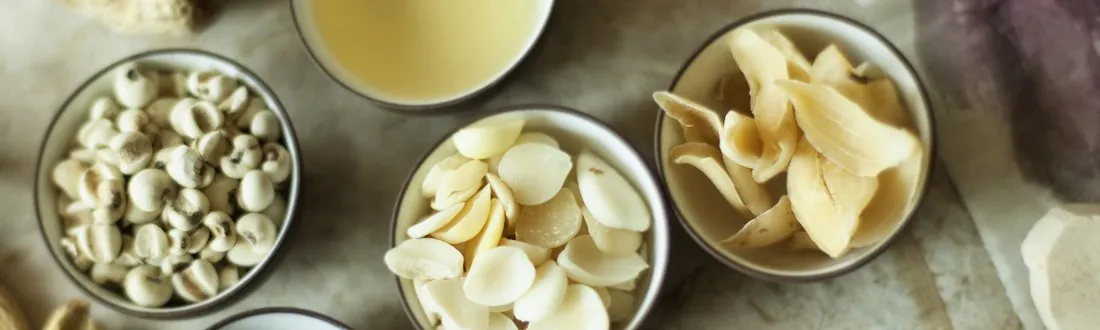
- Job's tears (yi yi ren) — the foremost damp-resolving grain
- Barley (cooked or roasted barley tea)
- Adzuki bean — classical for clearing damp through urine
- Mung bean (cooked, particularly in summer)
- Brown rice, millet, buckwheat
- Modest white rice (better tolerated than wheat in this constitution)
Damp-clearing vegetables:
- White radish, daikon, mooli — excellent for chest and digestive damp
- Cucumber (in summer), celery, lettuce, fennel
- Mushrooms: shiitake, button, oyster, maitake
- Cabbage, mustard greens, watercress
- Seaweed: nori, wakame, kelp, kombu
- Onion, leek, spring onion, garlic
Lean proteins:
- Skinless chicken, turkey
- White fish: cod, hake, sea bass, sole
- Egg whites (yolks in moderation)
- Lean cuts of beef and lamb in modest portions
Aromatic spices that move damp:
- Ginger (fresh and dried), cardamom, cumin, fennel
- Turmeric, black pepper, white pepper, mustard seed
- Star anise, bay leaf
Drinks:
- Roasted barley tea, fennel tea, pu'er tea, oolong
- Green tea after rich meals
- Hot water with lemon
8. Foods to limit
- Dairy products, especially cheese, cream, ice cream, full-fat milk — the largest single category to reduce
- Sugar, sweets, cakes, biscuits, sweet desserts, chocolate (except occasional dark chocolate)
- Wheat in excess, particularly white-flour pastries, sandwiches, pasta
- Fried, greasy food, takeaway food, fried snacks, crisps
- Alcohol, particularly beer; sweet wines and cocktails
- Excess fruit juice, smoothies, sweet milky coffees
- Bananas in excess (sweet and damp); excess tropical fruits
- Excess nuts, particularly cashews and peanuts
- Eating large meals, eating late at night, constant snacking
- Excess raw and cold food, despite the heaviness, raw food alone tends to chill the Spleen and worsen damp generation long-term
9. Sample day's eating
On waking: warm water with lemon and a thin slice of fresh ginger.
Breakfast: a small bowl of Job's tears porridge with chopped pear and cinnamon; or two scrambled eggs with mushrooms and tomato. No bread.
Mid-morning: a cup of roasted barley tea or pu'er; a handful of pumpkin seeds.
Lunch: grilled chicken with stir-fried mixed vegetables (mushroom, white radish, fennel) and brown rice; or a clear vegetable soup with adzuki beans.
Afternoon: green tea; a small piece of fresh fruit (apple, pear, citrus).
Dinner: baked white fish with steamed greens and a small portion of barley; or a vegetable curry with very little oil. Finished by 7pm.
Evening: fennel or oolong tea; no further food.
10. Cooking methods
- Steaming, grilling, baking — minimal oil; preserves the food's character without adding fat
- Roasting and dry-roasting — particularly for grains (barley, Job's tears), to remove moisture before cooking
- Stir-frying with very little oil — ginger, garlic and aromatic vegetables move damp
- Simmering in clear broths — rather than thick creamy sauces
Methods to limit: deep frying, heavy cream-based sauces, breaded fried foods, greasy stir-fries, sugar-glazed dishes.
11. Lifestyle
Daily aerobic exercise is essential — at least 30–45 minutes of brisk walking, jogging, cycling, swimming or a sport, ideally five or six days a week. Damp resolves through sweat, so genuine cardiovascular effort is far more effective than gentle yoga alone. Avoid eating late suppers; finish dinner by 7pm where possible. Damp-prone climates (low-lying, humid, foggy) aggravate the constitution; sunlight, dry air and movement disperse damp. Manage worry and rumination directly — meditation, talking therapies, journaling — since these damage Spleen qi and feed phlegm formation. Treatment-wise, acupuncture on Spleen-9 (Yinlingquan), Stomach-40 (Fenglong) and CV-12 (Zhongwan) is classical for resolving phlegm-damp.
12. Common mistakes
- Daily smoothies as "healthy". Frozen banana, oat milk and nut butter are a near-perfect damp-forming combination.
- Greek yoghurt and cottage cheese for "protein". All dairy is damp-forming in this constitution.
- Plant-based meat alternatives loaded with refined oils and starches. Often more damp-forming than the meat they replace.
- Going gluten-free with substitute breads and cakes. Rice flour, tapioca and gum-laden GF baked goods are still refined and sweet.
- Daily fruit smoothies and juices. Concentrated fruit sugars in liquid form generate damp rapidly.
- Sedentary plus "salad and soup" diet. Without daily aerobic exercise, even a careful diet does not fully clear damp.
- Late suppers and constant grazing. Phlegm-damp digestion is overwhelmed by frequent eating; three modest meals at fixed times suit it best.
13. Risks if uncorrected
Untreated phlegm-damp is the gateway to several serious modern diseases: type-2 diabetes, fatty liver disease, hypertensive cardiovascular disease, stroke, sleep apnoea and certain cancers. In TCM, accumulated phlegm is also implicated in mental conditions such as cognitive fog, depression with apathy and certain forms of psychotic illness ("phlegm misting the Heart"). Early dietary and exercise correction has a strong evidence base in conventional medicine for reversing many of these trajectories.
14. Frequently asked questions
Is phlegm-damp the same as obesity?
Closely overlapping but not identical. Most overweight people have a phlegm-damp pattern, but slim people can also be phlegm-damp (with foggy thinking, oily skin, sluggish digestion, sinus catarrh) without being overweight. Conversely, some people are overweight from yang deficiency, blood deficiency or qi stagnation, where the dietary correction is different.
Can I keep some dairy?
For most strongly phlegm-damp patients, a four to eight week strict reduction is the most effective starting point. After improvement, modest amounts of fermented dairy (live yoghurt, kefir, hard aged cheese in small portions) are usually tolerated. Cream, ice cream and full-fat milk should remain occasional treats rather than daily foods.
Will I lose weight on this diet?
Most patients lose weight gradually — typically 0.5 to 1 kg per week — while energy improves. The diet is not designed primarily for rapid weight loss but for resolving the underlying constitutional pattern. As damp clears, weight loss tends to be sustained rather than rebound, because the underlying drivers have been addressed.
How long until the brain fog clears?
Most patients notice improved concentration and reduced post-meal sleepiness within 2–4 weeks of removing dairy, sugar and refined wheat, with continued improvement over months. Sinus and chest catarrh usually clear in parallel.
How does PCOS fit into phlegm-damp?
PCOS is the textbook phlegm-damp gynaecological condition: ovarian cysts (visible "phlegm"), insulin resistance (Spleen failing to transform sweet food), weight gain, oily skin, irregular menstruation. Phlegm-damp dietary correction combined with weight reduction, exercise, and TCM herbal and acupuncture treatment can produce meaningful improvement in cycle regularity, ovulation and skin within 3–6 months. See the PCOS page for full detail.















