


Allergic / special diathesis constitution (Te Bing)
By Dr (TCM) Attilio D’Alberto — registered Traditional Chinese Medicine practitioner (BAcC, RCHM) with over 25 years’ clinical experience.
On this page
- Overview
- How the allergic constitution develops
- Recognising the pattern
- Tongue and pulse
- Common health conditions
- Dietary approach
- Foods to favour
- Foods to limit
- Sample day's eating
- Cooking methods
- Lifestyle
- Common mistakes
- Risks if uncorrected
- Frequently asked questions
- Related pages
1. Overview
The special diathesis or allergic constitution (Te Bing) is the modern category in the Wang Qi classification that captures the heightened, dysregulated immune response seen in atopic and allergic conditions: hayfever, asthma, eczema, urticaria (hives), food intolerances, and contact and chemical sensitivities. It is the constitution most clearly linked to genetic predisposition; family history of atopic disease is almost universal.
The TCM understanding centres on weak wei qi (defensive qi) and a tendency to "wind" invasion. Wei qi is the most superficial layer of qi, circulating just below the skin and through the upper respiratory tract; it is the body's first line of defence against external pathogens (wind, cold, heat, damp). When wei qi is weak or dysregulated, the body overreacts to stimuli that should not provoke a response, generating the cardinal allergic symptoms: itching, sneezing, congestion, rash, wheeze.
The allergic constitution is almost always combined with another underlying pattern. The most common combinations are: with Lung and Spleen qi deficiency (the picture of frequent colds, eczema, asthma, fatigue); with phlegm-damp (allergic asthma, chronic sinusitis, weeping eczema); with damp-heat (hot inflammatory eczema, hives, food intolerance with bowel inflammation); and with yin deficiency (chronic dry eczema, late-onset asthma, dry hayfever). The dietary approach therefore depends on the underlying pattern as well as the allergic tendency itself. Classical formulae include Yu Ping Feng San ("Jade Windscreen") for wei qi, Xiao Qing Long Tang for wind-cold asthma, and Xiao Feng San for itching skin conditions.
2. How the allergic constitution develops
- Genetic predisposition — family history of asthma, eczema, hayfever, food allergy
- Caesarean delivery (less microbial exposure at birth)
- Lack of breastfeeding or short breastfeeding
- Early-life antibiotic use (alters gut microbiome)
- Highly hygienic, low-microbial-exposure childhood (the "hygiene hypothesis")
- Vitamin D deficiency, particularly in childhood
- Air pollution, indoor mould, cigarette smoke exposure
- Chronic Lung or Spleen qi deficiency from poor diet and overwork
- Repeated upper respiratory infections in childhood
- High processed-food intake; low diversity of plant foods
- Chronic stress in adulthood, which dysregulates immune function
3. Recognising the pattern
- History of multiple allergies: hayfever, eczema, asthma, hives, food intolerance
- Family history of atopic disease in parents and siblings
- Sensitive to climate changes, temperature changes and seasonal triggers
- Frequent skin rashes triggered by food, contact, stress or weather
- Sneezing, itchy eyes, runny nose with seasonal pollen triggers
- Multiple food sensitivities or intolerances rather than one
- Sensitive to chemicals, perfumes, cleaning products, household sprays
- Reactions worsen during stress and improve during holidays
- Tendency to recurrent colds and post-viral cough or wheeze
- Skin tendency to dryness, redness, itching
- Allergic shiners (dark circles under the eyes); transverse nasal crease
4. Tongue and pulse
The tongue and pulse vary according to the underlying pattern (qi deficiency, damp, heat etc). Common findings:
Tongue: often pale with white moist coating (Lung-Spleen qi deficiency picture); or red with thin coating (yin deficiency); or red with thick yellow coating (damp-heat).
Pulse: commonly weak or floating-weak (deficient wei qi); may be slippery (phlegm) or rapid (heat) depending on the underlying pattern.
5. Common health conditions
- Allergic rhinitis (hayfever) — seasonal and perennial
- Atopic eczema, particularly childhood and adolescent
- Asthma, including exercise-induced and allergic asthma
- Urticaria (hives), angioedema
- Food allergy (IgE-mediated): peanut, tree nut, egg, milk, shellfish
- Food intolerance: lactose, gluten, FODMAP intolerance, histamine intolerance
- Eosinophilic oesophagitis
- Allergic conjunctivitis
- Contact dermatitis (nickel, fragrance, lanolin)
- Multiple chemical sensitivity
- Coeliac disease and non-coeliac gluten sensitivity
- Mast cell activation syndrome (MCAS)
6. Dietary approach
The diet must do three things at once: strengthen wei qi and Spleen, calm wind and inflammation, and eliminate known trigger foods. The most common food triggers in TCM — dairy, wheat, peanuts, shellfish, eggs, soy — map closely to the Western allergen list. Anti-inflammatory and immune-modulating foods are central. Three principles:
- Identify and avoid personal triggers. Allergy testing (IgE skin prick / blood test for true allergy; elimination-rechallenge for intolerance) and food diary are the practical tools.
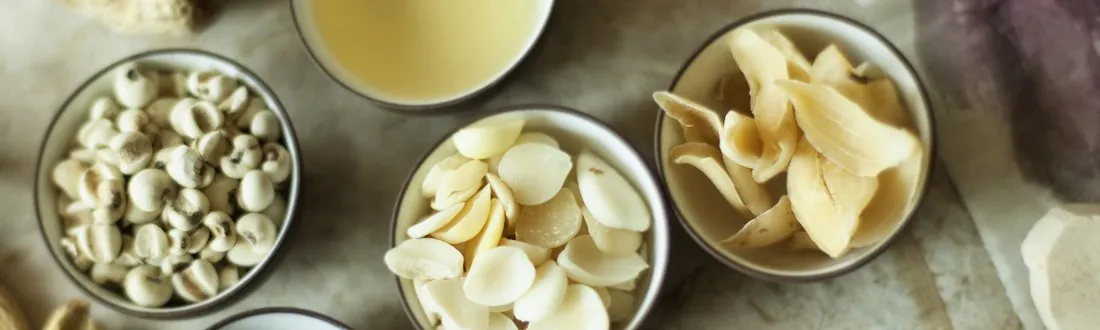
- Strengthen wei qi and Spleen daily. Astragalus, Chinese yam, ginger, lotus seed, modest cooked grains, soups and bone broth.
- Reduce inflammatory load. Less refined sugar, less alcohol, less processed food, more vegetables, oily fish for omega-3.
7. Foods to favour
Wei qi and Spleen tonics (the foundation):
- Astragalus (huang qi) — in soup or congee; the foremost wei qi tonic
- Chinese yam (shan yao)
- Lotus seeds (lian zi)
- Poria (fu ling)
- Red dates (da zao)
- Goji berries (gou qi zi)
- Bone broth and slow-cooked soups
Lung-moistening foods (for dry, allergic Lung patterns):
- Pear (cooked or raw with rock sugar)
- Apple, lily bulb, white fungus
- Almonds (in moderation; avoid if allergic)
- Honey (small amounts; ideally local raw honey)
Anti-inflammatory and omega-3 sources:
- Wild oily fish: salmon, mackerel, sardines, anchovy
- Flax seed, chia seed, walnuts (if not allergic)
- Olive oil, avocado
- Turmeric, ginger
Gut-supportive foods:
- Cooked vegetables in variety
- Bone broth
- Fermented foods if histamine-tolerant: small amounts of sauerkraut, kefir, kimchi
- Cooked apple, pear (gentle prebiotic)
Grains:
- Rice, quinoa, oats, millet (gluten-free options for those with sensitivity)
- Sourdough rye or wheat for those who tolerate
8. Foods to limit
- Known personal allergens (always; allergy testing helpful to identify)
- Common atopic triggers: dairy, wheat, peanuts, tree nuts, shellfish, eggs, soy
- Food additives, preservatives, artificial colourings, MSG, sulphites
- Excess sugar, refined flour, processed and ultra-processed food
- Cold and raw food (weakens Spleen and wei qi)
- Fermented and aged foods if histamine-sensitive (aged cheese, salami, sauerkraut, wine)
- Alcohol — particularly red wine, beer, sulphited wines
- Highly inflammatory foods: deep-fried, char-grilled, BBQ, very spicy
- Raw shellfish, raw fish (high allergen and histamine risk)
9. Sample day's eating
On waking: warm water with a slice of lemon or fresh ginger.
Breakfast: oat porridge with stewed apple, walnut (if tolerated), cinnamon and a teaspoon of honey; or millet congee with red dates and Chinese yam.
Mid-morning: astragalus tea or rooibos; a handful of pumpkin seeds.
Lunch: grilled salmon with rice and lightly cooked greens; or chicken soup with astragalus, Chinese yam, red dates and shiitake.
Afternoon: chamomile or rose tea; a piece of cooked pear with a drizzle of honey.
Dinner: steamed white fish with quinoa, fennel and steamed broccoli; or a turmeric-and-ginger chicken stew. Eaten before 8pm.
Evening: herbal tea (chamomile, lemon balm); no late-night snacking.
10. Cooking methods
- Soup-making with wei qi tonics — astragalus, Chinese yam and red dates simmered with chicken make the iconic preventative soup
- Steaming — gentle on a sensitive digestion
- Slow-cooking — breaks down food fibres, easier to digest in sensitive guts
- Stewing with aromatic spices — ginger, fennel, cardamom, turmeric, bay
Methods to limit: deep-frying, BBQ char-grilling, raw preparation of high-allergen foods (raw fish, raw nuts, raw shellfish).
11. Lifestyle
Identify and minimise environmental and food triggers — HEPA filter for dust mite, careful pollen-season management, fragrance-free household products, removal of mould. Daily moderate exercise to strengthen wei qi — brisk walking, swimming, t'ai chi, yoga — but avoid extreme cold-air exercise during pollen season for asthmatics. Manage stress directly — cortisol modulates atopic disease, and stress-flares of eczema, asthma and hives are well documented. Acupuncture and Chinese herbal medicine are commonly used in TCM practice for allergic constitutions, with growing evidence for hayfever, eczema and asthma. Consider seasonal preventative courses (acupuncture and Yu Ping Feng San from late winter to support wei qi before the spring pollen season).
12. Common mistakes
- Adding raw immune-stimulating foods (echinacea, raw garlic, raw ginger shots) during flares. Can worsen autoimmune-leaning allergic conditions.
- Strict elimination diet without re-introduction plan. Long-term avoidance of many foods narrows the diet excessively and weakens Spleen.
- Daily smoothies and salads. Cold raw food in volume weakens Spleen and wei qi.
- Heavy use of antihistamines without addressing constitution. Suppresses without resolving; rebound flares common when stopped.
- Over-sanitised home environment. Modest microbial exposure helps train the immune system.
- Skipping breakfast then late-night eating. Patterns most disruptive to Spleen qi and to the immune system.
- Self-prescribed multi-supplement regimens. Often add to inflammatory load rather than reduce; targeted supplementation under guidance is far better.
13. Risks if uncorrected
Untreated allergic constitution tends to follow the "atopic march": eczema in infancy, asthma in childhood, allergic rhinitis in adolescence, food and chemical sensitivities in adulthood. Severe forms predispose to anaphylaxis, severe asthma and emergency presentations. Long-term, the dysregulated immune state increases risk of autoimmune disease in mid-life. Early dietary, lifestyle and TCM intervention — particularly seasonal preventative courses — can substantially modify this trajectory.
14. Frequently asked questions
Will Chinese food therapy cure my allergies?
"Cure" overstates it. The aim of dietary and TCM treatment is to reduce reactivity and the frequency and severity of flares, rather than to eliminate the underlying genetic predisposition. Many patients achieve substantial improvement — eczema clear or near-clear, hayfever down to mild, asthma well controlled with reduced inhaler use — without the constitution itself ever fully disappearing. Continued maintenance dietary and lifestyle support is generally needed long-term.
Should I avoid all the common allergens?
No — only those you actually react to. Avoiding foods unnecessarily narrows nutrition and may itself increase reactivity over time. Allergy testing (IgE skin prick or blood test) identifies true allergy; food diary plus elimination-rechallenge identifies intolerance. Remove what you genuinely react to; keep what you tolerate.
Is the allergic constitution the same as a weakened immune system?
Closely overlapping but not identical. Many allergic patients have weakened wei qi and Lung/Spleen qi (a true deficiency) and a parallel over-reactivity (a dysregulation). Both need addressing: tonifying wei qi for resilience and calming the over-reaction for symptom control. The classical formula Yu Ping Feng San does both at once.
How long until I notice changes?
Patients with chronic eczema and hayfever commonly notice improvement within 6–12 weeks of consistent dietary correction and herbal/acupuncture treatment, with continued improvement over months. Asthma response is generally slower; food allergy reactivity can take years to substantially modify. Maintenance treatment over multiple seasons (especially before pollen season for hayfever) gives the best long-term results.
Can my child have this constitution?
Yes — childhood allergic constitution is common and highly responsive to TCM dietary correction. Reducing dairy, sugar and refined wheat; introducing astragalus and Chinese yam soups; and addressing Spleen qi with cooked food rather than raw is often used in TCM practice for childhood eczema and recurrent infection. Specialist TCM paediatric practitioners adjust dose and approach for children.















