



The Bladder in Chinese medicine
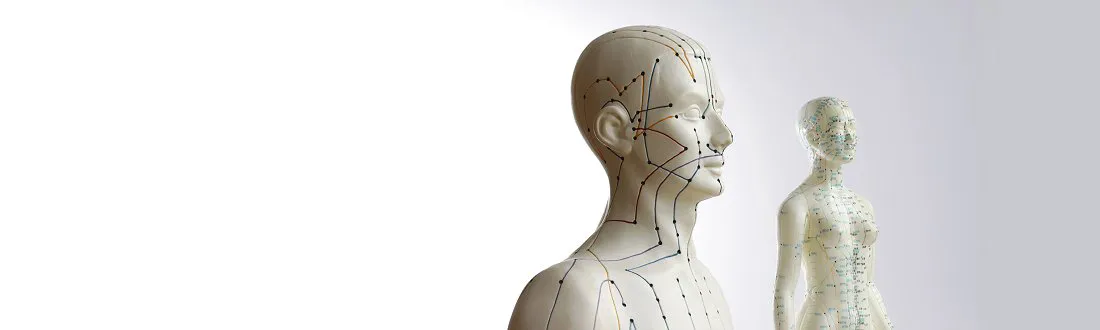
The Bladder (Pang Guang, 膀胱) is the “Reservoir of Fluids” in Chinese medicine. It receives the impure fluid sent down by the Small Intestine and the Kidneys’ transformation, holds it temporarily, and excretes it as urine. In TCM, urinary function is the joint product of Kidney Yang (provides the warmth and Qi to transform fluids), Spleen Qi (sends fluids to the Bladder), Lung Qi (descends fluids) and Bladder Qi (holds and releases). The Bladder meridian is the longest in the body — 67 points running from the inner eye, over the head, down the back in two parallel lines, through the back of the leg to the little toe — and contains the entire system of Back-Shu points, the body’s most powerful access points to the internal organs. Paired with the Kidney; element Water; season winter; sense organ the ears; emotion fear; tissue bones.
Functions of the Bladder
- Stores urine — receives the impure fluid from the Small Intestine’s “separation of pure and impure” and from Kidney transformation
- Excretes urine — under the warming action of Kidney Yang; healthy Bladder Qi opens and closes the urinary outlet appropriately, neither too readily (incontinence, frequency) nor too tightly (retention)
- Transforms fluids via Kidney Yang — the Bladder cannot work in isolation; Kidney Yang provides the heat and motive force. Bladder pathology is therefore almost always Bladder + Kidney pathology
- Hosts the Back-Shu points — the inner Bladder line carries the Back-Shu (transporting) points for every internal organ. Acupuncture and moxibustion at these points provide direct access to the Zang-Fu and are central to chronic-disease treatment
Bladder and Kidney pair
The Bladder is paired with the Kidney as the Water-element couple. The Kidney provides the Yang (motive heat) that powers Bladder transformation and the Yin (substance) that fills the Bladder with fluid. Chronic urinary symptoms in TCM are almost never “just a Bladder problem” — they reflect underlying Kidney Yang or Yin deficiency. The Kidney holds the body’s reserve and the Bladder its working fluid; together they are the foundation of urinary, reproductive and lower-back health.
Common patterns of Bladder disharmony
- Bladder Damp-Heat — frequent, urgent, burning urination, scanty dark or bloody urine, lower abdominal heaviness or pain. The TCM picture in acute UTI, cystitis and acute pyelonephritis
- Bladder Cold — frequent clear copious urine, urinary incontinence, lower back cold, intolerance of cold; from Kidney Yang deficiency or invasion of external Cold
- Bladder Qi deficiency — urinary frequency, dribbling, stress incontinence, weak stream; chronic and constitutional
- Kidney Yang failing to warm the Bladder — nocturia, urinary frequency, copious clear urine, cold limbs, sore lower back. The most common TCM picture in age-related urinary frequency
- Damp-Heat in the Bladder with stones — the TCM pattern in some bladder and kidney stones — with sharp pain, dark or bloody urine, sudden interruption of flow
- Bladder-channel obstruction — back pain anywhere along the spine, sciatica down the back of the leg, the occipital and sub-occipital region; the channel is involved in the majority of back pain presentations
Conditions on this site relating to Bladder disharmony
Urinary tract infections, recurrent UTI, interstitial cystitis, stress incontinence, urge incontinence, nocturia, prostatitis, prostatic enlargement, kidney stones, bladder stones, chronic low back pain, sciatica, occipital headache, posterior neck stiffness. The Back-Shu point system makes the Bladder meridian central to treatment of virtually all chronic internal-organ conditions.
Treatment principles for the Bladder
Core acupuncture points include BL 23 (Shenshu) — Back-Shu of the Kidney, central to chronic low back pain, infertility and Kidney deficiency patterns; BL 28 (Pangguangshu) the Back-Shu of the Bladder; BL 40 (Weizhong) the He-Sea point and command point of the back; BL 60 (Kunlun) for occipital headache and lumbar pain; BL 67 (Zhiyin) for breech presentation (moxa); CV 3 (Zhongji) Front-Mu of the Bladder; SP 9 (Yinlingquan) for resolving Damp in the lower jiao. The Back-Shu points (BL 13 through BL 28 on the inner line, BL 41 through BL 53 on the outer) are reached for whenever a chronic Zang-Fu pattern needs direct addressing. Foundational formulas include Ba Zheng San (Bladder Damp-Heat / acute UTI), Jin Gui Shen Qi Wan (Kidney Yang deficiency with urinary frequency), Suo Quan Wan (Bladder Qi deficiency with frequency / incontinence) and Wu Ling San (fluid retention and difficult urination).
For the full clinical article with pattern differentiation, classical citations and herbal treatment strategies, see Disorders of the Kidney and Bladder.
Return to Zang-Fu organ overview. Paired with the Kidney. Read about the other Fu organs: Stomach, Large Intestine, Small Intestine, Gallbladder, Triple Burner and the Pericardium; or the Zang organs: Spleen, Lung, Liver and Heart.















