


Yellow in Chinese Medicine
In Chinese medicine, yellow is the colour of the Earth element and the Spleen, and it most often signals dampness, damp-heat, or Spleen deficiency. A sallow, pale-yellow complexion suggests a weak Spleen failing to make enough Qi and Blood, while a bright, fresh yellow — especially of the skin and the whites of the eyes — points to damp-heat. Yellow shows up across the tongue coating, sweat, urine, phlegm and discharge, and it is echoed in the bitter yellow herbs that clear heat and the warm yellow foods that nourish the Spleen. This page is part of the guide to colours in Chinese medicine.
On this page
- What yellow signifies
- Yellow complexion and jaundice
- Yellow tongue, eyes, sweat and secretions
- The Earth element and the Spleen
- Yellow Chinese herbs
- Yellow foods in Chinese food therapy
- When yellow needs a doctor
- Frequently asked questions
1. What yellow signifies
Yellow carries two main meanings in Chinese medicine, and the shade matters:
- A dull, sallow, pale yellow (sometimes called “withered yellow”) suggests Spleen Qi or Blood deficiency — the body is under-nourished because the Spleen is not transforming food efficiently.
- A bright, fresh, vivid yellow suggests damp-heat — a hot, sticky accumulation, classically in the Liver and Gallbladder.
In both cases the underlying theme is the Earth element and the Spleen, the organ responsible for transforming food and fluids. When that transformation falters, dampness accumulates — and dampness combined with heat produces the vivid yellow signs.
2. Yellow complexion and jaundice
A sallow, yellowish complexion that looks dull and lacking lustre is one of the classic signs of a damp, Spleen-deficient pattern, often alongside tiredness, poor appetite, bloating and loose stools.
A bright orange-yellow of the skin and the whites of the eyes is jaundice. In Chinese medicine this is understood as damp-heat obstructing the Liver and Gallbladder. In conventional medicine jaundice is an important sign of liver or gallbladder disease — so while Chinese medicine has a clear framework for it, jaundice always needs urgent medical assessment (see the warning below).
3. Yellow tongue, eyes, sweat and secretions
Yellow appears across many of the signs a practitioner observes:
- Tongue coating — a yellow tongue coating indicates heat; the thicker and greasier it is, the more damp-heat is present.
- Eyes — yellowing of the whites is jaundice (damp-heat); red-and-yellow, sticky eyes suggest damp-heat rising.
- Sweat — sweat that stains clothing yellow is a classic damp-heat sign.
- Urine — dark, scanty yellow urine indicates heat; cloudy yellow urine suggests damp-heat in the bladder (though simple dehydration also darkens urine).
- Phlegm and mucus — yellow, thick phlegm indicates heat or phlegm-heat in the Lung.
- Vaginal discharge — a yellow discharge points to damp-heat in the lower body.
4. The Earth element and the Spleen
Yellow is the colour of the Earth element, whose organs are the Spleen and Stomach. Earth governs digestion, the transformation of food into Qi and Blood, and the sense of being nourished, steady and centred. Its season is late summer, its climate is dampness, its taste is sweet, and its emotion is worry or over-thinking — which is itself a common cause of Spleen weakness. When Earth is out of balance, dampness accumulates and the yellow signs appear.
5. Yellow Chinese herbs
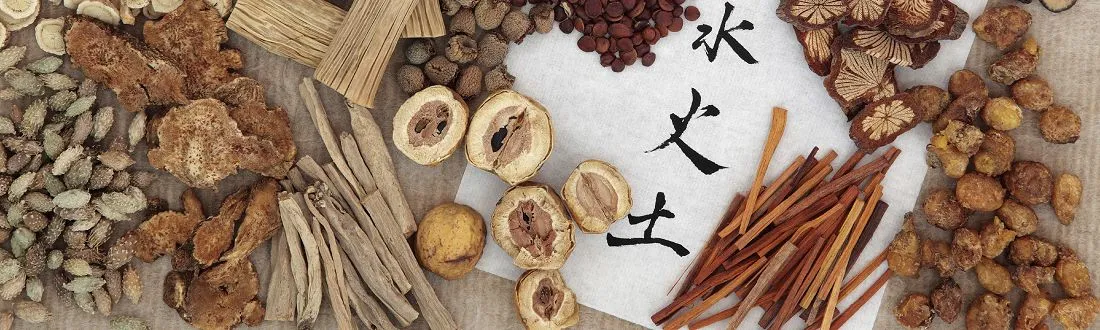
Some of the most important heat-clearing herbs in the Chinese materia medica are bright yellow inside, and their colour is a well-known reminder of their action. The bitter, cold “three yellows” are the classic examples:
- Huang Lian (coptis) — intensely bitter and cold; clears heat and drains damp-heat, especially from the digestion and Heart.
- Huang Qin (scutellaria) — clears heat from the Lung and upper body and calms damp-heat.
- Huang Bai (phellodendron) — clears damp-heat from the lower body.
The vivid yellow of Huang Lian and Huang Bai comes from berberine, the same compound now popular as a supplement. Other notable yellow herbs are Da Huang (rhubarb), which drains heat downward, and Yin Chen Hao, the principal herb for damp-heat jaundice. These are always combined into a formula matched to the individual by a qualified practitioner.
6. Yellow foods in Chinese food therapy
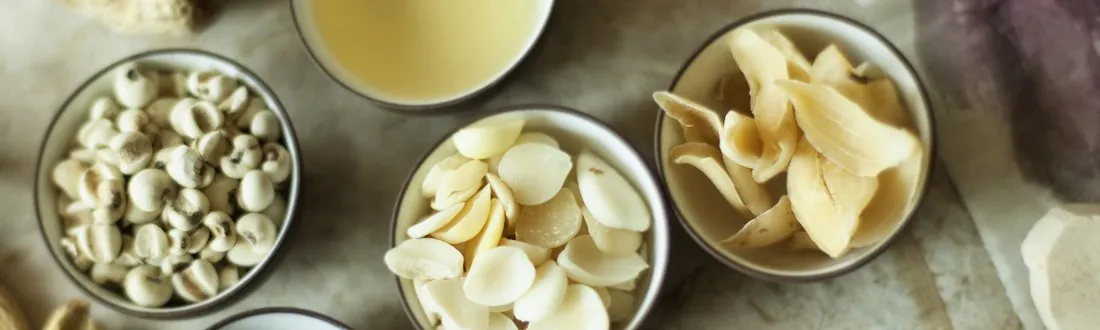
Warm, mildly sweet yellow and orange foods are the classic Earth foods that nourish the Spleen and support digestion. Everyday choices include squash and pumpkin, sweet potato, carrot, swede, millet, sweetcorn and yellow lentils. Cooked and warm rather than raw and cold, and in moderate quantity, they help build Qi and Blood — the opposite of the sugary, refined “sweet” foods that overburden the Spleen and generate damp.
7. When yellow needs a doctor
Yellow skin, or yellowing of the whites of the eyes (jaundice), always needs urgent medical assessment — it can be a sign of liver disease (such as hepatitis), gallstones or other conditions that require conventional treatment. This is especially important if it comes with pale, clay-coloured stools, dark urine, itching, abdominal pain or feeling unwell.
Yellow-green phlegm with fever or breathlessness, or a yellow vaginal discharge with pain or a strong odour, should also be checked by your doctor. Chinese medicine can support wellbeing alongside conventional care, but it is not a replacement for diagnosing the cause.
8. Frequently asked questions
What does yellow mean in Chinese medicine?
Yellow is the colour of the Earth element and the Spleen. A dull, sallow yellow complexion usually signifies Spleen Qi or Blood deficiency, meaning the body is under-nourished, while a bright, vivid yellow, especially of the skin and the whites of the eyes, signifies damp-heat. The common theme is the Spleen and the accumulation of dampness.
What does a yellow tongue coating mean in Chinese medicine?
A yellow tongue coating indicates heat. The thicker and greasier the yellow coating, the more damp-heat is present. A thin yellow coating suggests milder or more recent heat, while a thick, sticky yellow coating suggests established damp-heat, often in the digestion or lower body. It is always read together with the tongue body colour and the other signs.
Which Chinese herbs are yellow and what do they do?
The bitter, cold “three yellows” are the classic examples: Huang Lian (coptis), Huang Qin (scutellaria) and Huang Bai (phellodendron), which clear heat and drain damp-heat from different parts of the body. Da Huang (rhubarb) drains heat downward and Yin Chen Hao is the main herb for damp-heat jaundice. The vivid yellow of Huang Lian and Huang Bai comes from berberine.
What do yellow foods do in Chinese medicine?
Warm, mildly sweet yellow and orange foods such as squash, pumpkin, sweet potato, carrot, millet and sweetcorn are the Earth foods that nourish the Spleen and support digestion, helping to build Qi and Blood. They are best eaten cooked and warm and in moderation, unlike sugary refined foods, which overburden the Spleen and generate dampness.
Are yellow eyes or yellow skin serious?
Yes, they can be. Yellowing of the skin or the whites of the eyes is jaundice, which always needs urgent medical assessment because it can indicate liver disease such as hepatitis, gallstones or other conditions. Although Chinese medicine understands jaundice as damp-heat in the Liver and Gallbladder, it is not a substitute for diagnosing and treating the underlying cause.
References
- Huang Di Nei Jing Su Wen (The Yellow Emperor's Classic of Internal Medicine). (~300 BCE). Beijing: People's Medical Publishing House.
- Maciocia, G. (2015). The Foundations of Chinese Medicine: A Comprehensive Text (3rd ed.). Edinburgh: Churchill Livingstone Elsevier.
- Maciocia, G. (2018). Diagnosis in Chinese Medicine: A Comprehensive Guide (2nd ed.). Edinburgh: Elsevier.
- Kaptchuk, T. J. (2000). The Web That Has No Weaver: Understanding Chinese Medicine (2nd ed.). New York: McGraw-Hill.
- Wiseman, N. & Ye, F. (1998). A Practical Dictionary of Chinese Medicine (2nd ed.). Brookline: Paradigm Publications.
- Bensky, D., Clavey, S., & Stöger, E. (2004). Chinese Herbal Medicine: Materia Medica (3rd ed.). Seattle: Eastland Press.















